Strontium Citrate Side Effects: What to Know Before Taking It
Strontium Citrate vs Strontium Ranelate: Different Risk Profiles
Most safety concerns about strontium come from studies of strontium ranelate — a prescription drug that was used in Europe for osteoporosis but was restricted in 2014 due to cardiovascular risks (increased risk of heart attack and blood clots). Strontium ranelate is not available in the US and was never FDA-approved.
Strontium citrate is the supplement form sold over-the-counter. It delivers elemental strontium at much lower doses than the ranelate prescription. The cardiovascular risks documented for ranelate have not been replicated in studies of citrate, but the research base is smaller.
The bottom line: strontium citrate has a cleaner safety profile than ranelate, but it has not been studied as extensively. Treat it with appropriate caution, particularly if you have cardiovascular risk factors.
Common Side Effects of Strontium Citrate
At standard supplement doses (680 mg strontium citrate, providing roughly 170 mg elemental strontium), the most commonly reported side effects are:
- Nausea — usually mild and improves with food. Taking strontium with a meal reduces this.
- Diarrhea or loose stools — typically transient in the first 1-2 weeks.
- Headache — reported infrequently, usually resolves within days.
- Skin irritation — rare with citrate form (more associated with ranelate).
These side effects are generally mild and dose-dependent. Reducing the dose or splitting it across two daily doses usually resolves them.
Serious Concerns to Be Aware Of
Cardiovascular Risk
Strontium ranelate was restricted in Europe after post-marketing data showed increased risk of myocardial infarction. This risk has NOT been established for strontium citrate at supplement doses, but as a precaution, most practitioners recommend avoiding strontium supplements if you have established cardiovascular disease, uncontrolled hypertension, or a history of blood clots.
DEXA Scan Interference
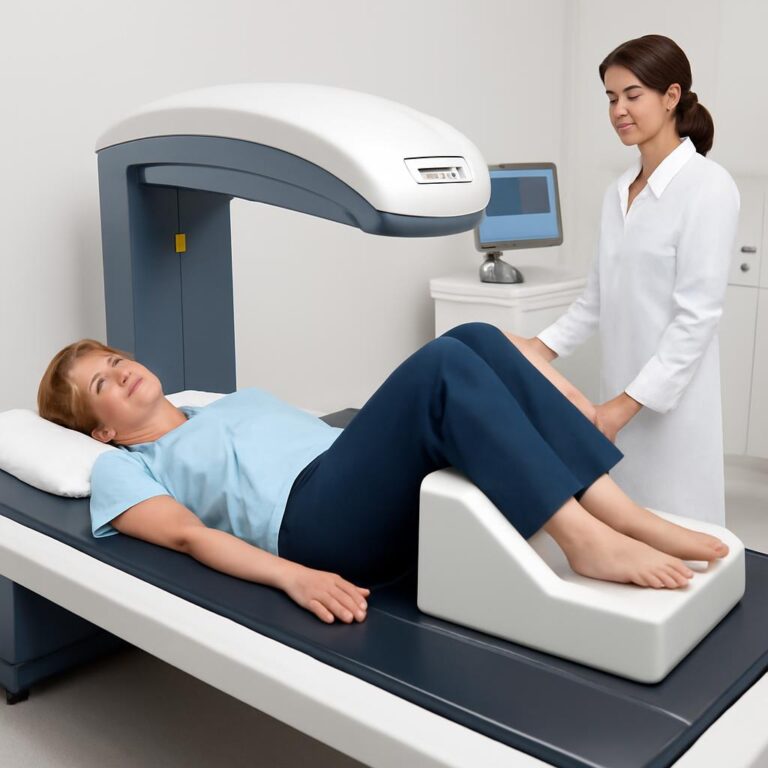
Strontium accumulates in bone and artificially inflates DEXA scan readings. This is not a health risk — it is a measurement artifact. DEXA machines measure bone mineral density by X-ray absorption, and strontium absorbs X-rays more strongly than calcium. A T-score improvement while taking strontium may overestimate actual bone density gains by 5-10%. Inform your doctor that you take strontium before any DEXA scan.
Kidney Considerations
Strontium is excreted through the kidneys. Adults with impaired kidney function (eGFR below 30) should avoid strontium supplements, as clearance is reduced and accumulation risk increases.
Who Should Avoid Strontium Citrate
- Anyone with established cardiovascular disease or history of blood clots
- Adults with severe kidney impairment (eGFR below 30)
- People taking tetracycline or fluoroquinolone antibiotics (strontium reduces absorption)
- Pregnant or breastfeeding women (insufficient safety data)
How to Take Strontium Citrate Safely
- Dose: 680 mg strontium citrate (170 mg elemental) once daily
- Timing: Take at bedtime on an empty stomach, separated from calcium by at least 2 hours. Strontium and calcium compete for absorption.
- Duration: No established long-term safety data beyond 3 years at supplement doses. Reassess with your physician annually.
- Monitoring: Inform your doctor before DEXA scans. Request cardiovascular risk assessment before starting.
The Evidence for Bone Benefits
The evidence for strontium and bone density is mixed. Strontium ranelate showed clear fracture reduction in large RCTs, but it is no longer available. Strontium citrate has weaker evidence — small studies suggest it may modestly increase bone density markers, but robust clinical trial data is lacking.
For most adults in the osteopenia range, the better-evidenced supplements (vitamin D, K2 MK-7, magnesium, adequate protein) should be prioritized. Strontium citrate is a reasonable add-on if those foundations are in place, not a first-line choice.
For the complete bone health supplement framework: our Bone Density Solution review covers the structured protocol that integrates all evidence-based pillars.
Related: Strontium for Bone Density: Evidence and Considerations
FAQ
Is strontium citrate safe to take long-term?
There is limited long-term safety data for strontium citrate supplements. Most practitioners suggest reassessing annually and monitoring cardiovascular health. If you have no cardiovascular risk factors, long-term use at standard doses appears well-tolerated based on available data.
Does strontium citrate cause heart problems?
Strontium ranelate (prescription) was linked to increased cardiovascular risk. This has not been established for strontium citrate at supplement doses, but caution is recommended for anyone with existing heart disease.
Can I take strontium citrate with calcium?
Take them at different times — strontium and calcium compete for absorption. Calcium with meals during the day, strontium at bedtime is the standard recommendation.
Does strontium really improve bone density?
Strontium increases DEXA readings, but 5-10% of that increase is a measurement artifact rather than real bone strengthening. There is genuine evidence for modest bone benefits, but it is weaker than for vitamin D, K2, or magnesium.