
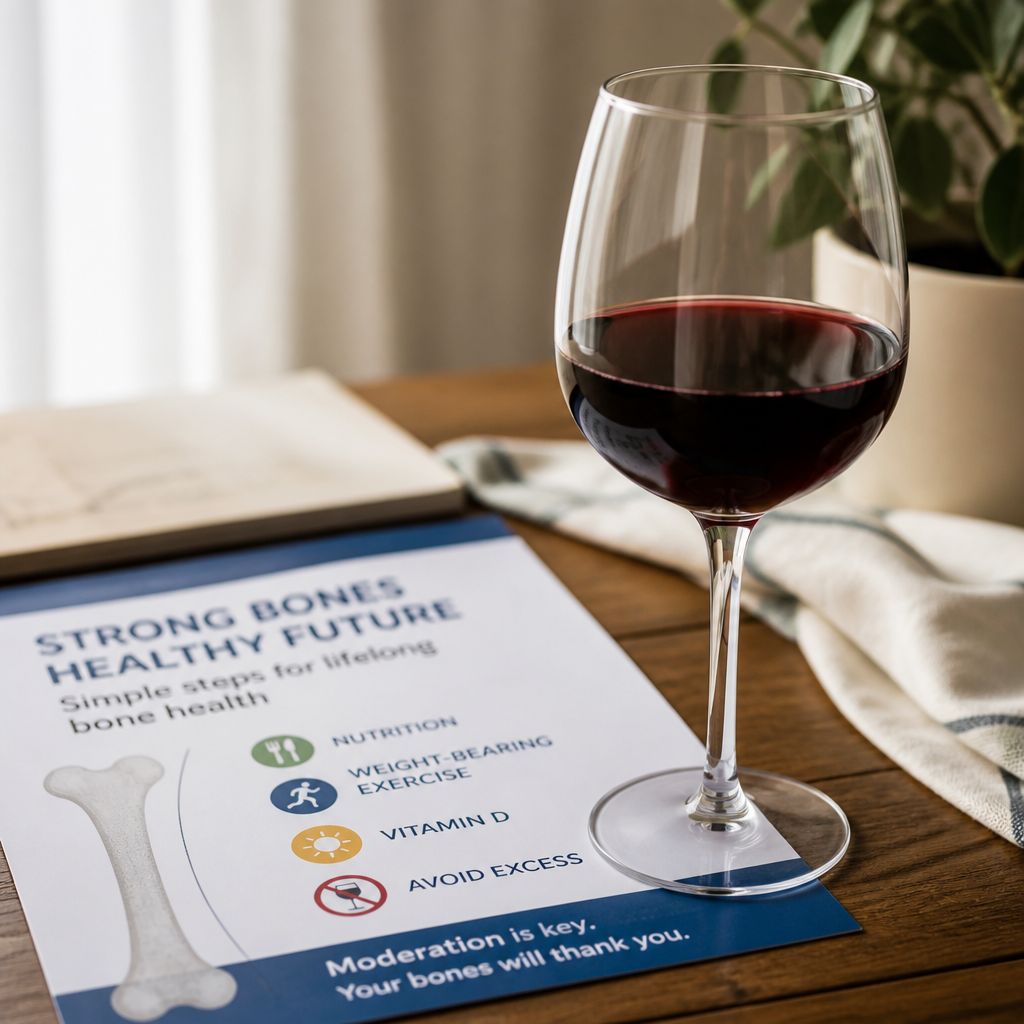
How Alcohol Affects Your Bone Density
Disclosure: We may earn a commission if you purchase through links on this page. This does not affect our editorial assessment. See our affiliate disclosure.
A glass of wine with dinner, a social drink on weekends — for many adults, moderate alcohol is a normal part of life. When it comes to bone health, the question isn’t black and white. The evidence suggests that light drinking may have a neutral or even slightly protective effect on bones, while heavy or chronic drinking is clearly harmful. Understanding where that line is matters.

How Alcohol Affects Bone Metabolism
Alcohol affects bone through several mechanisms. At higher intake levels, it directly suppresses osteoblast activity — reducing bone formation. It interferes with the liver’s ability to activate vitamin D, reducing calcium absorption. It increases urinary calcium excretion. It disrupts the hormonal environment: heavy drinking suppresses testosterone in men and disrupts estrogen levels in women, both of which are important for bone maintenance. It also impairs balance and reaction time, significantly increasing fall risk — the immediate cause of most fractures.
What the Research Shows
Studies consistently show that heavy drinkers — typically defined as more than 2–3 drinks per day — have lower bone mineral density and higher fracture rates than non-drinkers. This is well-established across multiple large observational studies.
The picture for light to moderate drinking (1 drink per day for women, up to 2 for men) is less clear. Some studies have found slightly higher bone density in moderate drinkers compared to non-drinkers, potentially due to alcohol’s mild estrogen-mimicking effects. However, the overall health risks of regular alcohol use — including cancer risk — mean this is not an argument for drinking for bone health.
The Fall Risk Factor
Even modest alcohol consumption impairs balance and coordination. For someone with osteoporosis or osteopenia, a fall from even standing height can cause a serious fracture. This is perhaps the most practical bone health reason to moderate alcohol — reducing fall risk is at least as important as preserving bone density itself.
Practical Guidance
If you drink, staying within the recommended limits (up to 1 standard drink per day for women, up to 2 for men) is unlikely to significantly impact bone health. Exceeding these consistently appears to cause measurable harm. Avoiding alcohol in the hours before activities that require balance, or before bed (where it disrupts sleep quality), is also worth considering.
For a complete bone health program that addresses nutrition, exercise, and lifestyle factors together, The Bone Density Solution offers a practical daily framework for adults over 50.
Related articles:
Osteoporosis Prevention: Habits That Make a Difference
Balance Exercises to Prevent Falls and Fractures
How Sleep Affects Bone Health
Sources and Further Reading
This article is for educational purposes only and does not replace advice from a qualified healthcare professional.
The Bone Density Solution
A structured program specifically designed for adults over 50 to improve bone density through diet, exercise, and lifestyle changes. Takes an integrated approach to reducing fracture risk.
Check The Bone Density Solution →Affiliate link — we may earn a commission at no extra cost to you. Full disclosure.
Disclosure: This article contains affiliate links. We may earn a small commission if you purchase through our links, at no extra cost to you.
Medical disclaimer: This article is for informational purposes only and is not medical advice. Consult your physician before changing supplements, medications or exercise routines, especially if you have been diagnosed with osteopenia or osteoporosis. See our full medical disclaimer.