
Bisphosphonates Side Effects: An Honest Look at the Trade-Offs
Bisphosphonates (alendronate, risedronate, ibandronate, zoledronate) are the most-prescribed first-line treatment for osteoporosis. They work. They also have a side effect profile that gets either over-emphasized in casual conversation or under-discussed in the doctor’s office. This piece sits in the middle.
What bisphosphonates actually do
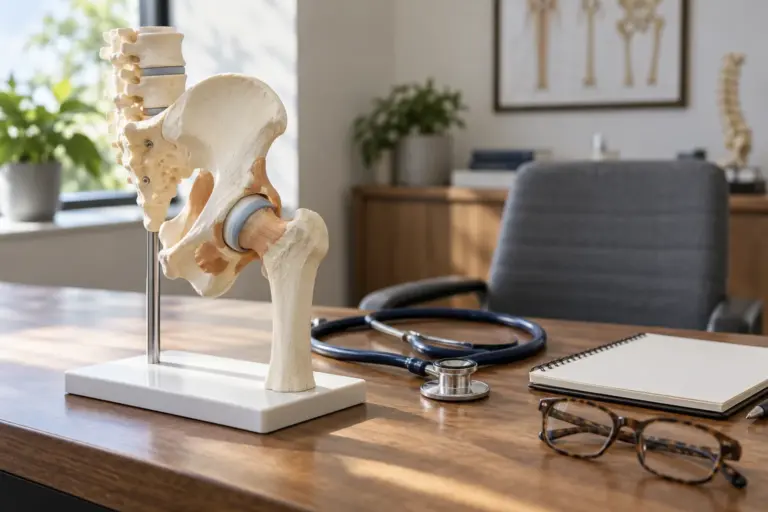
They bind to bone and inhibit osteoclasts — the cells that break bone down. By suppressing the breakdown side of the remodeling equation, they let the build side gain ground, producing measurable T-score improvements over 12-36 months.
The common side effects (most people)
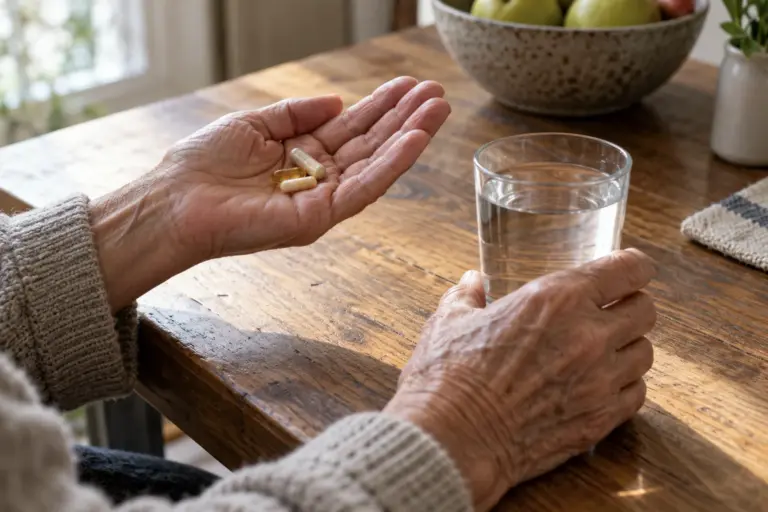
- Heartburn and oesophageal irritation — particularly with oral weekly forms. Often manageable by taking the pill correctly: full glass of water, upright posture for 30+ minutes after, on empty stomach.
- Muscle and joint aches — usually transient, often in the first few weeks.
- Flu-like symptoms after IV infusions (zoledronate) — common after the first dose, less common after subsequent doses.
The rare but serious side effects
- Osteonecrosis of the jaw (ONJ) — very rare in osteoporosis-dose bisphosphonate use (roughly 1 in 10,000 to 1 in 100,000 per year). Much higher in cancer-dose IV use. Risk factors: invasive dental work, poor oral hygiene, immune compromise. Have any planned dental extractions before starting, not after.
- Atypical femur fracture — extremely rare. Risk appears to climb after 5+ years of continuous use; one reason “drug holidays” exist.
- Severe esophageal events — usually preventable by proper administration. Switch to IV form if oral administration is intolerable.
The drug-holiday concept
Many guidelines now recommend a “drug holiday” after 3-5 years of bisphosphonate use, particularly if T-score has improved and fracture risk has dropped. The drug effects persist after stopping because bisphosphonates bind to bone. The holiday is for managing the rare-but-real long-term risks.
Putting the trade-off in context
For someone with established osteoporosis, the absolute fracture risk reduction from bisphosphonates is meaningful — roughly 50% relative reduction in vertebral fracture, 25-40% in non-vertebral. Vs the rare serious side effects (well under 1 in 1,000 person-years), the math typically favors treatment.
For someone with osteopenia and low FRAX-predicted risk, the calculus tilts the other direction. Side effects are not zero; benefits in lower-risk groups are smaller. This is where lifestyle protocols (loaded exercise, K2, protein) genuinely compete with medication; one packaged version of that lifestyle approach is the programme we looked at in detail.
FAQ
Can I take K2 alongside a bisphosphonate?
Generally yes. The mechanisms do not conflict: a bisphosphonate suppresses bone breakdown, while K2 helps direct absorbed calcium into bone. Many physicians actively encourage the K2 + bisphosphonate combination. Discuss with your prescriber.
Can I avoid heartburn from oral bisphosphonates?
The administration protocol is strict but works: take on empty stomach with full glass of water (200ml+), stay upright for 30-60 minutes, no other food or drink during that window. If still problematic, ask about IV zoledronate once yearly.
How long should I take a bisphosphonate?
Most guidance: re-evaluate at 3-5 years. If risk has dropped to lower range, consider a drug holiday. If risk remains high, continue.