Foods High in Vitamin K2 You Should Be Eating
Disclosure: This article contains affiliate links. We may earn a small commission if you purchase through our links, at no extra cost to you.
Vitamin K2 activates the proteins that direct calcium into bones and prevent it from depositing in arteries. It’s one of the most important and most overlooked nutrients in bone health — and unlike calcium or vitamin D, most people don’t have any idea how much they’re getting. Here’s where to find K2 in food and how to ensure you’re getting enough.
Why K2 Is Hard to Get from a Typical Western Diet
K1 (phylloquinone) is abundant in green vegetables and is the form that covers most official vitamin K recommendations. K2 (menaquinone) is different — it’s found primarily in fermented foods and certain animal products. Western diets are typically very low in K2 because they include few fermented foods and have moved away from traditional animal fat consumption (where K2 concentrates).
The Best Food Sources of Vitamin K2
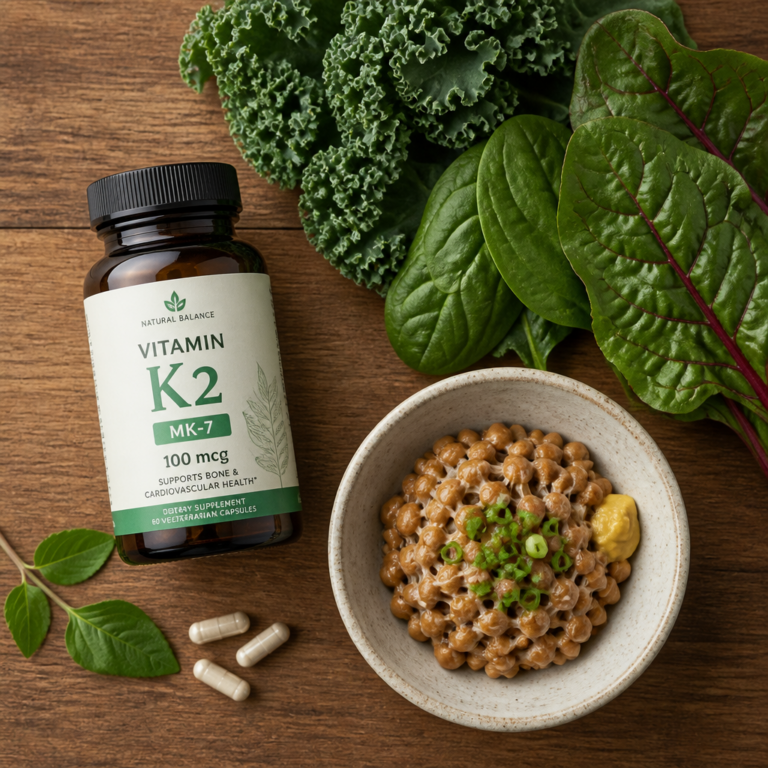
Natto (fermented soybeans): By far the richest dietary source of K2, containing 850–1000 mcg of MK-7 per 100g. One serving of natto provides more K2 than most supplements. It’s a staple of traditional Japanese cuisine and is strongly associated with the lower hip fracture rates seen in Japanese regions where natto consumption is high. The taste is distinctly pungent and the texture unusual — an acquired taste for most Western palates, but available in Asian supermarkets and online.
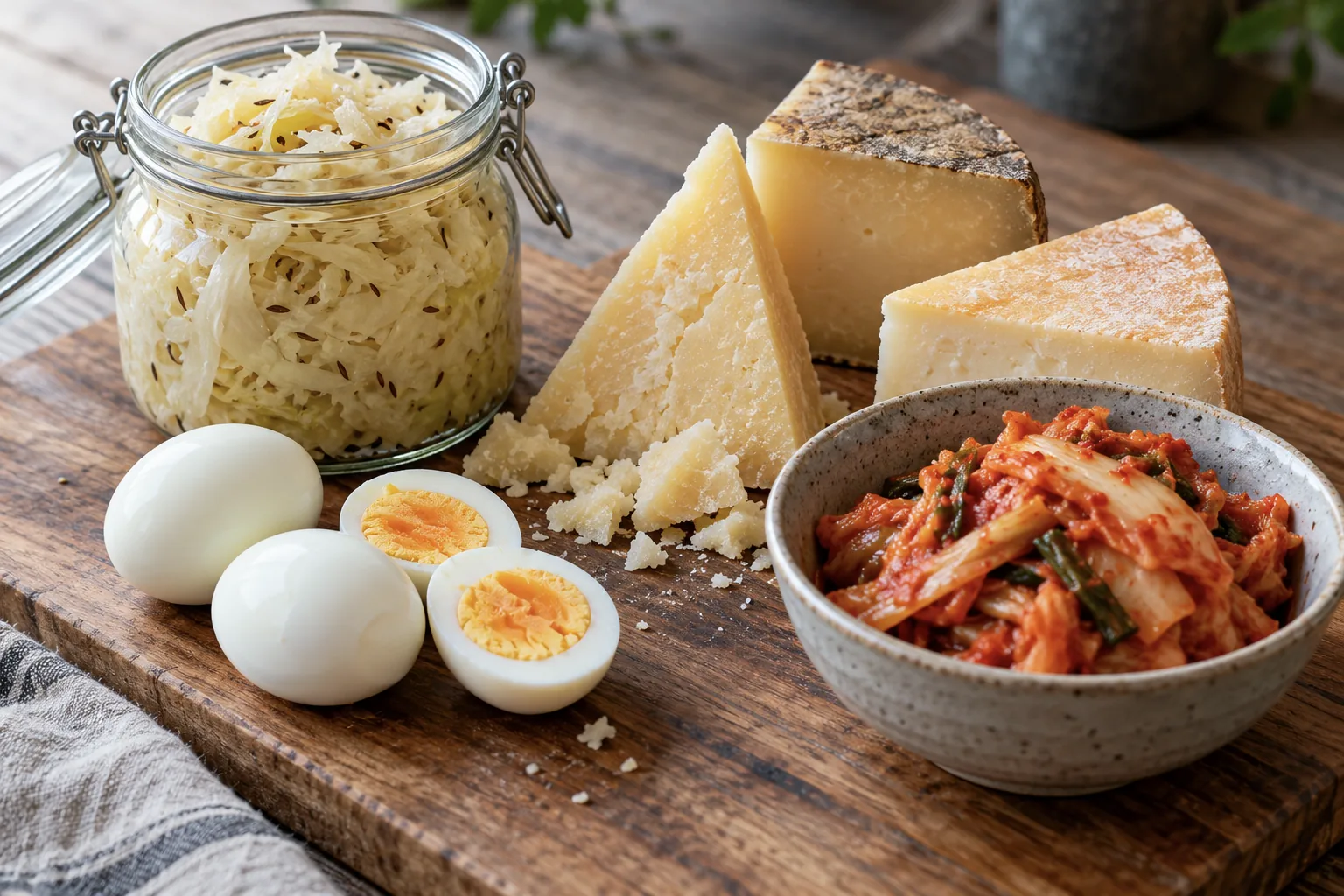
Hard cheeses (Gouda, Brie, Emmental): The best Western dietary sources of K2, particularly as MK-8 and MK-9. Gouda and Brie contain approximately 70–75 mcg per 100g. Eating cheese regularly as part of a Mediterranean-style diet provides a meaningful K2 contribution.
Egg yolks: Eggs from pasture-raised hens contain more K2 than those from conventionally raised hens. Approximately 15–30 mcg per yolk, primarily as MK-4. A useful daily contributor.
Chicken liver and dark meat: Organ meats, particularly liver, contain MK-4. Chicken liver provides approximately 14 mcg per 100g. Not a staple for many people, but worth including occasionally.
Grass-fed butter: Higher in K2 than grain-fed butter, providing approximately 15 mcg per 100g. A useful addition to cooking, but not a concentrated K2 source.
Fermented foods (sauerkraut, some aged cheeses): Some traditionally fermented products contain MK forms of K2, though amounts are highly variable depending on the fermentation process and bacterial strains involved.
Getting Enough K2 from Diet
Unless you eat natto regularly, getting therapeutic amounts of MK-7 from diet alone is difficult. Supplementation with 100–200 mcg of MK-7 daily is a practical solution for most people — particularly those not eating natto or significant quantities of hard cheese. Look for supplements specifically listing MK-7 (from natto), not just vitamin K or K1.
For a comprehensive bone health program covering all key nutrients and lifestyle factors, The Bone Density Solution provides structured guidance for adults over 50.
Related articles:
Vitamin K2 and Bone Health: one factor worth understanding
Calcium, Vitamin D & Beyond
The Best Foods for Stronger Bones