Diabetes and Bone Fragility: Why Normal DEXA Hides Higher Fracture Risk
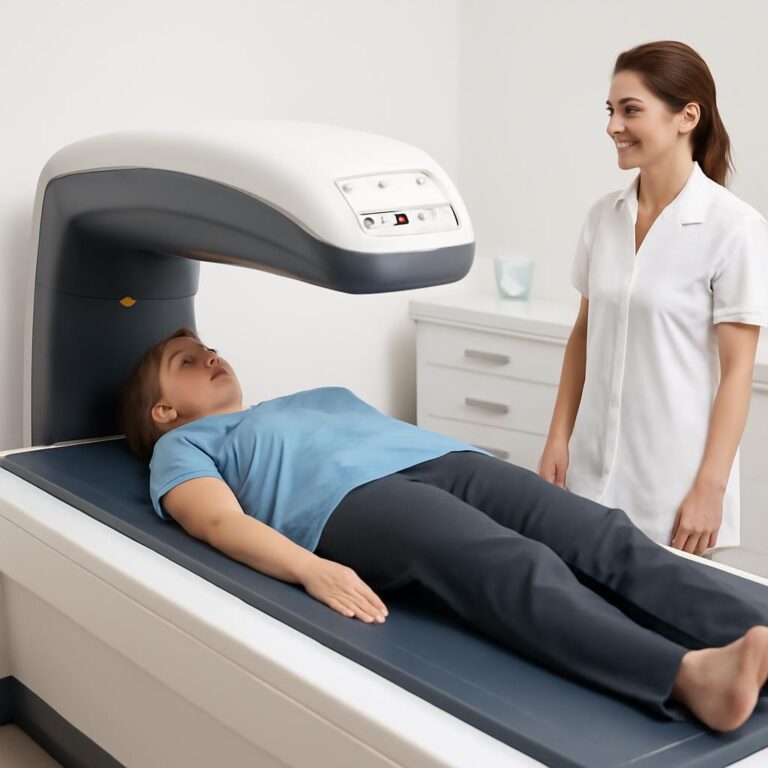
For decades the assumption was simple: more bone density equals less fracture. Type 2 diabetes complicates that assumption. People with type 2 diabetes generally have equal or higher bone mineral density on DEXA compared to non-diabetic peers — yet their hip fracture rate is roughly 30-70% higher depending on the cohort. The mismatch reveals something important about bone quality versus bone quantity.
What the data actually show
Multiple large cohort studies (the Rotterdam study, the Study of Osteoporotic Fractures, several Asian and European registries) have confirmed the pattern: in type 2 diabetes, BMD is similar or higher than controls, but hip and non-vertebral fracture rates are higher. The discrepancy widens with diabetes duration, insulin use, and poor glycemic control.
Why density and quality diverge in diabetes
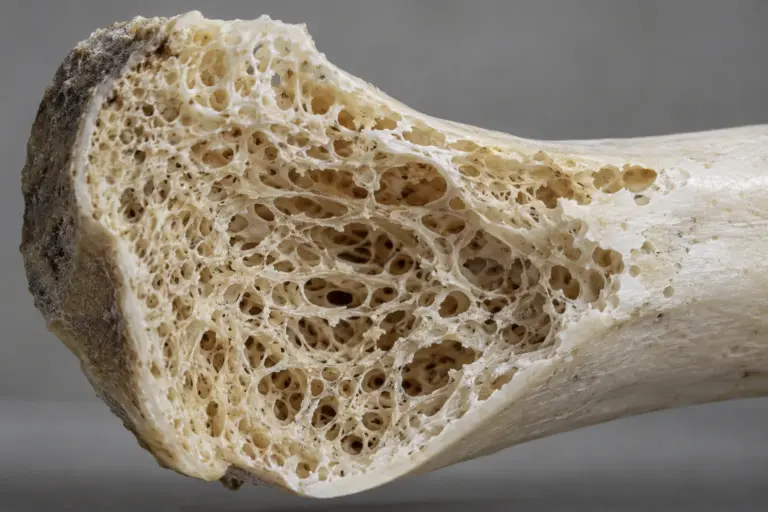
Several mechanisms: advanced glycation end-products (AGEs) accumulate in collagen, stiffening bone and making it less able to absorb impact. Insulin and IGF-1 signaling abnormalities reduce bone formation. Microvascular changes affect the bone’s blood supply. Falls are also more common in diabetes due to peripheral neuropathy, retinopathy, and orthostatic hypotension. The bone itself is more brittle and the person is more likely to fall on it.
Type 1 diabetes is a different picture
Type 1 diabetes typically presents with lower bone density and a 6-7 fold increase in hip fracture risk. The mechanism appears to be earlier-onset disease, lower peak bone mass attainment, and insulin’s role as an anabolic signal for bone. Type 1 patients should be screened more aggressively, often starting earlier than the standard postmenopausal screening age.
Implications for DEXA interpretation
A T-score of -1.0 in a person with type 2 diabetes may carry the fracture risk of a T-score of -2.0 in someone without diabetes. FRAX (fracture risk calculator) does not currently include diabetes as a separate risk factor, although recent updates have proposed adjustments. Until the calculator catches up, clinicians often informally adjust upward for diabetes.
Medications that complicate the picture
Thiazolidinediones (pioglitazone, rosiglitazone) are associated with increased fracture risk, particularly in postmenopausal women. SGLT2 inhibitors have had mixed data — some signals of increased fracture risk, others neutral. Metformin appears bone-neutral or possibly slightly protective. Insulin has a complex relationship with bone that is still being unraveled.
Practical takeaways
If you have type 2 diabetes, do not rely on a single “normal” DEXA to mean you are off the hook for fracture risk. Glycemic control, weight-bearing exercise, vision care, neuropathy management, and balance training all reduce real-world fracture risk even when bone density looks good on paper. Pulling those habits into one coordinated routine is the harder part; we examine one such six-month bone-protection protocol and where its evidence is thinner than the marketing suggests. Discuss FRAX results with your physician knowing that the score may underestimate your actual risk.
Frequently asked questions
Should I have a DEXA earlier if I have diabetes?
Many endocrinologists recommend DEXA starting at age 50 for diabetics, earlier than the standard 65 for women. There is no strict guideline, but the rationale is reasonable.
Does good blood sugar control reduce fracture risk?
Probably yes, indirectly. Stable glucose reduces fall risk (less neuropathy progression), reduces AGE accumulation, and supports overall musculoskeletal health.
Can osteoporosis medications be used in diabetics?
Yes — bisphosphonates, denosumab, romosozumab, and teriparatide have all been studied or used in diabetic populations. Choice depends on individual factors.
What is the single most useful intervention for a diabetic with a normal DEXA but worried about fractures?
Balance and strength training. Reducing falls is the most impactful single change because the bone is brittle and impact tolerance is what fails.