Weight Loss and Osteoporosis: Protecting Bone While You Slim Down
Disclosure: We may earn a commission if you purchase through links on this page. This does not affect our editorial assessment. See our affiliate disclosure.
The first time a doctor tells you your bones are thinning, and in the same visit suggests you could stand to lose a few pounds, the advice can feel like it is working against itself. Drop the weight to protect your heart and your knees, sure — but doesn’t losing weight also thin your bones? If you have osteoporosis or osteopenia and a scale that reads higher than you’d like, that contradiction is real, and it deserves a straight answer rather than a shrug.
Here is that answer. You can lose weight safely with osteoporosis or osteopenia. What decides whether you come out ahead or behind is not the number on the scale but the way you get there. Lose slowly, with plenty of protein and regular resistance training, and your skeleton comes along for the ride in reasonable shape. Crash diet your way down, and you strip off muscle and bone right alongside the fat. The rest of this piece is about the difference between those two roads — and how to make sure you’re on the right one.
Why the scale and your skeleton can pull in opposite directions
It helps to remember that bone is living tissue, not the inert scaffolding it looks like in a diagram. It responds to what you ask of it. Carry more weight and your skeleton hauls a heavier load with every step, so it holds onto more bone mass to do the job. Take that weight away and the load eases — and bone, ever efficient, tends to shed some of what it no longer needs to carry.
That drop in mechanical loading is only part of the story. Fat tissue produces small amounts of estrogen, and estrogen helps protect bone, particularly after menopause; lose fat and you lose a little of that cushion too. Cutting calories can also mean fewer of the nutrients bone is built from, and when weight comes off fast, it usually drags muscle down with it — the very muscle whose daily pull keeps bone strong. Put those forces together and you can see why the research is consistent: intentional weight loss tends to nudge bone density down and fracture risk up, especially at the hip, and the faster and more extreme the loss, the steeper the cost. That is exactly why method matters more than almost anything else, a point we dig into further in our look at rapid weight loss and bone loss.
The awkward truth about weight and bone density
Let’s say the uncomfortable part out loud: heavier people generally have denser bones. Their skeletons have adapted to the load, and their extra fat tissue tends to mean more circulating estrogen. It’s one of the reasons being underweight is a well-recognized risk factor for osteoporosis in the first place. So if your bones are already thin, doesn’t losing weight just make a bad situation worse?
It can — but only if you go about it carelessly, and that is a fixable problem, not a reason to stay overweight. Excess weight comes with its own long list of hazards: diabetes, heart disease, harder-hitting falls. And a heavier body that goes down generates more force on impact, which is not what you want with fragile bones. So the goal was never to avoid losing weight. It’s to lose it in a way that guards, and where possible builds, the muscle and bone strength that keep you upright and unbroken. The link between body size and skeletal strength is messier than “more weight, safer bones,” and we untangle it further in our piece on body weight and bone density. For now, hold onto this: someone with osteoporosis can absolutely lose weight, but bone protection has to be a deliberate part of the plan, not something you hope happens by accident.
How to lose weight without giving up bone
The good news is that a bone-safe approach doesn’t ask for anything heroic. If anything, it asks for the opposite of heroics — patience, protein, and a couple of honest strength sessions a week. Here are the levers that matter most.
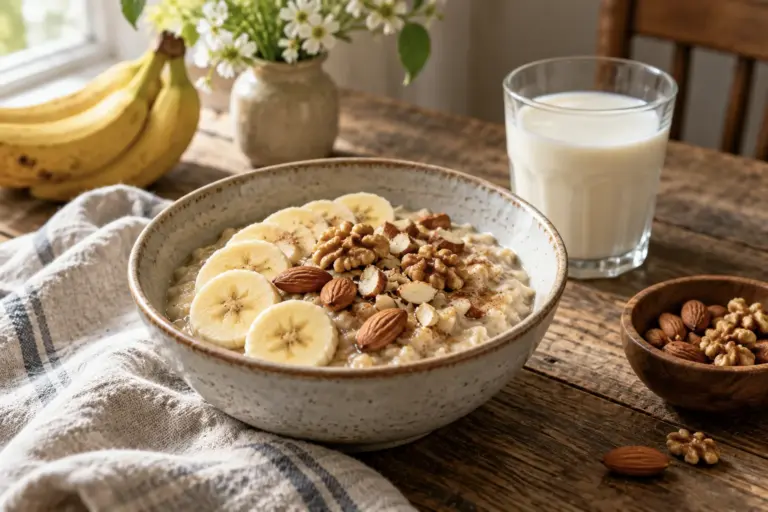
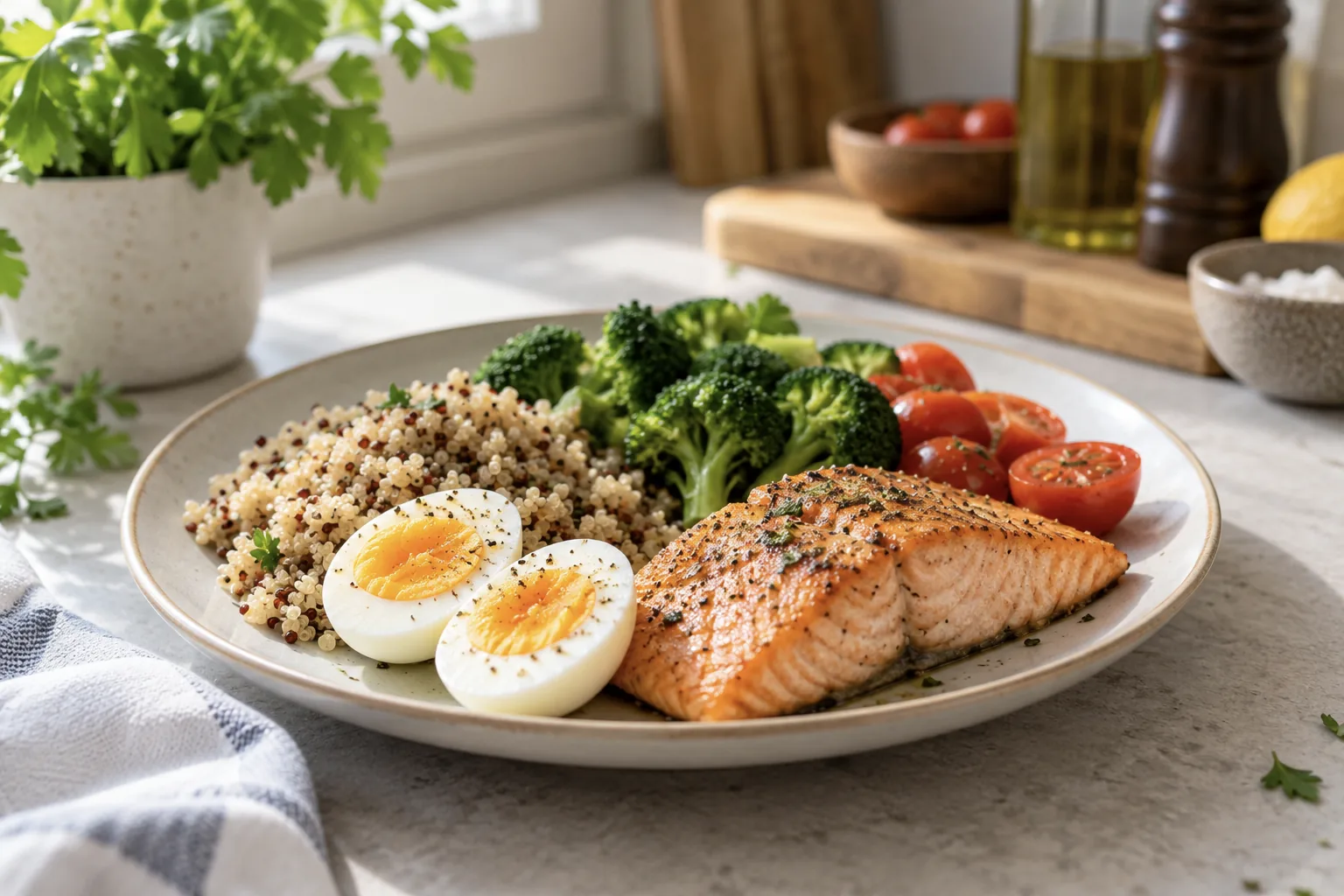
Build every meal around protein. Protein pulls double duty when you’re cutting calories: it defends your muscle from being broken down for fuel, and it supplies the raw material for collagen, which makes up roughly a third of bone. Skimp on it in a deficit and your body starts dismantling muscle — and less muscle means less pull on bone. For adults past 50, many experts suggest somewhere around 1.0 to 1.2 grams of protein per kilogram of body weight a day, with some evidence for going a bit higher, toward 1.2 to 1.5 g/kg, while you’re actively losing. Spread it across the day rather than piling it into dinner, and lean on eggs, dairy, fish, poultry, lean meat, tofu, beans, and lentils. And ignore the old myth that protein leaches calcium from your bones — adequate protein supports them, as we lay out in our guide to protein and bone health.
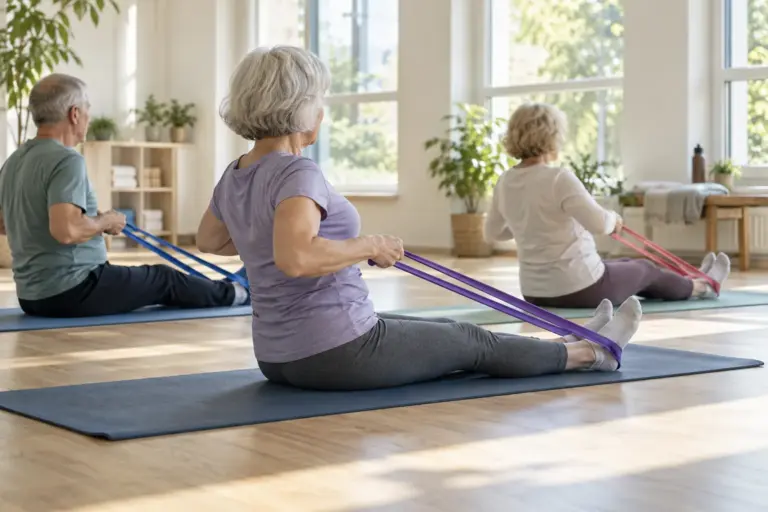
Treat resistance training as non-negotiable. If you do only one thing on this whole list, make it this. Lifting weights, pulling on resistance bands, or working through bodyweight moves puts controlled stress on bone, and that stress is a signal for bone to stay strong — it partly offsets the loading you lose by weighing less. It also protects the muscle that guards your metabolism and, just as importantly, your balance. Two sessions a week hitting the major muscle groups is a sensible floor, with weight-bearing cardio like brisk walking stacked on top. If you’re new to lifting or your osteoporosis is significant, a physical therapist or a trainer who knows bone conditions can keep you away from the movements — deep forward bends, heavy twisting — that raise fracture risk.
Don’t let calcium and vitamin D slip. Eating less makes it easier to come up short on the nutrients bone depends on. Most adults over 50 need roughly 1,200 mg of calcium and 800 to 1,000 IU of vitamin D a day, ideally from food first — dairy, fortified plant milks, canned fish with the bones in, leafy greens — with supplements filling whatever gap is left. A calorie deficit is exactly when this gets easy to neglect, so be deliberate about it, and ask your doctor whether a supplement makes sense for you rather than guessing.
Go slow, and mean it. Pace is one of the most powerful levers you actually control. Losing something like half a pound to a pound a week gives bone and muscle time to adjust and is far kinder to your skeleton than a dramatic plunge. It’s also the pace that tends to stick, which spares you the losing-and-regaining cycle that may do its own quiet damage to bone. Which brings us to the flip side: the crash diet is the enemy here. Very-low-calorie plans, long unsupervised fasts, and fad regimens that ban whole food groups strip muscle, shortchange protein and calcium and vitamin D, and drive fast bone loss. The same caution extends to the newer weight-loss medications — rapid drug-driven loss can accelerate bone and muscle decline if protein and strength work fall by the wayside, something we cover specifically in our article on Ozempic and bone loss.
If you’d like a single structured plan that ties diet, exercise, and daily habits together for bone health, one option built for adults over 50 is The Bone Density Solution — the structured protocol, based on the materials we have seen. Useful as a framework to work alongside your doctor’s guidance, never as a replacement for it.
Keep an eye on two things
Bone changes are invisible day to day, which is exactly why a little tracking pays off — it turns a silent process into something you can see coming. Two measures are worth watching. The first is your bone density itself, read by a DEXA scan, the standard tool for the job. If you’re dropping a meaningful amount of weight and already have osteoporosis or osteopenia, ask your doctor how often you should be scanned — frequently that’s every one to two years — so any slide gets caught and addressed early rather than discovered after a break.
The second is your muscle, which is the best everyday proxy you’ve got for whether the weight is coming off the right way. If you’re getting weaker, losing your grip strength, or watching muscle visibly waste, take it as a warning that your approach is too aggressive or too low in protein. Feeling stronger as the weeks pass is the opposite signal — a sign you’re shedding fat while holding onto the lean tissue and bone that matter.
Where your doctor comes in
With thin bones, weight loss stops being a solo project. Talk to your doctor before you start, and especially before you attempt a large loss, a very-low-calorie plan, or a weight-loss medication. A physician can order a baseline DEXA scan, check where your calcium and vitamin D stand, flag any medications you take that affect bone, and pull in a dietitian or physical therapist to round out the plan. Reach out promptly, too, if you notice new back pain, a loss of height, a fall, or anything that feels like it might be a fracture. And keep one thing in perspective: no diet, supplement, or program cures osteoporosis. The right approach can slow bone loss, shore up your strength, and lower your fracture risk — but the treatment decisions themselves belong with your healthcare team.
Sources
- PubMed — research on weight loss and bone mineral density
- NIAMS — Osteoporosis overview
- Bone Health & Osteoporosis Foundation (BHOF)
- Mayo Clinic — Osteoporosis
The Bone Density Solution
A structured program designed for adults over 50 to support bone density through diet, exercise, and lifestyle changes — an integrated approach to reducing fracture risk. Best used alongside, not instead of, professional medical care.
Check The Bone Density Solution →Affiliate link — we may earn a commission at no extra cost to you. Full disclosure.
Medical disclaimer: This article is for informational purposes only and is not medical advice. See our full medical disclaimer.