Exercises to Avoid With Osteoporosis (and What to Do Instead)
When Carol was diagnosed with osteoporosis at sixty-three, the first piece of advice she got — from a well-meaning friend, not a clinician — was to “just do Pilates.” So she signed up for a mat class at the community center, lay down on the floor with everyone else, and dutifully curled up into the roll-ups and the deep forward folds the instructor called out. Two weeks in, she reached down to touch her toes and felt a sharp, breath-stealing pain shoot across her mid-back. It turned out she had a small compression fracture in one of her vertebrae. She hadn’t fallen. She hadn’t lifted anything heavy. She had simply bent forward, hard, the way she’d been told was good for her.
Carol’s story is more common than it should be, and it points to something worth getting straight from the start: the problem is almost never exercise itself. The problem is a handful of specific movements that put fragile bone under exactly the kind of load it can’t handle. If you understand which movements those are and why they’re risky, you can keep moving — vigorously, even — without spending your days afraid of your own spine.
Why forward bending is the movement that gets people hurt
To see why a toe-touch can crack a bone, picture a single vertebra. It’s a small, roughly cylindrical block of bone, and in osteoporosis the honeycomb interior of that block has thinned out, leaving the walls doing more work with less material. When you stand tall, the load from your upper body presses down through the middle of each vertebra fairly evenly. But when you bend forward from the waist — a deep spinal flexion, in the clinical phrasing — you tip that load forward onto the front edge of the vertebra. That front edge is the weakest part. Bend far enough, or add momentum or a weight to the movement, and the front of the bone can quietly collapse. This is called a vertebral compression fracture, and the unsettling thing about it is that it often happens without a dramatic event. No fall. Just a bend.
This is why the old fitness staples so many of us grew up with are the ones to retire. Sit-ups and crunches pull you into repeated, forced flexion. So do toe-touches, deep forward folds, and any move that rounds your back to reach the floor. A landmark study out of the Mayo Clinic decades ago found that among people with osteoporosis who did spinal flexion exercises, the large majority went on to develop new vertebral fractures — a far higher rate than those who did extension-based work instead. The finding has held up, and it’s why physical therapists who specialize in bone health will gently but firmly steer you away from anything that curls your spine forward under load.
The second category of risk is heavy, forceful twisting of the spine — the wringing-out motion. A rotational golf swing at full power, a weighted Russian twist, a yoga posture that cranks your torso around against resistance: these shear the vertebrae in a direction they’re not built to resist once bone is thin. Gentle rotation to look over your shoulder is fine. It’s the loaded, forced version that’s the concern.
The third category is anything with a real chance of falling. A fracture needs two ingredients — fragile bone and force — and a fall delivers force in abundance. That doesn’t mean you avoid everything that challenges your balance; in fact, the opposite is true, and we’ll come back to it. It means you’re thoughtful about high-speed, high-impact, unstable activities where a stumble sends you to the floor: think icy trail runs, fast downhill skiing, or a bosu-ball routine you’re not ready for.
The moves to rethink, at a glance
Here is the short version — the movements that most often cause trouble, why they do, and what to reach for instead. Think of the right-hand column not as a consolation prize but as the genuinely better training choice.
| Risky movement | Why it’s a problem | Safer swap |
|---|---|---|
| Sit-ups and crunches | Repeated forced forward flexion loads the weak front edge of the vertebrae | Planks and dead bugs, which brace the core without bending the spine |
| Toe-touches and deep forward folds | Deep flexion under the weight of your own upper body | Hip hinges with a flat back; hamstring stretches done lying on your back |
| Loaded or fast spinal twists | Rotational shear the thinned vertebrae can’t resist | Gentle, unweighted rotation; anti-rotation holds like the Pallof press |
| High-impact jumping or bounding (if frail or with prior fractures) | Sudden compressive force on vulnerable bone, plus fall risk | Brisk walking, stair climbing, and low, controlled hops only if cleared |
| Fast, unstable activities with high fall risk | A fall supplies the force a fragile bone can’t absorb | Supervised balance work on stable ground; strength training |
The reassuring flip side: your bones want to be worked
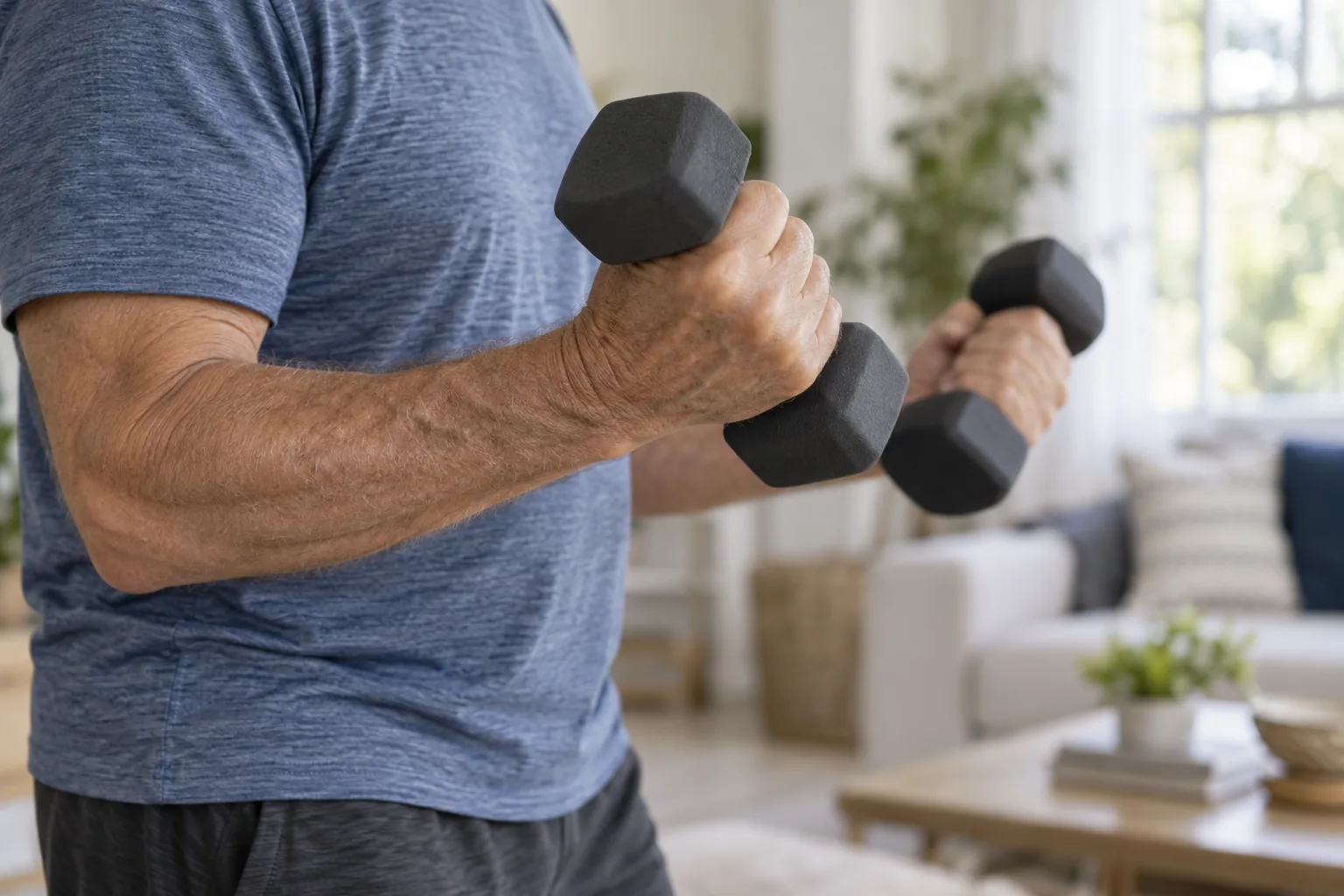
If you take away one idea from all of this, let it be this one: loading your bones is protective, not dangerous. Bone is living tissue, and it responds to demand. When a muscle pulls hard on the bone it’s attached to, and when your skeleton bears weight against gravity, your body reads that as a signal to lay down more bone or at least hold onto what it has. Take the load away — bed rest, a sedentary life, a spell in zero gravity — and bone melts away with startling speed. The astronauts taught us that. So the goal after a diagnosis is not to protect your bones by doing less. It’s to protect them by doing the right things, harder.
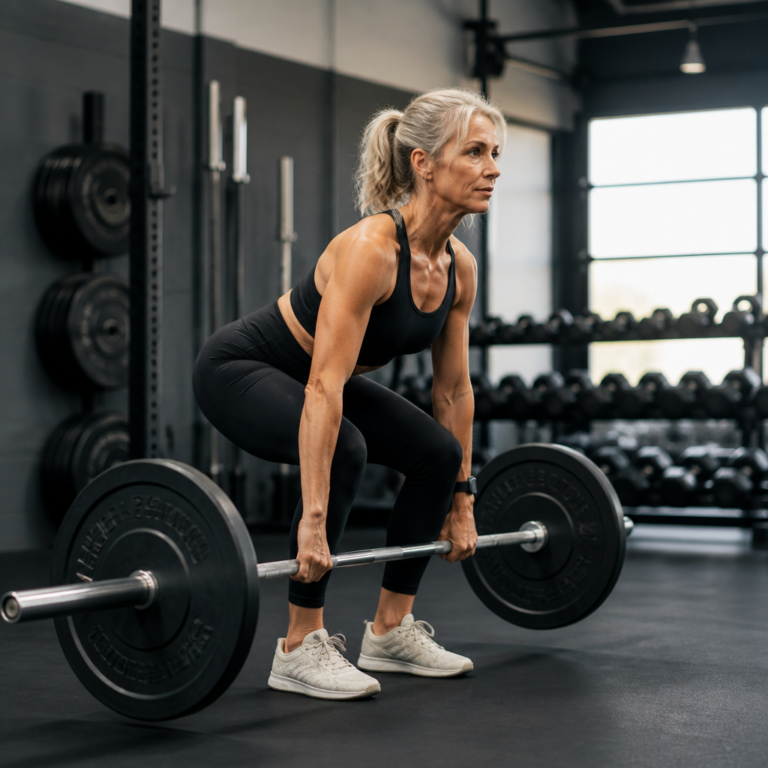
The two forms of exercise with the strongest evidence behind them are progressive resistance training and weight-bearing activity. Lifting weights — real, challenging weight, not just the pastel dumbbells — puts the kind of muscular tension on your skeleton that stimulates bone. Weight-bearing movement, meaning anything you do on your feet against gravity, from brisk walking to climbing stairs to dancing, does the same through impact and load. We go deep on the how-to in our guides to strength training after 50 for bone health and the best exercises to improve bone density after 50, and if you’re specifically worried about your back, our piece on spine-safe exercises for osteoporosis walks through moves that build strength without flexing the vertebrae.
Balance deserves its own mention, because it’s the part people skip. Preventing the fall is often more important than any single exercise, since the fall is what turns thin bone into a broken hip. Standing on one leg while you brush your teeth, heel-to-toe walking down the hallway, tai chi — these unglamorous drills measurably cut fall risk over time. Our guide to balance exercises for fall prevention lays out a simple progression you can start at the kitchen counter this week.
This article contains affiliate links; we may earn a commission at no extra cost to you. See our disclosure. If pulling all of this together into one coherent weekly plan feels daunting, a structured program can take the guesswork out of what to do on which day and how to progress safely. The Bone Density Solution lays out a bone-safe routine alongside diet and lifestyle guidance built for adults over 50, which many readers find easier to stick with than assembling a program from scratch. Use it as a framework to bring to your own doctor or physio, not as a replacement for their advice.
What about Pilates and yoga — are they off the table?
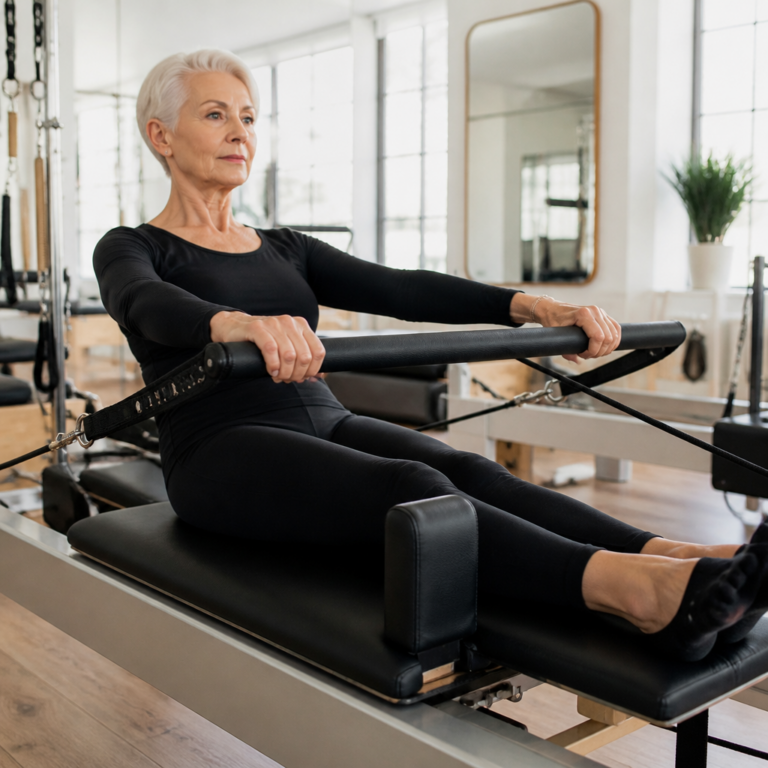
Not at all, and this is where Carol’s story could have gone differently. The trouble in her class wasn’t Pilates; it was the specific exercises and the fact that nobody had modified them for a body with fragile bone. Both Pilates and yoga contain movements that are wonderful for posture, core strength, and stability — and both also contain deep-flexion and heavy-twist postures that someone with osteoporosis should skip or modify. A roll-up, a seated forward fold, a deep spinal twist: these are the ones to leave out. Extension work, gentle standing poses, and strengthening holds are usually fine.
The deciding factor is almost always the instructor. Someone trained in bone health will offer you a modification before you have to ask. Someone teaching a general class may cue the whole room into a movement that’s wrong for you, and it’s on you to opt out. Because this comes up so often, we’ve written dedicated guides on making Pilates safe with osteoporosis and on the specific yoga poses to avoid with osteoporosis — worth reading before your next class so you know which cues to quietly ignore.
The Bone Density Solution
A structured program designed for adults over 50 to support bone density through diet, exercise, and lifestyle changes — an integrated approach to reducing fracture risk. Best used alongside, not instead of, professional medical care.
Check The Bone Density Solution →Affiliate link — we may earn a commission at no extra cost to you.
Where a professional comes in
Everything here is a starting framework, not a prescription, and the more your situation departs from the average the more that matters. If you’ve already had a vertebral fracture, or your bone density scores are severe, or you’re managing other conditions that affect balance and strength, the rules of thumb need tailoring to your body. A physical therapist who works with bone health can watch you move, tell you how much load is safe to add and how fast, and catch the compensations you can’t see yourself. That kind of individualized guidance is worth far more than any list of forbidden exercises, including this one.
Carol, for what it’s worth, came back from her fracture. She found a trainer who understood bone, swapped her crunches for planks and her forward folds for hip hinges, and started lifting weights that would have surprised her a year earlier. She still does a version of Pilates — just not the parts that hurt her. The lesson she took wasn’t that she’d been given bad advice about moving. It was that “just do something” isn’t the same as doing the right thing, and that with the right information she could be strong without being fragile. You can be, too.
This article is for general education and is not a substitute for personalized medical advice; please talk with your doctor or a physical therapist before starting or changing an exercise program, and see our full medical disclaimer.