
How Fast Bone Disappears During Immobilization (And How to Slow It)
Bone is alive, adaptive, and constantly remodeling. When the loads come off, bone density drops fast. Studies of bed rest, casting, paralysis, and spaceflight all converge on a number: about 1-2% of bone mass per week during complete immobilization, with the bone of the immobilized site losing fastest. After 50, the recovery from this loss is slower and less complete than in younger people. Understanding the magnitude helps inform decisions during recovery from injury, illness, or surgery.
The bed-rest data
Long-duration bed-rest studies (typically 60-90 days of strict head-down bed rest, used as ground-based analogues for spaceflight) show consistent BMD declines: 1-2% per month at the hip, 1-1.5% per month at the lumbar spine, and up to 3-4% per month at the calcaneus. Recovery after returning to upright activity takes 2-3 times longer than the loss took.
Cast immobilization effects
A 6-week cast on the lower limb produces approximately 5-10% bone density loss at the calcaneus and 2-4% at the distal tibia. Most recovers within 12-24 months in younger adults; recovery is slower and less complete after 50. This is one reason that prolonged casting is increasingly avoided when functional bracing or partial weight-bearing is feasible.
The mechanism
Bone responds to mechanical loading through osteocyte signaling. When loading drops below a threshold, the resorption-formation balance shifts toward net resorption. The threshold is not zero — partial weight-bearing maintains a significant fraction of normal loading and substantially reduces bone loss. This is why early partial weight-bearing after fractures is preferred over strict non-weight-bearing whenever possible.
What slows the loss during immobilization
Three interventions have evidence. First, isometric resistance exercise of the surrounding muscles (when not contraindicated) maintains some loading signal even without weight-bearing. Second, vibration-platform use can preserve bone in some studies. Third, in spaceflight, the Advanced Resistive Exercise Device and bisphosphonate prophylaxis combined have substantially blunted the bone loss that previously plagued long-duration missions. For most patients, the practical version is: move what you can, isometric where you can, weight-bear as early as the team allows.
Hip fracture as the prototype
Hip fracture is the most common scenario where extended immobilization happens after 50. Modern protocols emphasize same-day or next-day surgery and weight-bearing-as-tolerated within 24-48 hours. This is not because the bone has healed — it is because the systemic consequences of immobilization (rapid bone loss, deconditioning, pneumonia, DVT) outweigh the local risks of early loading in most cases.
Recovery numbers
After 6 weeks of immobilization, bone density recovery to baseline typically requires 6-12 months of return to normal activity in younger adults. After 50, recovery is partial, with residual 1-3% deficit common at 12 months. This is one reason that recurrent or prolonged immobilization episodes (multiple surgeries, repeated hospitalizations) progressively erode bone reserves.
Frequently asked questions
How much bone do I lose during a 2-week hospitalization?
Approximately 0.5-1% of lumbar bone density and 0.3-0.5% of hip density on average — measurable but not dramatic. Longer admissions compound these numbers.
Can I exercise in bed to prevent bone loss?
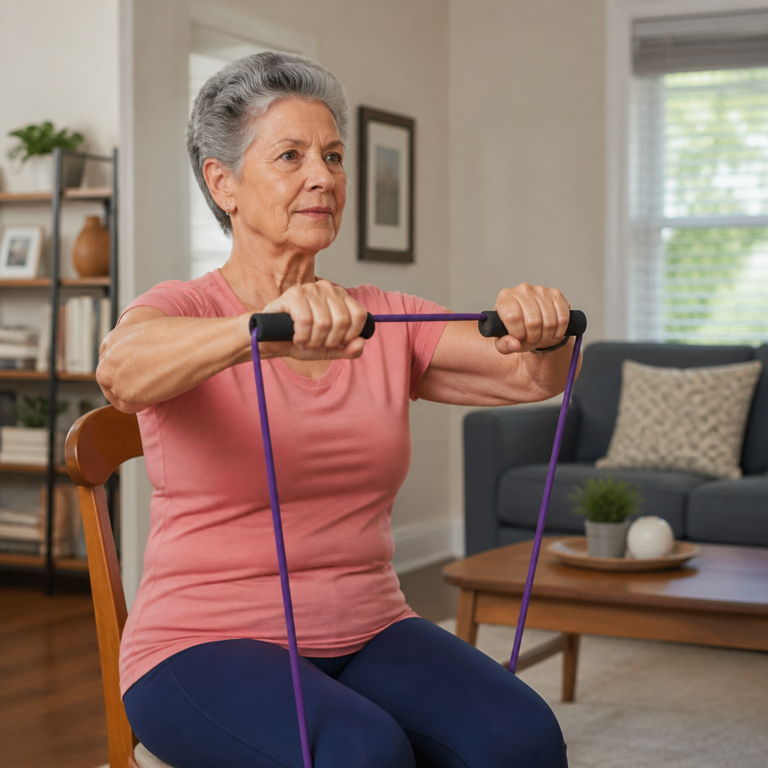
Yes — isometric exercise, leg presses against the bed frame, and movement of the unaffected limbs all help. Talk to a physical therapist for specific exercises matched to your condition.
Why is recovery slower after 50?
Bone formation rates are slower after 50, and the anabolic signals (sex hormones, IGF-1, mechanical loading sensitivity) are reduced. The same amount of physical activity produces less bone gain than at 30.
Should I take a bisphosphonate during planned immobilization?
For most patients, no — the duration is too short and the side-effect profile not justified. For specific scenarios (long ICU stays, spinal cord injury, prolonged paralysis), some specialists do consider prophylactic bisphosphonates. Discuss with the medical team.
Related reading: The Bone Density Solution review · Vitamin K2 and bone health