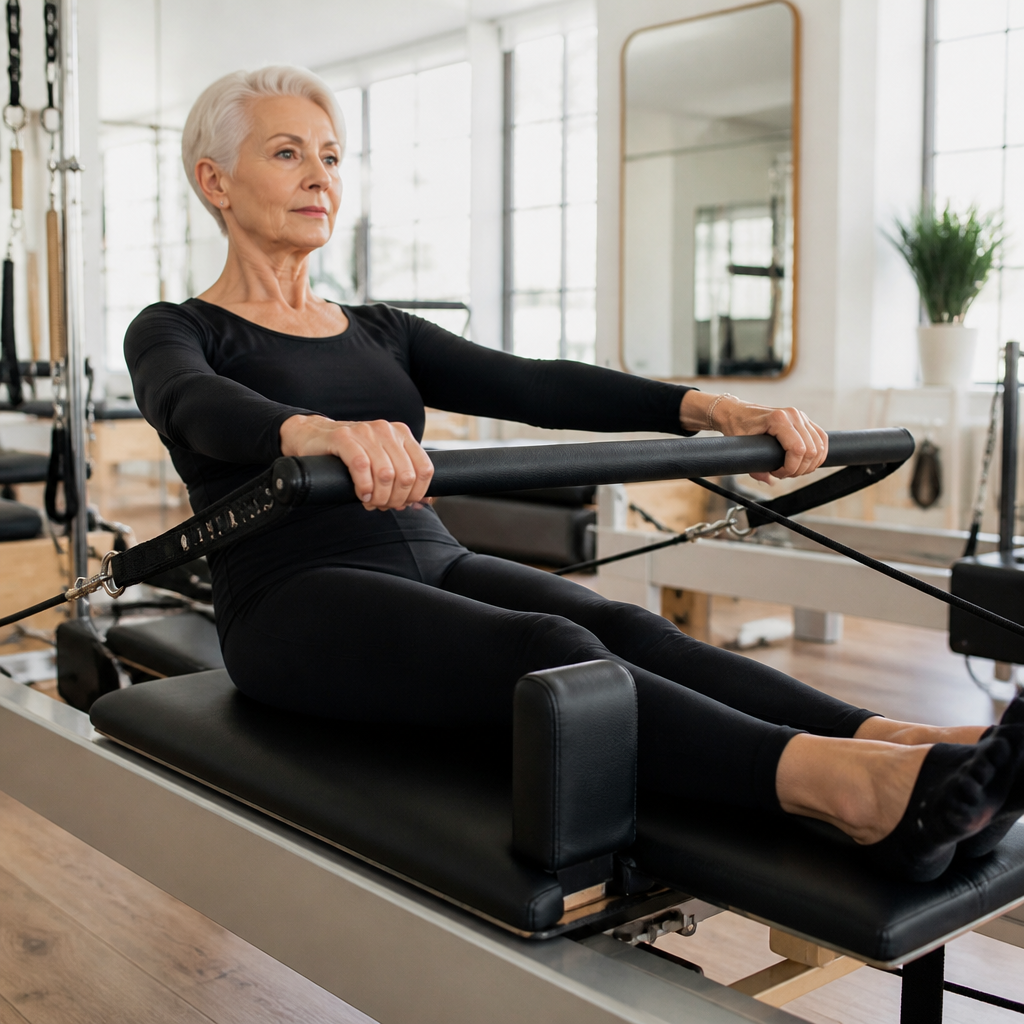
Pilates for Bone Health: Benefits and Limitations
Disclosure: This article contains affiliate links. We may earn a small commission if you purchase through our links, at no extra cost to you.
Pilates has a devoted following, and it’s easy to understand why. It builds deep core strength, improves posture, increases body awareness, and is accessible to people with a wide range of fitness levels and physical limitations. For bone health, pilates offers genuine benefits — alongside some important limitations that are worth understanding.
What Pilates Does Well for Bone Health
Core and spinal strength: Pilates systematically strengthens the deep stabilizing muscles of the spine and trunk. This is directly relevant to bone health — a strong core supports the vertebrae, improves posture, and reduces the compressive forces that can cause vertebral fractures in people with osteoporosis.
Posture improvement: Forward-stooped posture (kyphosis) is associated with vertebral fractures and increases fall risk. Pilates directly addresses postural alignment and the muscle imbalances that contribute to kyphosis.
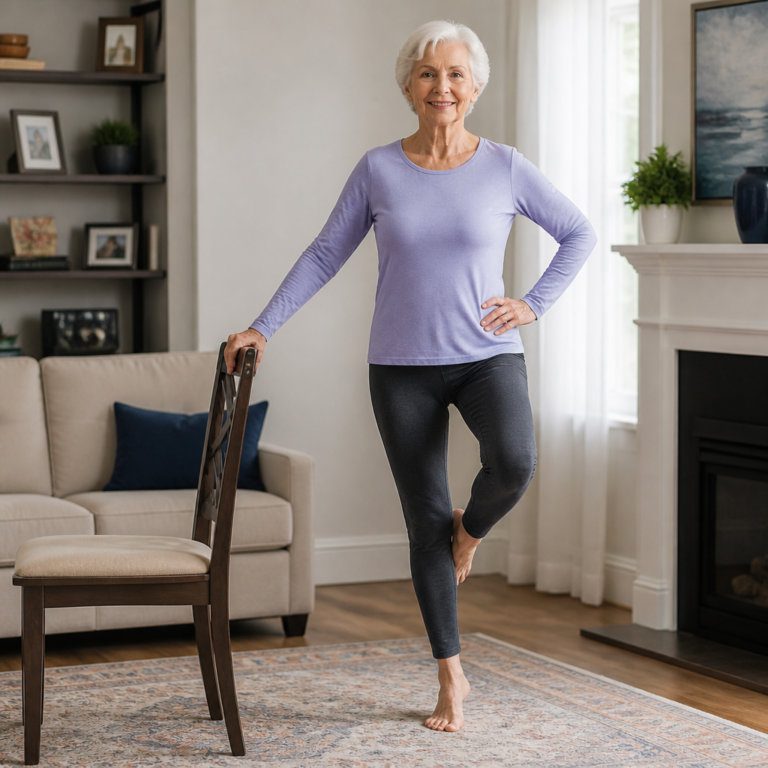
Body awareness and proprioception: Pilates training enhances the body’s awareness of its position in space — a key component of balance and fall prevention. Regular practitioners often show improved balance and coordination.
Low injury risk: Pilates is generally safe for people with osteoporosis when taught by an instructor familiar with modifications needed for this population.
The Limitations for Bone Density
The main limitation: most pilates exercises don’t provide sufficient mechanical loading to significantly stimulate bone formation — particularly at the hip and femoral neck, the sites of greatest fracture risk. Mat pilates involves little axial loading of the spine and minimal loading of the hip bones. Equipment-based pilates (reformer) can provide more resistance, but still doesn’t replicate the bone-loading effects of progressive resistance training with external weights.
Research on pilates and bone density has shown mixed results — some studies show modest benefits, others show no significant effect on bone mineral density. The evidence is not strong enough to recommend pilates as a primary bone-building exercise.
The Best Role for Pilates
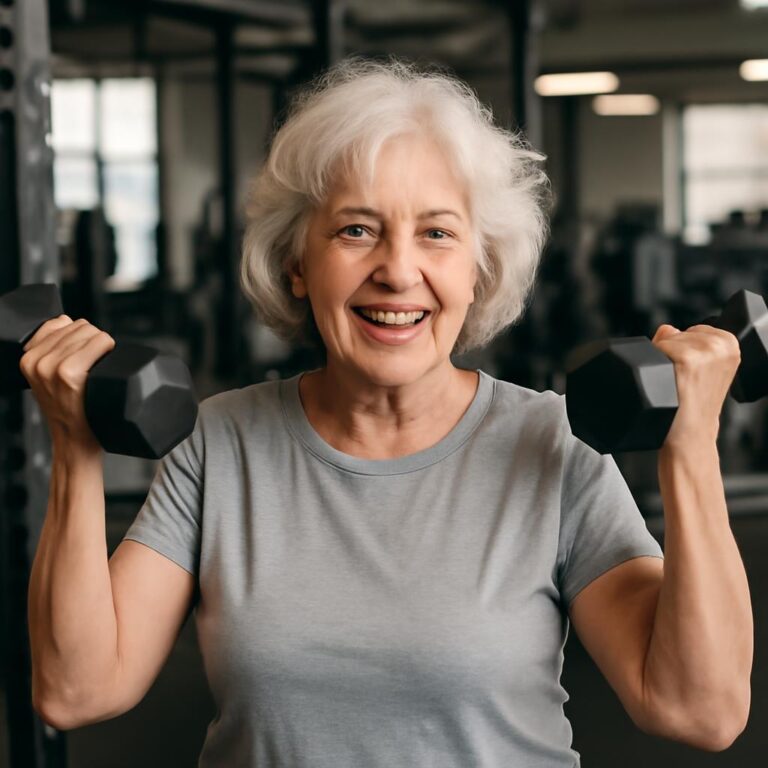
Pilates works best as a complement to weight-bearing and resistance exercise — not a replacement. It fills the gaps those exercises leave: core stability, postural alignment, flexibility, and proprioception. A combination of resistance training (2–3 days/week), weight-bearing cardio (most days), and pilates (2 days/week) covers all the bases comprehensively.
For a complete bone health program, The Bone Density Solution integrates exercise and lifestyle guidance for adults over 50.
Related articles:
Yoga for Bone Health
Strength Training After 50
Balance Exercises to Prevent Falls and Fractures After 50
Who Should Be Careful With Pilates for Bone Health
Pilates can be highly beneficial for posture, core strength, and fall prevention, but some modifications are important for people with osteoporosis:
- Avoid exercises that involve strong spinal flexion (rounding the back, rolling up from flat), as these increase vertebral fracture risk
- Deep spinal rotation should be performed with reduced range of motion or avoided entirely with severe osteoporosis
- Anyone with a recent vertebral fracture should get medical clearance before starting Pilates
- Seek out an instructor trained in osteoporosis-safe modifications — not all Pilates teachers have this background
When adapted appropriately, Pilates can be an excellent tool for people with low bone density. The key is working with a qualified instructor who understands the specific movement restrictions that apply.
Sources and Further Reading
- BHOF — Exercise and Safe Movement
- CDC STEADI — Fall Prevention for Older Adults
- Mayo Clinic — Osteoporosis and Exercise
This article is for educational purposes only. Always consult a qualified healthcare professional before starting a new exercise programme, especially if you have osteoporosis, a history of fractures or balance difficulties.