
Hyperthyroidism and Bone Loss: A Hidden Driver of Osteoporosis
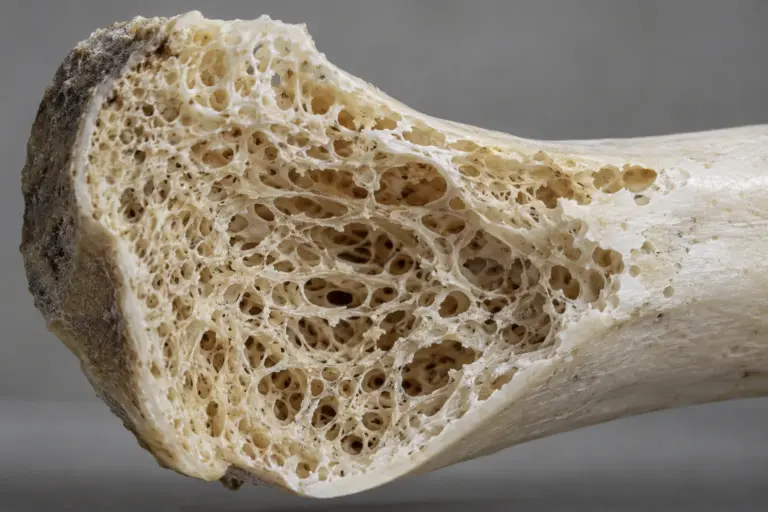
Thyroid hormone speeds up bone turnover. In hyperthyroidism — whether endogenous (Graves disease, toxic nodule) or iatrogenic (over-replacement with levothyroxine) — bone breakdown outpaces buildup, accelerating bone loss. This is one of the most common secondary causes of osteoporosis and one of the most fixable.
How the mechanism works
Thyroid hormone directly increases osteoclast (bone breakdown) activity and shortens the bone remodeling cycle. Over months to years of mildly elevated thyroid hormone, the net effect is bone loss roughly equivalent to 1-2% T-score decline per year.
The over-replacement problem
A surprising number of people on levothyroxine for hypothyroidism are slightly over-replaced — TSH suppressed below the lower limit of normal. This is iatrogenic subclinical hyperthyroidism and produces the same bone effects as endogenous disease. Annual TSH check is the safeguard most patients skip.
What to ask at your annual review
If you take levothyroxine: ask for your most recent TSH and free T4. TSH in the 1.0-3.0 range with normal free T4 is the typical target for most adults; below 0.4 is suppressed and warrants conversation. If you have ever been told you are “fine, no change needed,” check the actual number — many providers leave patients suppressed because they feel better there.
Recovery after correction
Bone density partially recovers after thyroid hormone normalizes, particularly in younger people. The damage is partly reversible. Combine the correction with the four-pillar protocol — exercise, K2-D-magnesium stack, protein, sleep — and the recovery curve steepens further; a ready-made version of that four-pillar routine is one way to keep it consistent.
When to suspect undiagnosed hyperthyroidism
Unintentional weight loss, anxiety or palpitations, heat intolerance, frequent loose stools, hair thinning, and bone density loss faster than expected for age all warrant TSH testing. Endogenous hyperthyroidism is more common than diagnosed rates suggest.
FAQ
Is subclinical hyperthyroidism a real risk for bone?
Yes. Even mildly suppressed TSH over years measurably increases fracture risk in postmenopausal women.
What if my doctor wants me at suppressed TSH after thyroid cancer?
In thyroid cancer survivors, TSH suppression is sometimes appropriate. The bone-protective steps become more important, not less. Discuss explicit bone monitoring.
Can I take levothyroxine with calcium supplements?
Not together. Separate them by at least 4 hours. Calcium interferes with levothyroxine absorption.
Do thyroid antibodies affect bone?
Antibodies alone — without hormone abnormality — do not appear to affect bone density.