The Best Dairy-Free Sources of Calcium for Bone Health
Disclosure: We may earn a commission if you purchase through links on this page. This does not affect our editorial assessment. See our affiliate disclosure.
Dairy is often treated as synonymous with calcium — as if the two are inseparable. They’re not. While milk, yogurt, and cheese are convenient calcium sources, they’re far from the only ones. Whether you’re lactose intolerant, vegan, or simply trying to diversify your diet, getting adequate calcium without dairy is entirely achievable — if you know where to look.

For women over 50, the target is 1,200 mg of calcium per day. For men over 50, it’s 1,000–1,200 mg. Here’s how to hit those numbers without a drop of milk.
Why Calcium Source Matters
Not all calcium is absorbed equally. The percentage of calcium your body actually uses from a food is called its bioavailability. Dairy calcium has a bioavailability of around 30–35%, which is reasonably good. Some plant sources are actually better than dairy — while others are significantly worse. The difference comes down to the presence of compounds like oxalates and phytates, which bind to calcium and reduce absorption.
Knowing bioavailability helps you make smarter choices — not just counting milligrams on a label, but understanding how much is actually getting into your bones.
The Best Dairy-Free Calcium Sources
1. Bok Choy and Low-Oxalate Leafy Greens
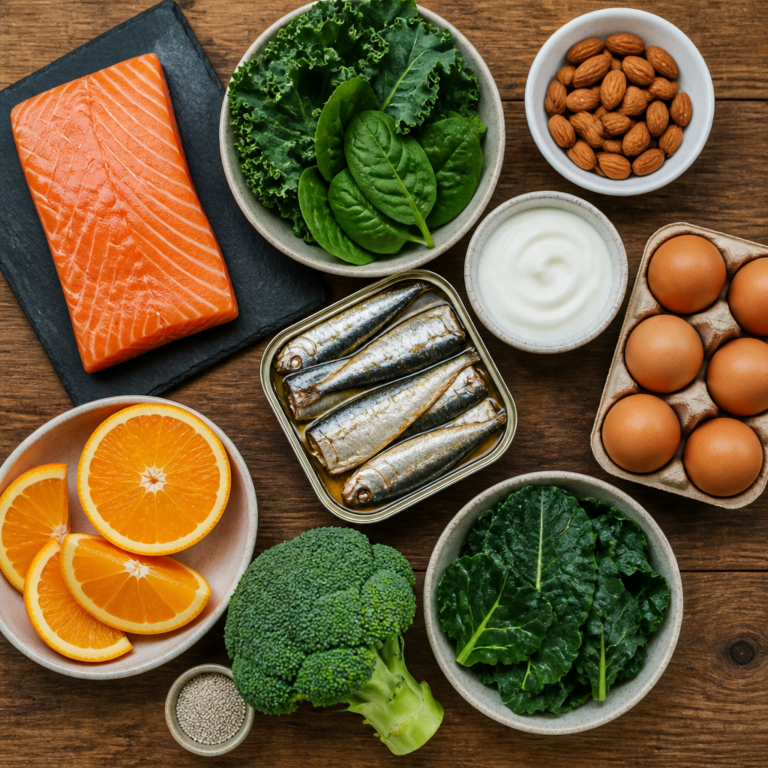
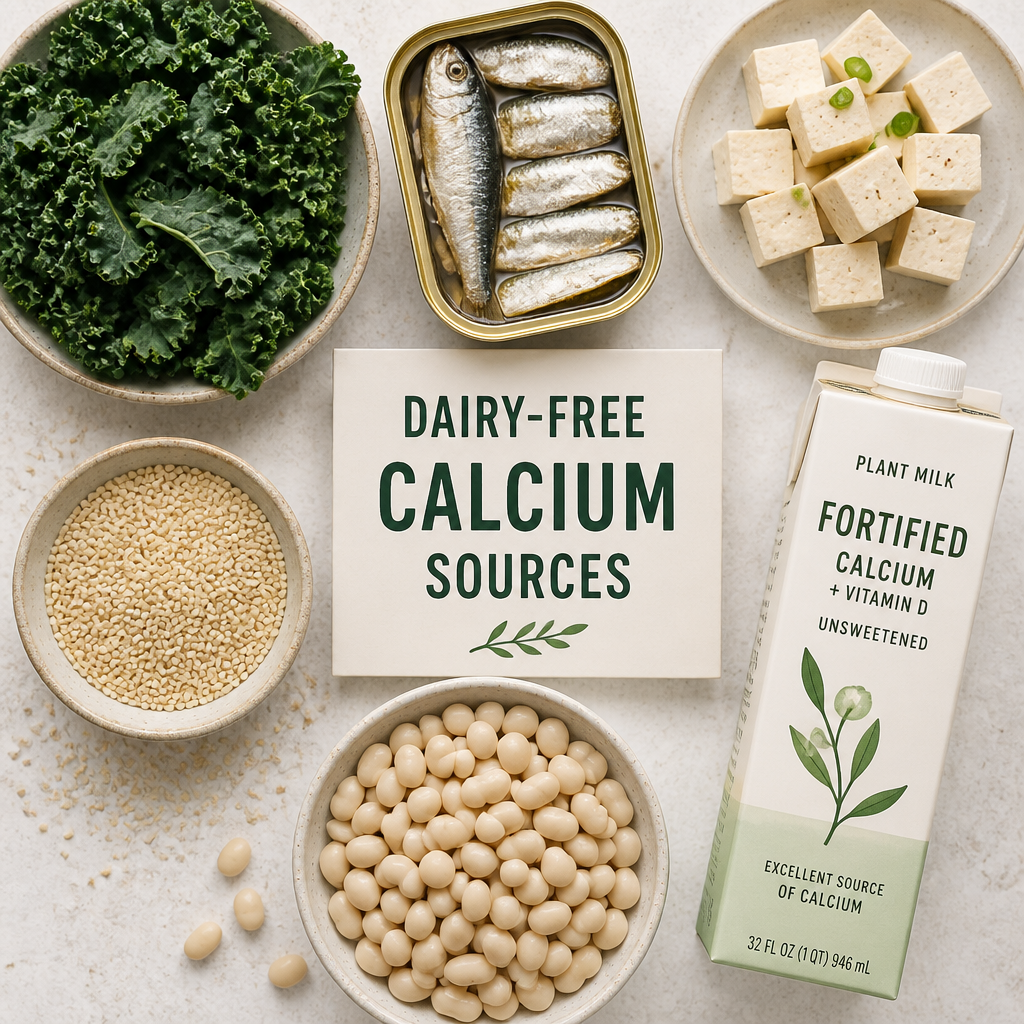
A key point worth knowing: bok choy, kale, broccoli, and collard greens have calcium bioavailability of 40–60% — higher than milk. Spinach and beet greens, by contrast, are high in oxalates and have poor calcium bioavailability (~5%), despite appearing calcium-rich on paper. One cup of cooked bok choy provides around 160mg of highly absorbable calcium. Collard greens cooked provide around 260mg per cup. Eating these regularly makes a genuine contribution to your daily calcium intake.
2. Canned Sardines and Salmon (with Bones)
Often overlooked, canned fish eaten with the soft bones is one of the richest non-dairy calcium sources available. A 3-oz serving of canned sardines with bones provides approximately 325mg of calcium — more than a glass of milk — alongside vitamin D, omega-3 fatty acids, and protein. Canned salmon with bones provides around 180–210mg per serving. These are also among the few foods that naturally contain vitamin D, making them doubly useful for bone health.
3. Fortified Plant Milks
Almond, soy, oat, and rice milks are commonly fortified with calcium carbonate or calcium phosphate, typically to match dairy’s calcium content of around 300mg per cup. Bioavailability is similar to dairy for most fortified plant milks, though it can vary by brand and formula. Soy milk is the most nutritionally similar to cow’s milk overall, with comparable protein content. Check labels — not all plant milks are fortified equally, and some contain very little calcium.
4. Tofu (Made with Calcium Sulfate)
Tofu set with calcium sulfate (listed on the ingredients) is an excellent calcium source — providing 200–400mg per half cup, depending on firmness and brand. Firm and extra-firm calcium-set tofu tend to be higher. This is a meaningful contribution for people eating tofu regularly, and the protein content makes it doubly useful for bone health. Check the label: tofu made with nigari (magnesium chloride) instead of calcium sulfate contains much less calcium.
5. Edamame and White Beans
Legumes generally provide moderate amounts of calcium with reasonable bioavailability. White beans (navy beans, cannellini) are among the best, with about 130mg per half cup cooked. Edamame (young soybeans) provides around 100mg per cup. Legumes also contribute magnesium, potassium, and plant protein — all beneficial for bone health — making them a worthwhile regular addition to a bone-supportive diet.
6. Almonds and Almond Butter
Almonds provide around 75mg of calcium per ounce (roughly 23 almonds), alongside magnesium, vitamin E, and healthy fats. Almond butter provides similar amounts per two-tablespoon serving. While not a calcium powerhouse on their own, almonds are a consistent contributor when eaten daily as part of a varied diet, and they come with additional bone-relevant minerals.
7. Fortified Orange Juice
Calcium-fortified orange juice provides approximately 350mg per cup, with good bioavailability comparable to dairy. It also provides vitamin C, which plays a role in collagen synthesis — relevant for the organic matrix of bone. The downside is the sugar content, so it’s best consumed in moderation, not used as the primary calcium strategy.
8. Sesame Seeds and Tahini
Sesame seeds are surprisingly calcium-dense: one tablespoon of sesame seeds provides around 88mg of calcium, and two tablespoons of tahini (sesame seed paste) provide approximately 130mg. Tahini is easy to incorporate — in salad dressings, hummus, sauces, and dips. Note that whole sesame seeds have somewhat lower bioavailability due to their hull, while hulled sesame seeds and tahini are better absorbed.
9. Broccoli and Cruciferous Vegetables
Broccoli provides about 60mg of highly bioavailable calcium per cup cooked, alongside vitamin K1, folate, and vitamin C. While not the highest in absolute calcium content, its excellent absorption rate and its combination of bone-relevant nutrients make it a reliable regular contributor. Eat it steamed or roasted rather than boiled to minimize nutrient loss.
10. Blackstrap Molasses
One tablespoon of blackstrap molasses provides approximately 200mg of calcium — a surprisingly large amount for such a small serving. It also contains iron, magnesium, and potassium. It has a strong, slightly bitter flavor that works well in baking, smoothies, or stirred into oatmeal. It’s not a daily staple for most people, but worth knowing about as a concentrated plant-based calcium source.
A Practical Day of Dairy-Free Calcium
| Meal/Food | Approx. Calcium |
|---|---|
| Fortified oat milk in morning coffee/tea (1 cup) | 300mg |
| Kale salad with tahini dressing (2 tbsp tahini) | 390mg |
| Canned sardines with bones (3 oz) | 325mg |
| Edamame as snack (1 cup) | 100mg |
| Tofu stir-fry (½ cup calcium-set tofu) | 250mg |
| Total | ~1,365mg |
This illustrates that hitting 1,200mg dairy-free is not only possible but practically achievable with a thoughtful mix of whole foods and fortified options.
A Note on Supplements
If diet alone isn’t covering your calcium needs — which is common, especially on restricted diets — a supplement can fill the gap. Calcium citrate is the preferred form for most people over 50: it’s better absorbed without food and causes fewer digestive issues than calcium carbonate. Take no more than 500mg at one time, as absorption drops significantly at higher single doses. And don’t forget vitamin D and K2 alongside calcium — they’re what ensure calcium ends up in your bones rather than elsewhere.
Related articles:
The Best Foods for Stronger Bones
Calcium, Vitamin D & Beyond: What Your Bones Need
Protein and Bone Health: Why You Probably Need More Than You Think
Related Articles
This article is for educational purposes and does not replace individualised nutrition or medical advice, especially for people with osteoporosis, kidney disease, digestive disorders or those taking medication.
The Bone Density Solution
A structured program specifically designed for adults over 50 to improve bone density through diet, exercise, and lifestyle changes. Takes an integrated approach to reducing fracture risk.
Check The Bone Density Solution →Affiliate link — we may earn a commission at no extra cost to you. Full disclosure.
Sources and Further Reading
- NIH Office of Dietary Supplements — Calcium: Fact Sheet for Health Professionals
- Bone Health & Osteoporosis Foundation — Calcium and Bone Health
- Harvard Health Publishing — Calcium: Beyond the Bones
- USDA FoodData Central — Food calcium values
Disclosure: This article contains affiliate links. We may earn a small commission if you purchase through our links, at no extra cost to you.
Medical disclaimer: This article is for informational purposes only and is not medical advice. Consult your physician before changing supplements, medications or exercise routines, especially if you have been diagnosed with osteopenia or osteoporosis. See our full medical disclaimer.