Calcium, Vitamin D & Beyond: What Your Bones Need
Disclosure: We may earn a commission if you purchase through links on this page. This does not affect our editorial assessment. See our affiliate disclosure.
Calcium and vitamin D are the two nutrients most consistently discussed in relation to bone health — and for good reason. Together, they underpin the basic process of building and maintaining bone mineral density throughout life. After 50, getting enough of both becomes harder and more consequential.
This guide covers what the evidence actually supports, how much you may need, where to get it, and the important safety considerations that are often left out of simpler summaries.
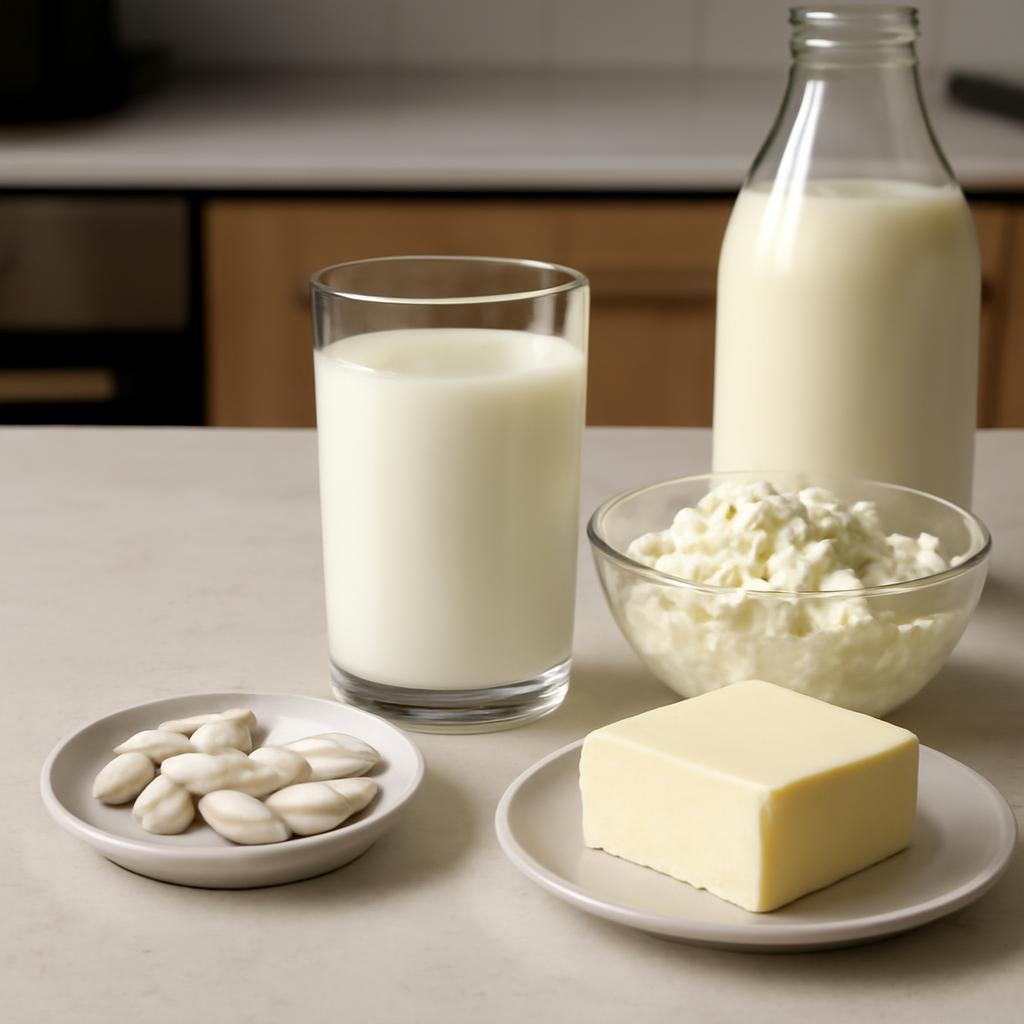
Quick Answer: Calcium and Vitamin D for Bone Health After 50
Adults over 50 generally need 1,000–1,200 mg of calcium per day and 600–2,000 IU of vitamin D per day, depending on individual factors including sun exposure, baseline blood levels and medical history. Food sources are preferred where possible; supplements fill gaps but carry considerations worth discussing with a doctor.
Calcium: What You Need to Know
How much calcium do adults over 50 need?
The NIH recommends:
- Women aged 51–70: 1,200 mg per day
- Men aged 51–70: 1,000 mg per day
- Adults 71+: 1,200 mg per day (both sexes)
These are total daily targets — from food and supplements combined. Most health authorities recommend meeting as much of this through food as practical before relying on supplements.
Why food sources are preferred
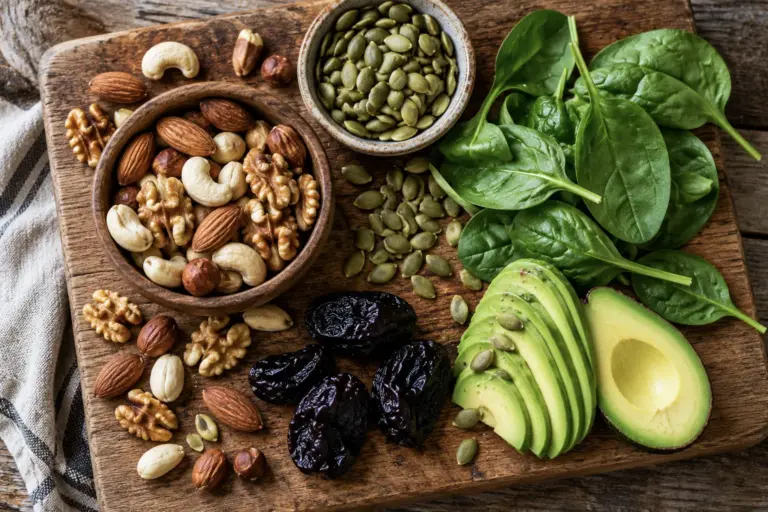
Calcium from food comes packaged with other nutrients (protein, phosphorus, magnesium, vitamin K) that support absorption and use. High-dose calcium supplements — particularly calcium carbonate taken in large single doses — are less efficiently absorbed than food-based calcium and have been associated with digestive side effects in some people. Some research has also raised questions about very high supplemental calcium intake and cardiovascular health, though the evidence is not conclusive. The current advice from most health bodies is to use supplements to fill genuine dietary gaps, not as the primary calcium source.
Best food sources of calcium
| Food | Approx. calcium |
|---|---|
| Plain yogurt (1 cup) | ~415 mg |
| Cow’s milk (1 cup) | ~300 mg |
| Cheddar cheese (30g) | ~200 mg |
| Canned sardines with bones (85g) | ~325 mg |
| Firm tofu, calcium-set (½ cup) | ~250–350 mg |
| Fortified plant milk (1 cup) | ~300 mg (check label) |
| Cooked kale (1 cup) | ~90 mg |
Vitamin D: What You Need to Know
Why vitamin D matters for bones
Vitamin D enables calcium absorption in the intestine. Without sufficient vitamin D, you can consume adequate calcium and still absorb relatively little of it. Beyond bone health, vitamin D plays roles in muscle function and immune regulation — muscle weakness from low vitamin D can itself increase fall risk.
How much vitamin D do adults over 50 need?
Current guidance varies by organisation:
- NIH recommended dietary allowance: 600 IU (15 mcg) for ages 51–70; 800 IU (20 mcg) for 71+
- Bone Health & Osteoporosis Foundation: suggests 800–1,000 IU for adults over 50
- Upper tolerable limit (NIH): 4,000 IU per day for adults
The right amount for any individual depends on their baseline serum 25-hydroxyvitamin D level, sun exposure, skin tone, body weight and other factors. A blood test is the most reliable way to establish your actual status before supplementing.
Why deficiency is common after 50
Skin synthesis of vitamin D from sun exposure declines with age. Many older adults have limited outdoor exposure, live at higher latitudes with reduced winter UV, or have conditions affecting vitamin D absorption. Dietary sources alone rarely provide enough. This makes vitamin D one of the most commonly recommended supplements for older adults — but dosing should ideally be guided by a blood test rather than guesswork.
Best food sources of vitamin D
- Cooked salmon (85g): ~570–700 IU
- Canned tuna in water (85g): ~150 IU
- Large egg yolk: ~40 IU
- Fortified cow’s milk (1 cup): ~100 IU
- Fortified plant milk (1 cup): varies — check label
Calcium and Vitamin D Together: Why Both Matter
Neither works optimally without the other. Calcium cannot be efficiently absorbed without adequate vitamin D. Vitamin D without sufficient calcium has little structural material to work with. Most bone health guidance recommends addressing both simultaneously rather than treating them as separate concerns.
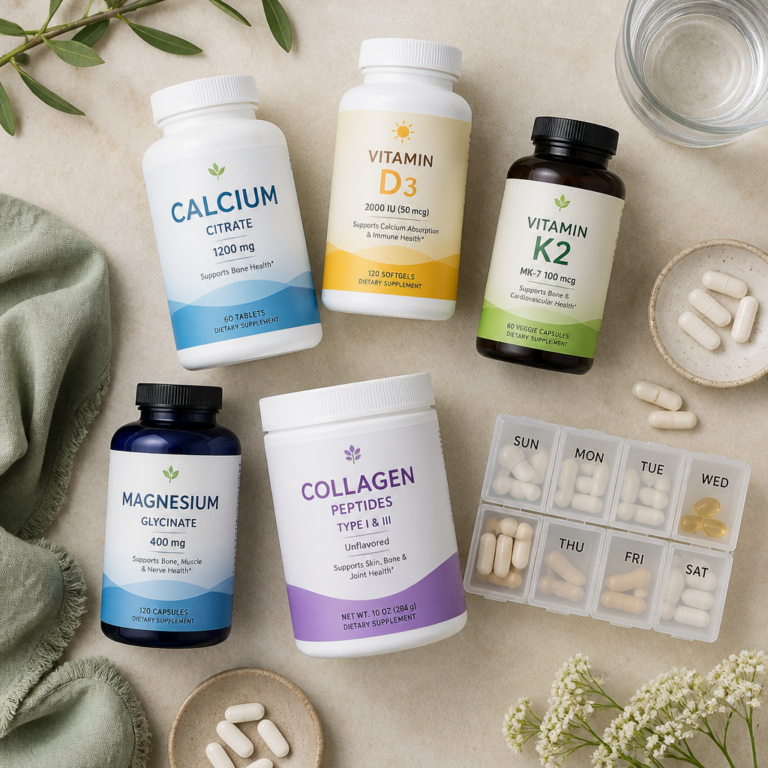
Supplement Considerations
| Supplement | Notes |
|---|---|
| Calcium carbonate | Best absorbed with food; higher elemental calcium per tablet; may cause constipation |
| Calcium citrate | Can be taken without food; better for people with low stomach acid or on acid reducers |
| Vitamin D3 (cholecalciferol) | Generally preferred over D2; better absorbed with a fat-containing meal |
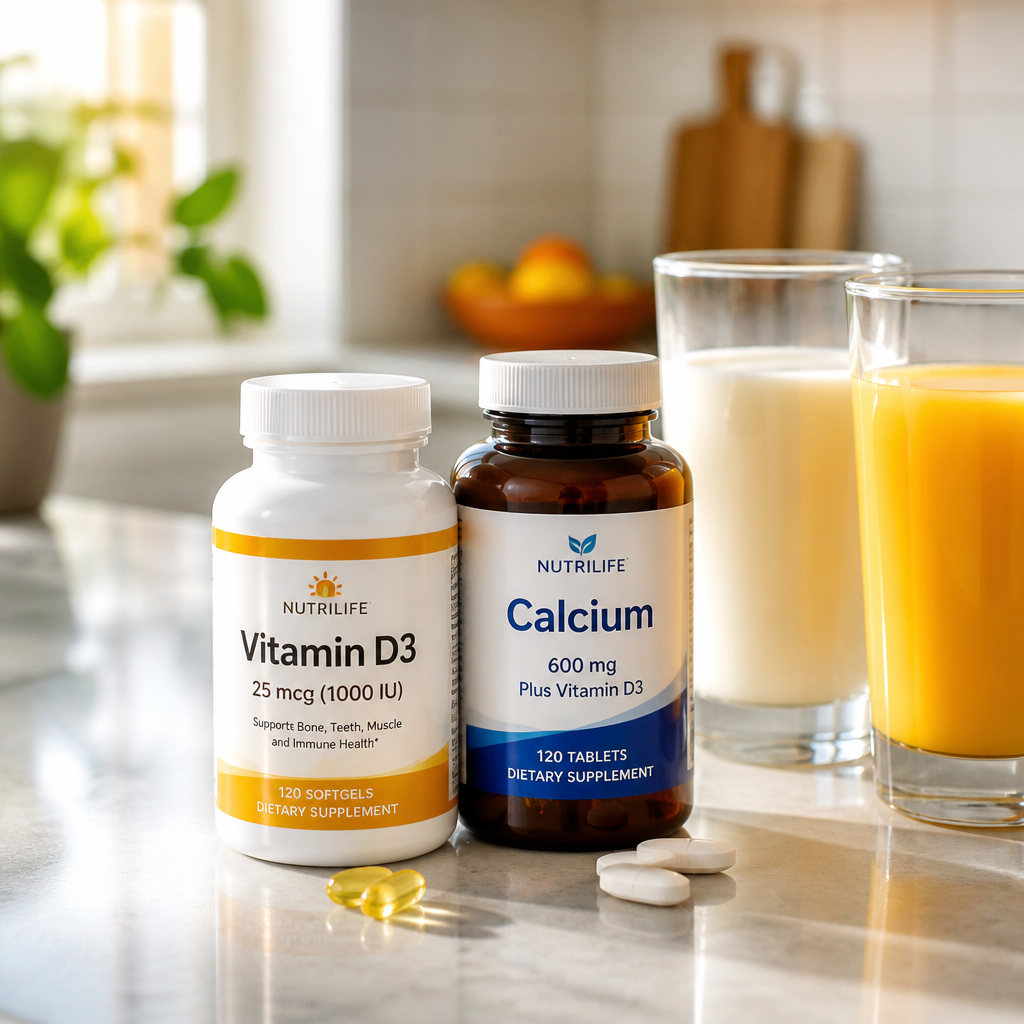
| Combined Ca + D supplements | Convenient, but check total dose — can be easy to exceed upper limits if also eating fortified foods |
Important: Doses above the tolerable upper limit (2,500 mg calcium per day for adults over 50; 4,000 IU vitamin D) carry risks including hypercalcaemia and kidney stones. Always total your intake from all sources — food, fortified products and supplements — before deciding on a dose.
Who Should Be Especially Careful
- People with kidney disease or kidney stones — calcium and vitamin D affect kidney function
- People on thiazide diuretics — may increase calcium blood levels
- People on certain heart or thyroid medications — vitamin D can interact
- People who already consume high amounts of calcium-fortified foods
When to Speak With a Healthcare Professional
Before starting calcium or vitamin D supplements, it is worth speaking with your doctor if you have any of the above conditions, if you are unsure of your current dietary intake, or if you want to know your actual vitamin D blood level. A simple blood test (serum 25-hydroxyvitamin D) takes the guesswork out of supplementation.
Frequently Asked Questions
Should everyone over 50 take calcium supplements?
Not necessarily. If your diet consistently provides adequate calcium (1,000–1,200 mg per day from food), supplements may add little benefit and can carry risks at high doses. The goal is to meet your requirement, not to exceed it. Assess your diet first, ideally with a healthcare professional.
Is it possible to take too much vitamin D?
Yes. Vitamin D toxicity (hypervitaminosis D) can occur with sustained very high supplemental intake — generally well above 4,000 IU per day over time. Symptoms include nausea, weakness and elevated blood calcium. Sun exposure alone does not cause toxicity. If supplementing at higher doses, periodic blood monitoring is advisable.
What is the difference between vitamin D2 and D3?
D3 (cholecalciferol) is the form produced by human skin in sunlight and is generally considered more effective at raising serum 25-hydroxyvitamin D levels than D2 (ergocalciferol). Most clinical guidance and most supplements now use D3.
Do older adults absorb calcium less efficiently?
Yes. Intestinal calcium absorption declines with age, particularly after menopause in women and gradually in men. This is one reason why calcium recommendations increase slightly after 50 — the body needs more intake to achieve the same net absorption.
Related Articles
Sources and Further Reading
- NIH Office of Dietary Supplements — Calcium
- NIH Office of Dietary Supplements — Vitamin D
- Bone Health & Osteoporosis Foundation — Calcium and Vitamin D
- Mayo Clinic — Calcium Supplements: Are They Safe?
- NHS — Vitamin D
This article is for educational purposes only and does not replace advice from a qualified healthcare professional.
The Bone Density Solution
A structured program specifically designed for adults over 50 to improve bone density through diet, exercise, and lifestyle changes. Takes an integrated approach to reducing fracture risk.
Check The Bone Density Solution →Affiliate link — we may earn a commission at no extra cost to you. Full disclosure.
Medical disclaimer: This article is for informational purposes only and is not medical advice. Consult your physician before changing supplements, medications or exercise routines, especially if you have been diagnosed with osteopenia or osteoporosis. See our full medical disclaimer.