How to Fall Safely: Reducing Fracture Risk When You Do Fall
Disclosure: This article contains affiliate links. We may earn a small commission if you purchase through our links, at no extra cost to you.
The goal of bone health is ultimately to may help reduce the risk of fractures — and most fractures result from falls. While preventing falls is the primary strategy, there’s a second line of defense that rarely gets discussed: learning how to fall in ways that reduce injury risk. This may sound counterintuitive, but physical therapists, martial artists, and sports scientists have developed evidence-based techniques for safer falling that are genuinely useful for older adults.
The Instinct That Causes Fractures
When most people start to fall, the instinctive response is to extend the arms and hands to break the fall. This instinct is understandable but problematic: it directs all the force of the fall onto the wrist and forearm, exactly where fragility fractures commonly occur in osteoporosis. The Colles’ fracture (broken wrist) is one of the most common osteoporotic fractures — and it’s often caused by this protective instinct working against the person.
Safer Falling Techniques
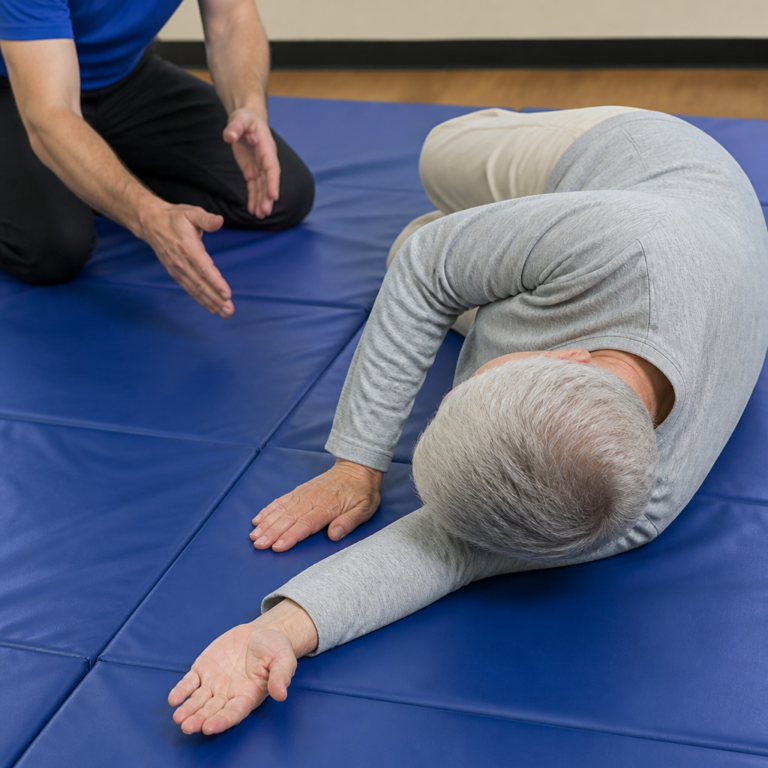
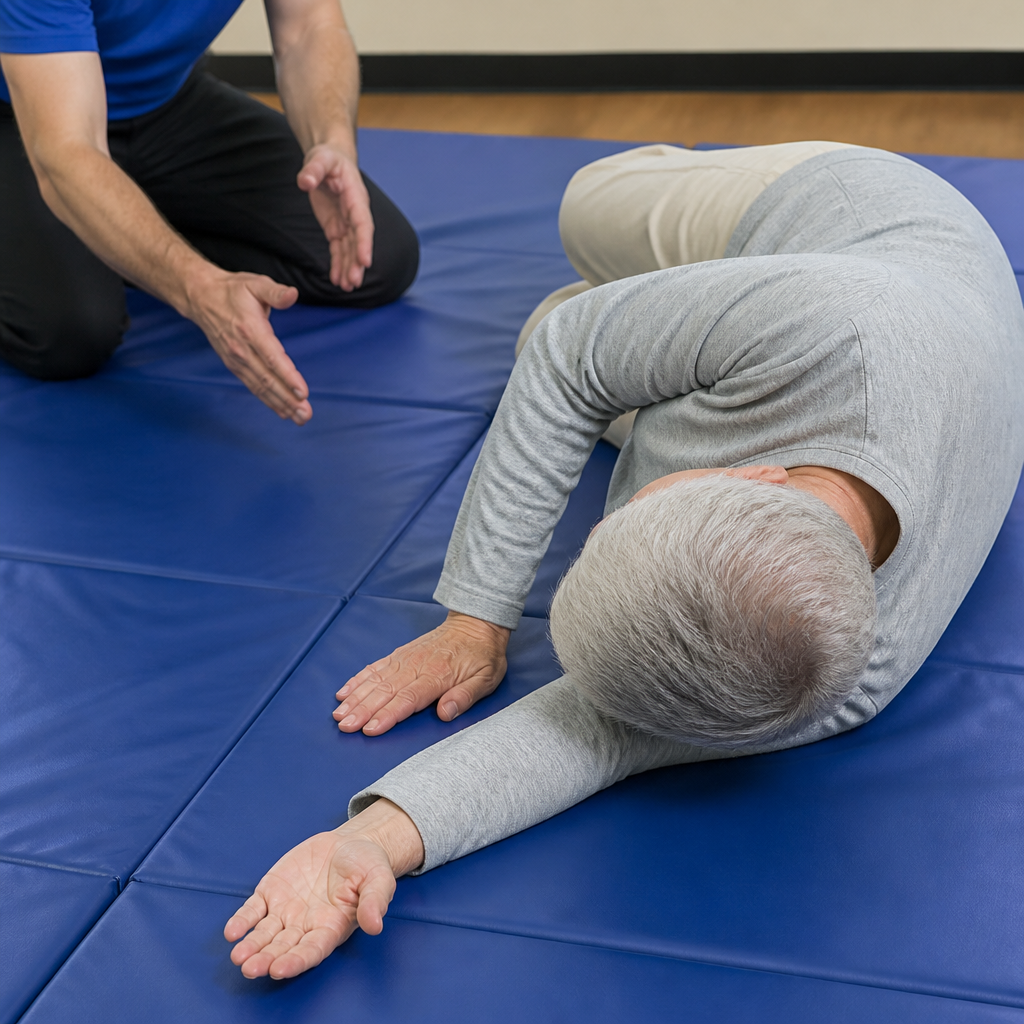
Tuck and roll: Rather than extending arms, tuck your chin to your chest, curve your body, and try to roll with the fall rather than stopping it abruptly. Distributing the impact across a larger body surface reduces peak force at any one point. This is a foundational technique in judo and is taught in fall prevention programs.
Fall sideways or forward, not backward: Backward falls are the most dangerous for hip fractures because they load the hip directly. If you feel yourself falling backward, try to turn sideways as you go down.
Bend your knees: A slight knee bend when you sense a fall lowers your center of gravity and shortens the falling distance, reducing impact force.
Protect your head: Tuck your chin and, if possible, bring an arm up to protect your head rather than extending both arms to break the fall.
Don’t tense up: Muscles that are tense transmit more force to bones. Staying relatively relaxed — easier said than done — allows muscles to absorb more impact energy.
Practice Makes a Difference
Some fall prevention programs include controlled falling practice on soft mats — practicing the tuck-and-roll technique under supervision until it becomes more automatic. If you have access to a physical therapist or fall prevention class, this kind of practice is worth seeking out.
Fall prevention through strength and balance training remains the primary strategy. For a complete approach to bone health and fall risk reduction, The Bone Density Solution provides structured daily guidance for adults over 50.
Related articles:
Balance Exercises to may help reduce the risk of Falls and Fractures
Strength Training After 50: A Beginner’s Guide
Warning Signs of Low Bone Density
Sources and Further Reading
- BHOF — Exercise and Safe Movement
- CDC STEADI — Fall Prevention for Older Adults
- Mayo Clinic — Osteoporosis and Exercise
This article is for educational purposes only. Always consult a qualified healthcare professional before starting a new exercise programme, especially if you have osteoporosis, a history of fractures or balance difficulties.