Osteopenia Home Remedies: What Actually Helps (and What’s Hype)
Disclosure: We may earn a commission if you purchase through links on this page. This does not affect our editorial assessment. See our affiliate disclosure.
The scan comes back, a word you have never used before is suddenly attached to your name, and within an hour you are on your phone typing some version of “what can I do at home for this.” If that is roughly where you are with osteopenia, you are in good company, and the instinct is a sound one. Osteopenia simply means your bone density has slipped below normal without yet reaching the threshold we call osteoporosis. For most people it is a nudge rather than an emergency — a chance to change a few things while the changing still counts for a lot.
Here is the honest part. Some of what you will read online about osteopenia home remedies is worth your time, and some of it is worth precisely nothing except the money you hand over for it. The two get shelved side by side, which is why a prune with real trial data behind it ends up looking no different from a “bone tea” that has never been tested on anyone. This guide is an attempt to pull them apart: what the research on natural remedies for osteopenia actually supports, what is mostly marketing, and how to turn the good stuff into a routine you will still be doing next year. Treat it as fuel for a better conversation with your own doctor about your osteopenia natural treatment options, not a stand-in for one.
The home remedies that actually hold up
Start with prunes, because they are the closest thing to a food with a bone claim it can back up. In controlled trials, postmenopausal women who ate around five or six prunes a day — roughly 50 grams — for six to twelve months held on to more bone density at the hip than those who ate none. Researchers point to the polyphenols, the vitamin K, and the way prunes seem to quiet the cells that break bone down. No one is claiming a handful of dried plums rebuilds a skeleton, but for a cheap, low-risk daily habit it carries more evidence than almost any other single food. Ease into them so your digestion has time to catch up.
Protein does quieter work and gets less attention than it deserves. Bone is about half protein by volume, and older adults who skimp on it tend to shed both bone and muscle faster than they should. Spreading it through the day — eggs at breakfast, fish or poultry later, beans, lentils, dairy, tofu wherever they fit — feeds the bone matrix and the muscle that keeps you upright and unlikely to fall. The old worry that protein leaches calcium out of bone has not held up; paired with enough calcium, normal protein intake helps rather than harms. If meat and dairy are rare on your plate, that is a detail worth raising with a doctor or dietitian.
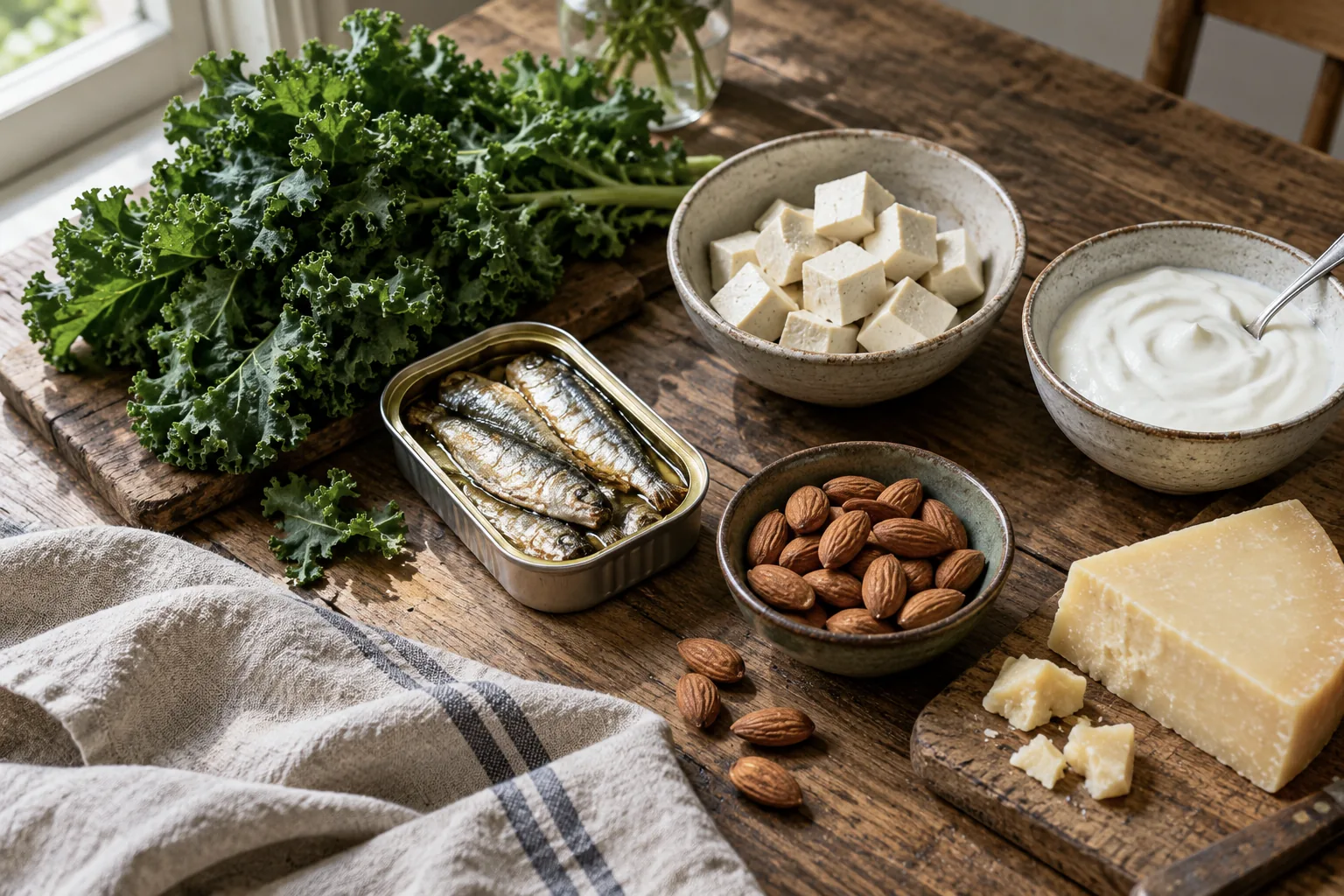
Calcium is the raw material, and most guidance lands somewhere around 1,000 to 1,200 mg a day once you are past 50 — ideally from what you eat rather than a bottle. Dairy, canned sardines and salmon with the soft bones still in, calcium-set tofu, kale and other leafy greens, and fortified plant milks all pull their weight. Food first matters here for a concrete reason: very high-dose calcium supplements have been tied to side effects and do nothing extra for bone once your needs are covered. If the target feels out of reach through meals alone, ask whether a modest supplement is sensible for you rather than defaulting to one. Our guide to calcium-rich foods for osteopenia goes deeper on where to find it.
None of that calcium reaches your bones without vitamin D to usher it in, and this is where a lot of people over 50 quietly fall short. Your skin makes vitamin D from sunlight, but the process slows with age, dims under sunscreen, and all but stalls through a northern winter. A short spell of daylight most days helps; many people still need a supplement on top, particularly in the darker months. Because both too little and too much cause trouble, a simple blood test is the honest way to know where you stand — far better than guessing and mega-dosing on your own.
Magnesium and vitamin K round out the supporting cast. Magnesium — from nuts, seeds, whole grains, legumes, and leafy greens — helps regulate calcium and vitamin D, while vitamin K, including the K2 found in fermented foods, helps steer calcium into bone rather than elsewhere. The evidence here is softer than it is for calcium and vitamin D, and trials of isolated K2 supplements have been mixed, so the reasonable move is to get both from a varied diet instead of trusting a pill to sort it out. One caveat that genuinely matters: if you take blood thinners, talk to your doctor before adding any vitamin K supplement, because the interaction is real.
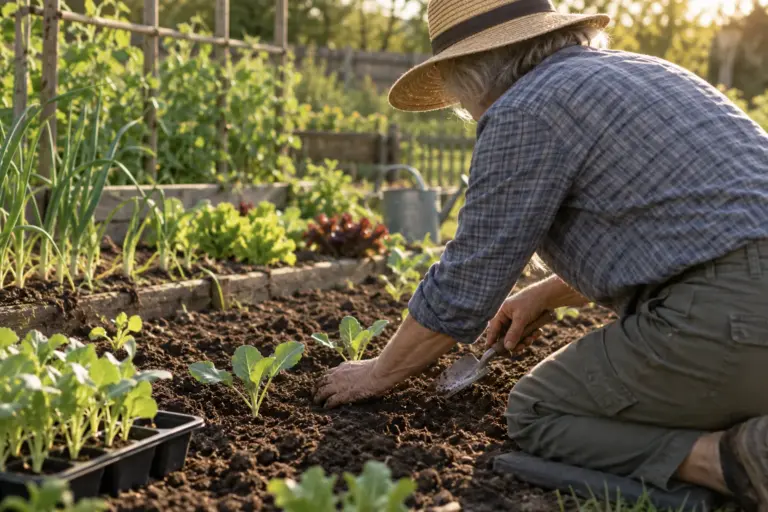
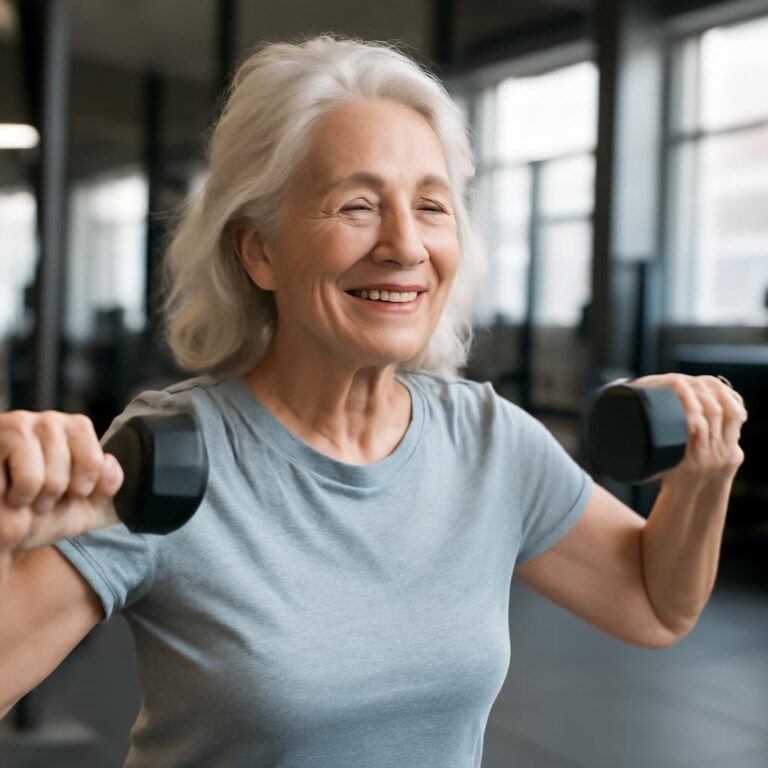
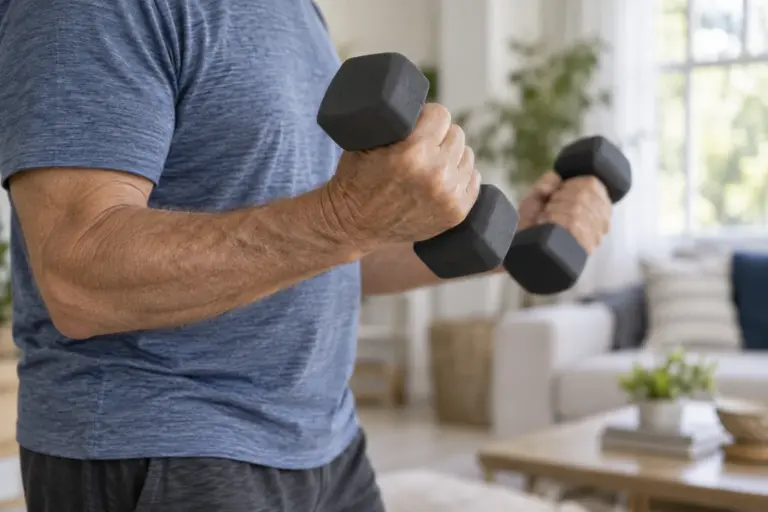
If any single remedy earns top billing, it is movement, because bone is stubbornly literal — load it and it strengthens. Two kinds pull the most weight. Weight-bearing activity such as brisk walking, stair climbing, or dancing gives bone something to push back against, and resistance work — bands, hand weights, or bodyweight moves like sit-to-stands and wall push-ups — adds to the effect. Balance practice like heel-to-toe walking or tai chi does something just as valuable: it keeps you from falling, which is what actually breaks bones in the first place. All of it fits at home with next to no equipment. Our roundup of the best exercises to improve bone density after 50 lays out the specifics. One guardrail: if your density is already very low, get clearance before you start, since some high-impact or deep-twisting moves may not be safe for you yet.
If you would rather follow a single structured plan than assemble one piece by piece, programs like The Bone Density Solution package these same food, movement, and lifestyle ideas into a step-by-step routine for adults over 50. It is a scaffold to work alongside your doctor’s advice, never a replacement for it. We went through what it covers, and what it leaves out, in our full assessment of the programme.
The ones that are mostly noise
Not everything wearing the word “natural” earns a spot in your week. The bone teas are the usual headline act — blends built around horsetail, red clover, or some proprietary botanical, sold as tonics that supposedly remineralize your skeleton. There is no reliable human evidence that any of them raises bone density, and a few of the herbs quietly interact with medication. A warm cup is a pleasant ritual; it is not a treatment. Essential oils sit in the same bracket: cypress, fir, or a “bone” blend rubbed on or diffused has no credible research behind it, and pleasant as they are, relaxation is the whole of what they deliver.
Then come the supplement stacks — expensive proprietary “bone formulas,” coral calcium, megadose combinations — that promise well past what the science can support and sometimes push nutrients to levels that are useless or outright risky. Correcting a real, tested gap is worth doing; buying a mystery blend to cover one you may not have is not. Homeopathic remedies for bone strength belong on the same shelf, unsupported by robust evidence and no substitute for the measures that work. The tell is consistent across all of it: the harder a product leans on “natural” while dodging any actual data, the more your skepticism is earning its keep. Every pound spent here is a pound not spent on the food, the movement, and the testing that do.
What a real week looks like
Gather the evidence into something you can actually live with, and a sustainable week takes shape. Bend it around your own health, and clear it with your doctor before you begin.
- Daily: calcium-rich foods spread across your meals, a source of vitamin D (sunlight or a supplement your doctor signs off on), and five or six prunes if they agree with you.
- Most days: 20 to 40 minutes of weight-bearing movement like a brisk walk, plus a few minutes of balance practice.
- Two or three times a week: resistance training for the major muscle groups using bands, weights, or your own bodyweight.
- Ongoing: keep protein steady at each meal, and go easy on smoking and heavy drinking, both of which wear bone down.
Consistency beats intensity every time. A modest routine you hold for years does far more for your bones than an ambitious one you drop within a month. If you want more of the small daily habits, our osteopenia self-care guide carries them further, and for the wider non-drug picture, osteopenia treatment without drugs fills in the rest.
When home isn’t enough
For all their value, home measures do not replace a proper medical assessment, and there are moments to stop tinkering and pick up the phone. A fracture from a fall that should not have caused one, a loss of height or a stoop creeping into your posture, a strong family history of osteoporosis, or a DXA scan showing your density drifting toward the osteoporosis range — any of those is a reason to see your doctor. Lifestyle still matters in those situations, but your doctor may also recommend prescription treatment to bring your fracture risk down, and turning that down on the strength of teas and oils would be a real mistake. Let your bone density scores, your history, and your other risk factors steer the decision — not a blog post, this one included. The best thing anything here can do is help you walk into that conversation better informed.
A few questions come up so often they are worth answering head-on. Can osteopenia be reversed with home remedies alone? Not reliably, and no honest source should tell you otherwise — diet and exercise can slow or partly steady the loss, and some people do see a modest gain, but curing it at home is not something you can count on. The realistic aim is to protect the bone you have and cut your fracture risk, alongside whatever your doctor advises. On the prune question, the trials that showed a benefit used about five or six a day, roughly 50 grams; bigger portions have been studied without clearly doing more, and they can upset digestion, so introduce them slowly and skip them if you have a reason to limit dried fruit. As for whether you need calcium and vitamin D supplements, not automatically — food first for calcium, sunlight where you can for vitamin D, and supplements when diet falls short or a blood test flags a shortfall, with the dose settled by your doctor rather than guessed. And the herbal bone teas? No solid human evidence that they lift bone density, some genuine drug interactions, and no harm in the ritual so long as it never crowds out the things that work.
Sources
- National Institute of Arthritis and Musculoskeletal and Skin Diseases (NIAMS) — Osteoporosis
- Bone Health & Osteoporosis Foundation (BHOF)
- NHS — Osteoporosis
- Mayo Clinic — Osteopenia
The Bone Density Solution
A structured program designed for adults over 50 to support bone density through diet, exercise, and lifestyle changes — an integrated approach to reducing fracture risk. Best used alongside, not instead of, professional medical care.
Check The Bone Density Solution →Affiliate link — we may earn a commission at no extra cost to you. Full disclosure.
Medical disclaimer: This article is for informational purposes only and is not medical advice. See our full medical disclaimer.