Calcium-Rich Foods for Osteopenia: What to Eat (and What to Skip)
Disclosure: We may earn a commission if you purchase through links on this page. This does not affect our editorial assessment. See our affiliate disclosure.
The word lands the moment the doctor says osteopenia: calcium. It is the reflex, and it is a good one, but it is only the opening line of a longer story. Calcium is the raw material your skeleton is built from, and pulling enough of it from your meals is one of the steadiest, lowest-risk things you can do for your bones. What it will not do, working alone, is rebuild what you have lost or undo the diagnosis. Bone is living tissue, and it answers to a whole cast of inputs at once: calcium, vitamin D, protein, a few quiet supporting nutrients, and the load you put through your frame when you move.
This guide is about the food part of that story. You will find out how much calcium you really need once you are past 50, which foods pull the most weight and by how many milligrams, the partner nutrients that decide whether any of it reaches your bones, and the ordinary habits that chip away at your effort without you noticing. Food first, always, with supplements kept in reserve for the gaps you genuinely cannot close at the table.
How much calcium you need with osteopenia
For most women over 50 and men over 70, the daily target is 1,200 mg of calcium. Men between 51 and 70 sit a little lower, at about 1,000 mg. Those figures come from the National Institutes of Health Office of Dietary Supplements and are echoed by the Bone Health & Osteoporosis Foundation. A diagnosis of osteopenia does not move the number, but it does raise the cost of falling short of it day after day.
The phrase to hold onto is food first. Health authorities including the NHS and Mayo Clinic point you toward diet as the main source and treat supplements as a way to top up a gap you cannot fill with meals. Two reasons sit behind that advice. Food brings calcium in the company of protein, magnesium and the other nutrients your bones lean on, so you are never getting it in isolation. And some research has tied high-dose calcium supplements, not the calcium in food, to a possible small bump in cardiovascular risk. That evidence is mixed and far from settled, but it is one more nudge toward your plate and away from the pill bottle. There is a ceiling to respect, too: past 50, total calcium from every source combined should generally stay under 2,000 mg a day. One more practical wrinkle worth knowing is that your body handles calcium best in doses of roughly 500 mg or less at a sitting, so spreading it across the day beats loading it all into one meal.
The best calcium-rich foods for osteopenia
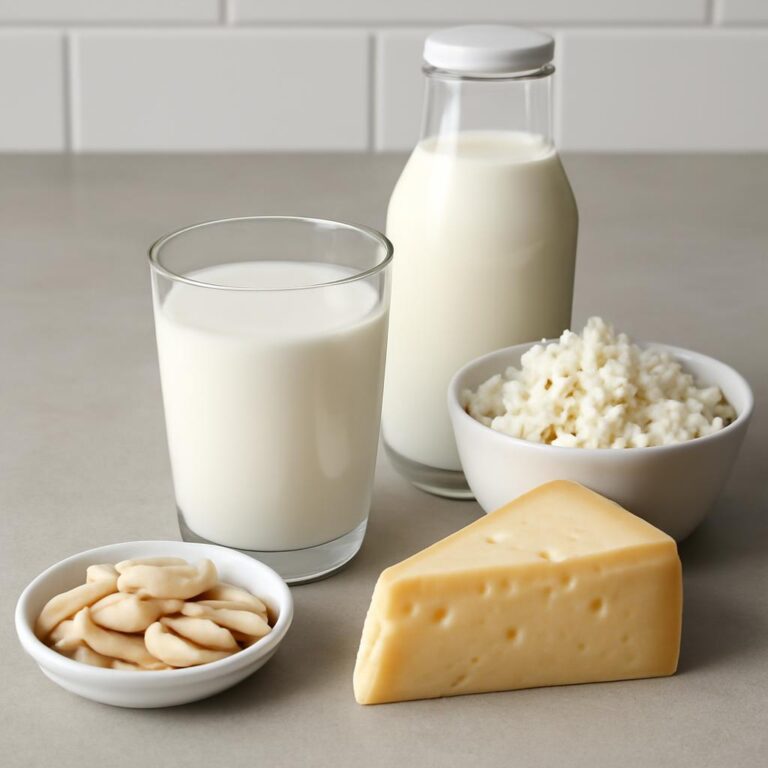
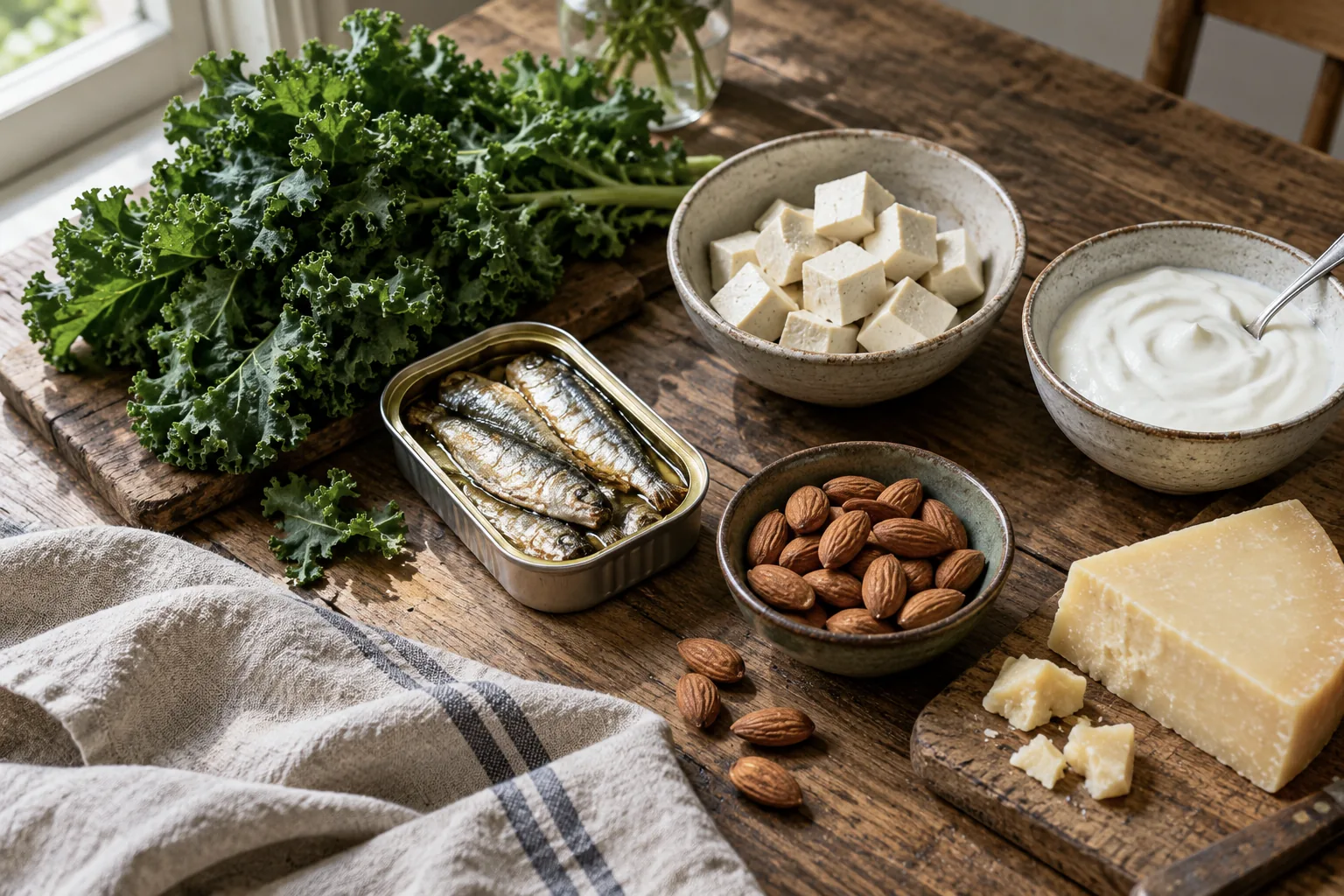
Dairy still does the heavy lifting for most people, because it is both calcium-dense and well absorbed. Plain yogurt, milk and hard cheeses are the standouts, and if your gut tolerates them, two or three servings a day cover a large share of the target on their own. Canned fish is the next reliable workhorse. The calcium in sardines and canned salmon lives in the soft, edible bones, so the trick is simply to leave them in and eat them; you get protein and vitamin D in the same bite, both of which work hand in hand with calcium.
Leafy greens are useful if you choose the right ones. Low-oxalate greens such as kale, bok choy and collard greens hand over calcium your body can actually take up. Spinach is the classic trap here: it reads as calcium-rich on the label, but its high oxalate content binds most of that calcium and locks it away, which makes it a poor bone source no matter what the numbers suggest. Away from the fresh aisle, fortified foods and plant sources round things out nicely. Calcium-fortified plant milks, fortified orange juice and tofu set with calcium salts are all strong options, and they matter most if you steer clear of dairy. Beans, almonds and dried figs contribute smaller amounts that add up over a day. One habit worth keeping with fortified drinks: shake the carton, because the calcium tends to drift to the bottom.
The milligram figures below are approximate and shift with brand and preparation, but they give you an honest feel for how quickly a day accumulates.
| Food | Serving | Approx. calcium |
|---|---|---|
| Plain low-fat yogurt | 1 cup (245 g) | ~415 mg |
| Canned sardines (with bones) | 3 oz (85 g) | ~325 mg |
| Fortified plant milk or orange juice | 1 cup | ~300 mg |
| Milk (skim or whole) | 1 cup | ~300 mg |
| Tofu, calcium-set | 1/2 cup | ~250-430 mg |
| Cheddar cheese | 1.5 oz (43 g) | ~305 mg |
| Canned salmon (with bones) | 3 oz (85 g) | ~180 mg |
| Collard greens, cooked | 1/2 cup | ~135 mg |
| Kale, cooked | 1/2 cup | ~90 mg |
| Bok choy, cooked | 1/2 cup | ~80 mg |
| White beans, cooked | 1/2 cup | ~60 mg |
| Almonds | 1 oz (23 nuts) | ~75 mg |
| Dried figs | 2 figs | ~40 mg |
The cofactors that make calcium work
Calcium never builds bone on its own. A handful of partner nutrients decide whether what you eat actually reaches your skeleton and stays put. Vitamin D is the gatekeeper of the group, and without enough of it you absorb only a fraction of the calcium you swallow. Adults from 50 to 70 generally need around 600 IU a day and those past 70 around 800 IU, drawn from sunlight, fatty fish, fortified products or a supplement; of all the nutrients here, this is the one many people truly do need to top up. Vitamin K2 plays a different role, helping steer calcium into bone rather than into soft tissue. The evidence there is still maturing, but fermented foods, certain cheeses and egg yolks make it a sensible part of a bone-friendly diet.
Magnesium earns its place too, since it helps convert vitamin D into its active form and turns up in the structure of bone itself; nuts, seeds, legumes and whole grains carry you there. And protein is the one people tend to underrate, even though it makes up roughly half of bone by volume and is essential both for the bone matrix and for the muscle that keeps you from falling in the first place. Older adults who skimp on protein, often because appetite fades with age, tend to lose bone faster. If you want to go deeper on how the first two of these fit together, see our guide on calcium and vitamin D and what your bones really need, along with our detailed piece on vitamin K2 and bone health.
Foods and habits that work against calcium
Some choices help; others quietly pull in the opposite direction. None of these calls for total avoidance, but moderation earns its keep. Salt is the first culprit, because a high sodium intake raises the amount of calcium you lose through urine, and heavily processed and restaurant meals are usually where it hides. Caffeine matters at the extremes rather than in normal use: very large amounts can slightly cut calcium absorption, but a couple of cups of coffee a day is fine for most people, and a splash of milk offsets part of the loss. Alcohol is worth watching for the same reason, since heavy drinking interferes both with the cells that build bone and with calcium balance, which is why health bodies suggest keeping it moderate. And then there is the habit of eating too little protein, common when appetite drops with age, which robs bone of a key building block and weakens the very muscle that guards against a fall.
A simple day on a plate (about 1,200 mg)
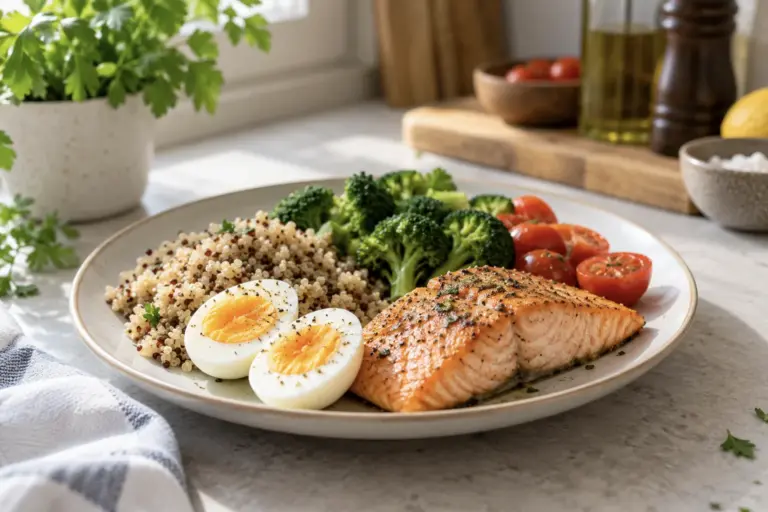
It helps to see how the target actually comes together without a single supplement. Start the morning with a cup of plain yogurt, a scattering of almonds and a couple of dried figs, and you are already around 530 mg. Lunch might be a salad built on canned sardines and cooked kale, worth roughly another 415 mg. Come mid-afternoon, a glass of fortified plant milk or a small piece of cheddar adds about 300 mg. Dinner rounds it off with a stir-fry of calcium-set tofu and bok choy for something near 330 mg. Tally it up and you comfortably clear 1,200 mg, spread into absorbable doses across the day, with protein, magnesium and vitamin D woven through the meals. If you avoid dairy entirely, our roundup of dairy-free calcium sources shows how to reach the same number.
A few questions come up again and again, so it is worth answering them plainly. Can you get enough calcium from food alone? For most people, yes; the day above shows that 1,200 mg is well within reach if you fold a couple of calcium-dense choices into each meal, and food stays the preferred route because it arrives packaged with protein and the other bone nutrients. If allergies, a small appetite or plain preference narrow your options, a supplement can cover the shortfall, but plenty of people never need one. Whether you personally need a supplement comes down to that same gap: they are meant to fill it, not to stand in for a good diet. Because high-dose calcium supplements have been linked in some studies to a possible small rise in cardiovascular risk, and because food calcium comes with its helpful cofactors attached, most experts lean toward the smallest supplemental dose that does the job. Talk to your doctor before starting one, particularly if you take other medications; our guide on how to choose a calcium supplement walks through the specifics.
Is dairy actually necessary? No. It is convenient and calcium-dense, but it is not required. Calcium-set tofu, fortified plant milks and juices, canned fish with their bones, and low-oxalate greens can meet your needs without a drop of milk, and the best choice is simply the one you will keep eating. And the question underneath all the others: does calcium reverse osteopenia? It does not, and no food can honestly be promised to. Enough calcium helps protect the bone you already have and supplies the raw material for ongoing maintenance, but real bone health rests on the full picture, vitamin D, protein, the other nutrients, weight-bearing and resistance exercise, and for some people medication. Treat calcium as a necessary foundation rather than a cure. For the wider strategy, see our pillar guide on osteopenia treatment without drugs. And if a follow-along plan suits you better than assembling one yourself, our assessment of Shelly Manning’s four-pillar protocol sets out what it does and does not cover.
The guidance here draws on the NIH Office of Dietary Supplements calcium fact sheet, the Bone Health & Osteoporosis Foundation on calcium and vitamin D, the NHS calcium guidance, and the Mayo Clinic overview of calcium and calcium supplements.
The Bone Density Solution
A structured program designed for adults over 50 to support bone density through diet, exercise, and lifestyle changes — an integrated approach to reducing fracture risk. Best used alongside, not instead of, professional medical care.
Check The Bone Density Solution →Affiliate link — we may earn a commission at no extra cost to you. Full disclosure.
Medical disclaimer: This article is for informational purposes only and is not medical advice. Consult your physician before changing supplements, medications or exercise routines. See our full medical disclaimer.