Osteopenia Treatment Without Drugs: A Complete Guide for Adults Over 50
Some links on this page are affiliate links; we may earn a commission at no extra cost to you, and it never changes our editorial take. See our affiliate disclosure.
The word lands somewhere between a diagnosis and a warning, and most people hear it the same way: the doctor glances at the scan, says “your bones are a little thin — you have osteopenia,” and you immediately brace for a prescription. Take a breath. A slightly low reading is not a fracture, it is not osteoporosis, and for the vast majority of people it is not a medical emergency. It is an early, genuinely useful signal that your bones want more attention than they have been getting — and the steps that matter most are ones you can start this week, no prescription required.
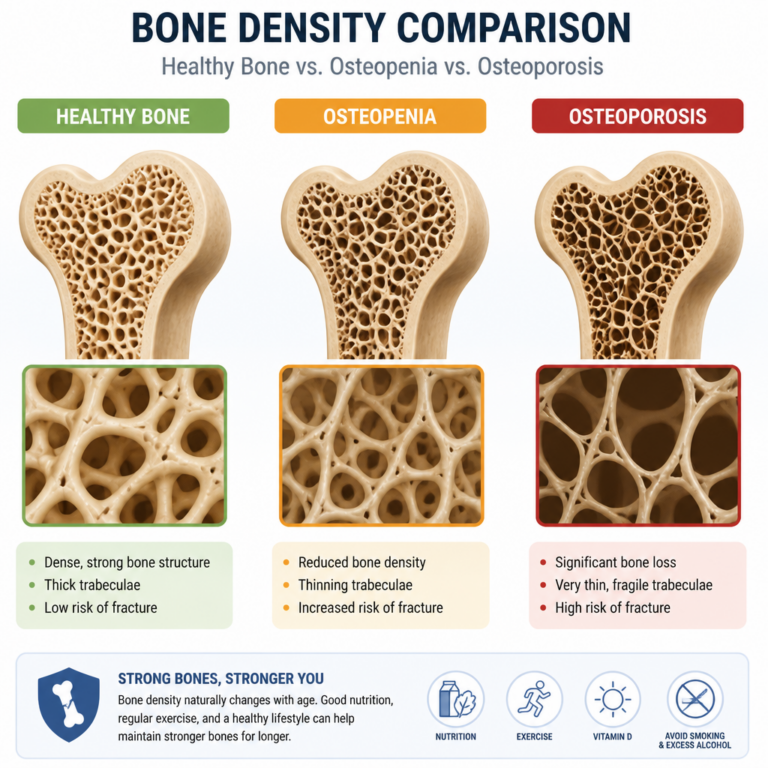
Osteopenia sits in the space between healthy bone and osteoporosis, and being earlier on that spectrum is exactly why what you do day to day carries so much weight. This is the stage where diet, movement, and ordinary habits can meaningfully slow bone loss and protect the density you already have. What follows is what osteopenia actually means, the four non-drug levers that move the needle, the moment medication really does become worth considering, and how to tell whether your effort is working — drawn from guidance published by NIAMS, the Bone Health & Osteoporosis Foundation, the NHS, and Mayo Clinic.
What osteopenia actually means
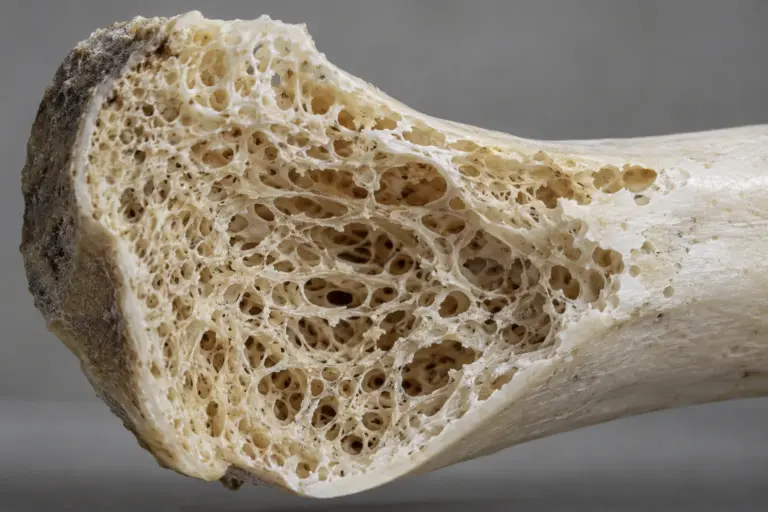
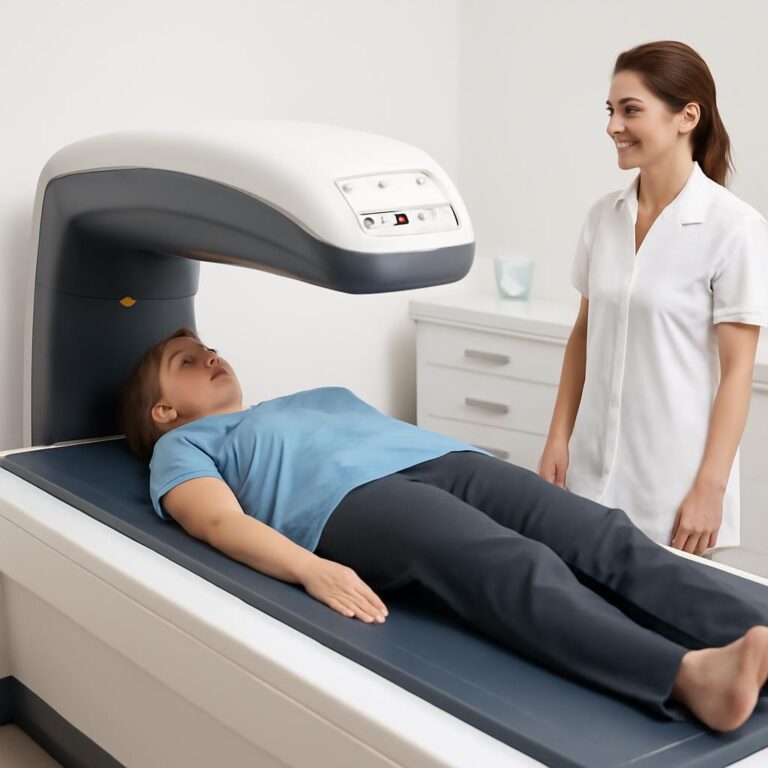
Osteopenia is lower-than-average bone mineral density that hasn’t crossed into osteoporosis. A DEXA scan measures it and reports a T-score, which compares your bone density with that of a healthy young adult. A T-score of −1.0 or above is normal. Anything between −1.0 and −2.5 is osteopenia. At −2.5 or below, it becomes osteoporosis.
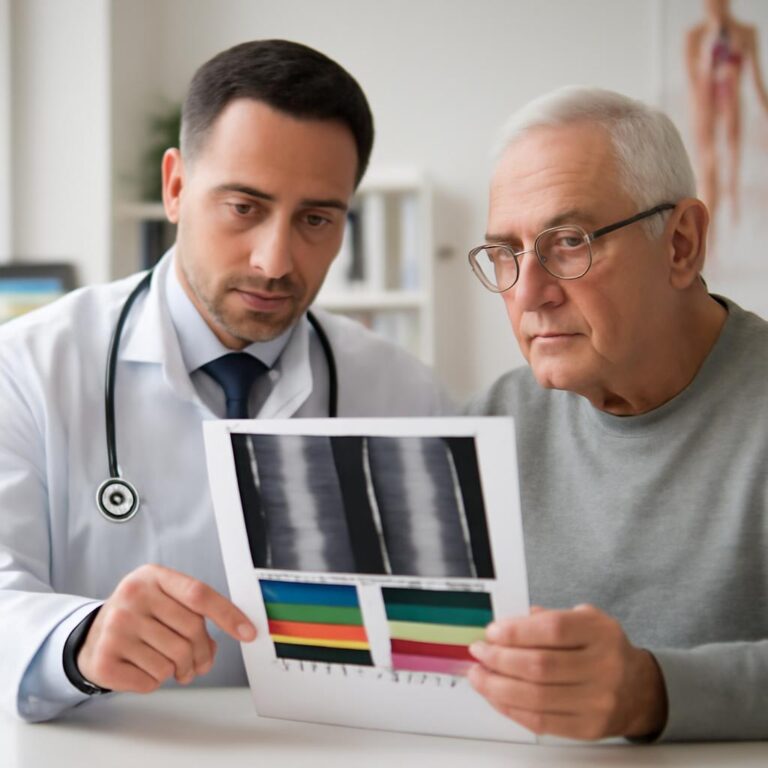
That’s a wide range, and where you land in it changes everything. Someone at −1.1 is barely below the line and may simply have naturally lighter bones; someone at −2.4 is nearly at the osteoporosis threshold and deserves a much closer look. So osteopenia isn’t a single verdict — it’s a spectrum, and the right response depends on your number and the rest of your risk profile. If you want the distinction spelled out, our guide on osteoporosis vs osteopenia goes deeper, and if you’re squinting at your own report trying to make sense of it, how to read DEXA scan results will help.
It helps to remember that bone is living tissue. All your life, old bone is broken down and new bone is laid in its place. After menopause, falling estrogen tips that balance toward loss, which is why thinning bone is so common in women past 50. Everything below is aimed at the rebuilding side of that equation.
Why most osteopenia is handled without drugs first
For most people with osteopenia, medical guidelines don’t recommend jumping straight to bone-building medication, and the reasoning is simple. Osteopenia on its own, without a high overall fracture risk, usually doesn’t carry enough near-term danger to justify years of drug therapy. The first-line approach is lifestyle: nutrition, exercise, and easing off the habits that speed bone loss. Some clinicians call this osteopenia self care, and it isn’t a consolation prize — it’s the medically endorsed place to begin.
It’s worth being honest about what these steps can and can’t do. Treating osteopenia without medication won’t “cure” it, and it won’t dramatically rebuild density in most adults. What a steady program realistically can do is slow the loss, help you hold onto the bone you have, build the muscle and balance that keep you upright, and cut your risk of the falls that actually break bones. Those are meaningful, evidence-backed outcomes — and for someone in the osteopenia range, they’re often exactly what’s called for.
The four non-drug levers that matter most
Picture your plan as four levers. You don’t have to pull each one perfectly. But the more of them you engage, the better your odds of holding your ground.
Resistance and weight-bearing exercise: the strongest lever
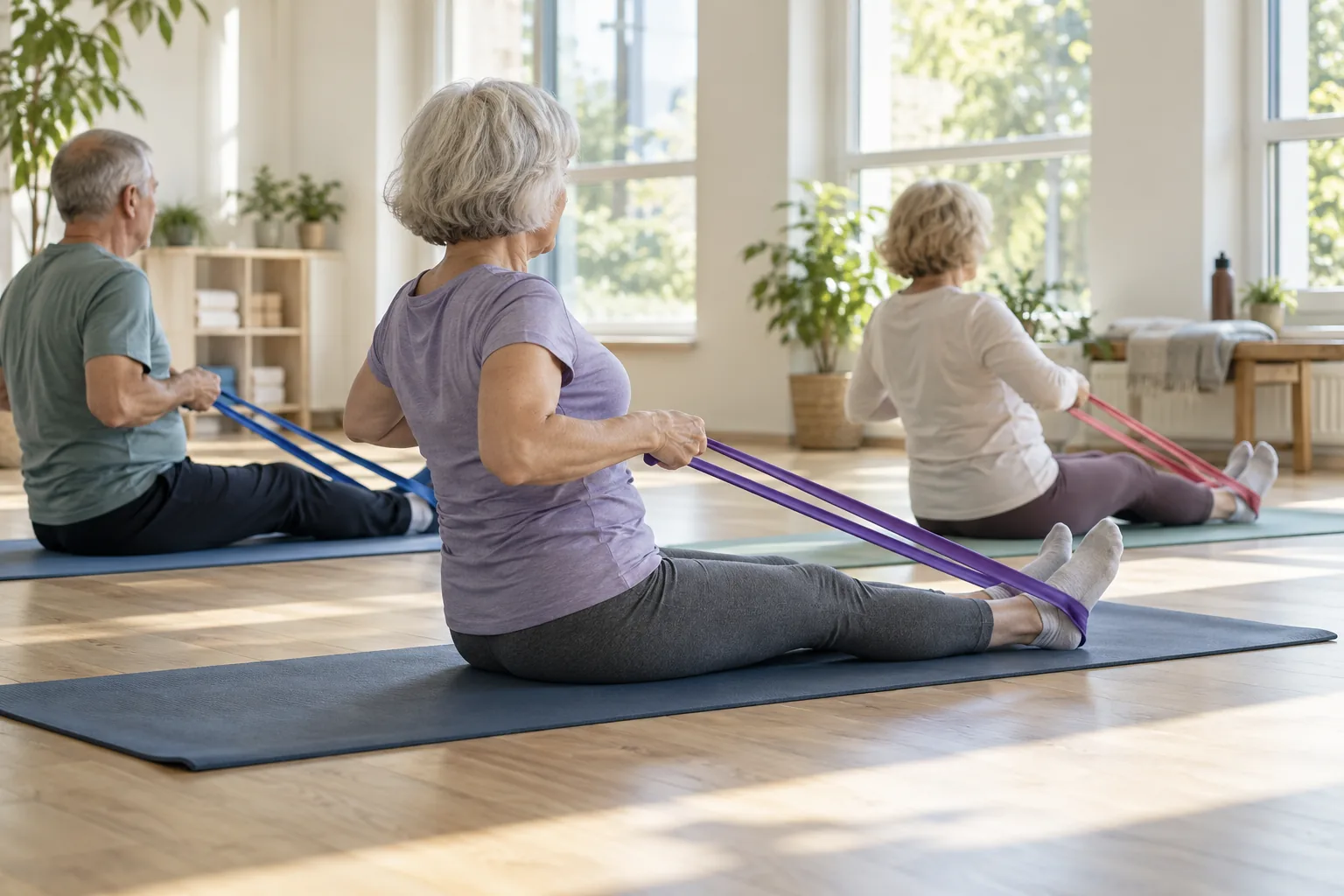
If you do only one thing, do this. Bone responds to load. When muscles pull on it and your skeleton carries your body weight, that stress tells your body to keep bone tissue where it is and build more. Two kinds of movement do the work: resistance training, which means challenging your muscles with weights, bands, or your own body weight, and weight-bearing exercise, which means anything done on your feet — brisk walking, stairs, dancing, hiking.
Swimming and cycling are wonderful for your heart, but they float or roll your weight rather than loading your bones, so they do relatively little for density. Aim to strength-train two or three times a week, adding a little as you get stronger, and keep the weight-bearing movement regular. A balance practice like tai chi earns its place twice over: steadier feet mean fewer falls. For a structured, joint-friendly routine, see our roundup of the best exercises to improve bone density after 50. And if you already have osteoporosis or a fracture history, get your doctor’s clearance first — some high-impact moves and deep forward bends may not be safe for you.
Nutrition: food first, then fill the gaps
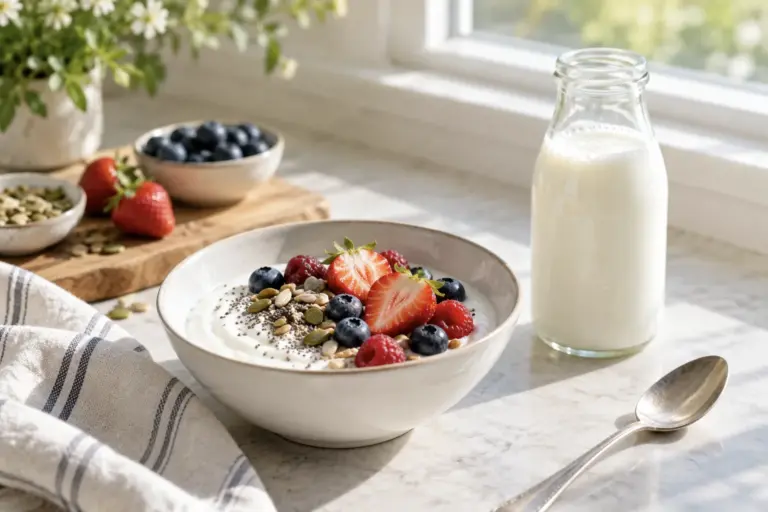
Bone is built from what you eat, and a handful of nutrients do the heavy lifting. Calcium comes first — roughly 1,200 mg a day for women over 50, ideally from food. Dairy, fortified plant milks, canned salmon or sardines with the bones, calcium-set tofu, leafy greens, and beans all count, and spreading it across your meals absorbs better than one big hit at dinner. Our guide to calcium-rich foods for osteopenia makes hitting that number a lot less daunting.
Calcium is useless, though, if your body can’t absorb it, and that’s vitamin D’s job. Plenty of adults over 50 run low, especially through the winter. A simple blood test tells you where you stand, and supplementing is common — just settle on the dose with your doctor rather than guessing. Two quieter players, vitamin K2 and magnesium, help steer calcium into bone; both come from a varied diet built on leafy greens, nuts, seeds, and fermented foods. Then there’s protein, which is easy to overlook: at about 1.0 to 1.2 grams per kilogram of body weight a day, it forms the collagen scaffold your bone is built on and protects the muscle that keeps you from falling. Older adults routinely eat too little of it, so this one is worth actually counting.
If you want to get into dosing and whether supplements make sense for you, read calcium and vitamin D: beyond what your bones need. It’s just as useful to know what works against you: heavy sodium, cola-type soft drinks, and a lot of alcohol or caffeine can all undermine bone, and foods to avoid with osteoporosis lays out the full picture.
Lifestyle: the habits that quietly cost you bone
A few everyday habits speed up bone loss, and changing them is entirely in your hands. Smoking is the big one — it’s directly toxic to the cells that build bone and ranks among the strongest fracture risks you can actually control, so quitting matters more here than almost anything. Keep alcohol to no more than a drink a day, since heavier drinking both blunts bone formation and makes falls more likely. Protect your sleep, too: poor and too-little sleep is increasingly tied to lower bone density and robs your muscles of the recovery they need. And don’t dismiss stress — chronically high cortisol nudges the body toward breaking bone down, so regular, low-key stress relief like a daily walk, some breathing, or time outdoors supports your skeleton in a real, if indirect, way.
Fall prevention: because fractures come from falls
Here’s the truth that reframes the whole conversation: with osteopenia, most fractures happen because someone falls. Strengthening bone matters, but so does simply not hitting the ground — and fall prevention is the most underrated lever of the four. Clear the loose rugs and clutter. Brighten the stairs and hallways. Put grab bars in the bathroom, wear supportive non-slip shoes, and have your vision checked along with any medication that leaves you dizzy. The balance and lower-body work from earlier pulls double duty here. Guard against falls and you turn a lower bone density into a much lower fracture risk, which is the outcome that actually counts.
Some readers want more structure than four principles — an actual program to follow day by day. If that’s you, The Bone Density Solution packages this same diet, exercise, and lifestyle approach into a step-by-step routine built for adults over 50. Treat it as a companion to your doctor’s guidance, not a replacement for it. If you want more detail before deciding, here is what we made of the program after working through it.
When medication really is warranted
Non-drug care is the default, though not for everyone. Medication deserves a serious look if you have already had a fragility fracture, if your FRAX result puts your 10-year fracture probability above the thresholds in national guidelines, if your T-score is drifting toward −2.5 across repeat scans, or if you carry other significant risks such as long-term steroid use. Our guide to osteopenia medication vs natural approaches works through how that call is actually made. Either way the lifestyle steps above still matter, since they work alongside medication.
How to track progress without losing heart
Bone changes slowly, and managing your own expectations is part of doing this well. A repeat DEXA scan usually comes every one to two years; scanning more often than that rarely reveals real change and can mislead you, because small differences can fall inside the margin of measurement error.
So be realistic about the numbers, and about the word “reversed,” which is honestly the wrong word for most people. A few individuals do see modest density gains with consistent exercise, good food, and a corrected vitamin D deficiency, but big reversals are uncommon, and no program can promise to cure bone loss. Even with a diligent routine, most people are aiming to hold steady or slow the decline rather than post dramatic gains — and where density does climb, a rise of 1 to 2 percent over 12 to 18 months is a real success, not a letdown. Stability itself is a win, because it means you’ve interrupted the downward trend.
The scan is slow, but your body offers faster feedback. Diet and exercise take months to years to register on a DEXA reading, yet the muscle strength, balance, and steadiness that directly cut your fall risk start showing up within weeks of a consistent strength-and-balance routine. Getting stronger, feeling surer on your feet, walking down stairs without a second thought — those are all signs the plan is working long before the next scan confirms it. For a routine you can follow week to week between scans, our osteopenia self care guide lays out a practical approach.
Two questions come up so often they’re worth answering plainly. Should you take medication for osteopenia? Usually not for osteopenia by itself — most people without other major risks are managed with lifestyle first, and drugs become appropriate only in the situations above. It’s an individual decision your doctor should make with you, not something to start or avoid on the strength of an article. And do you still need calcium supplements if you eat well? Not necessarily; guidelines favor food first, and many people reach roughly 1,200 mg a day through diet with a little planning. Supplements are for filling a genuine gap, and taking more calcium than you need buys no extra bone benefit. Vitamin D is the exception, since supplementing is more often necessary, especially in winter — but confirm your level and dose with your doctor rather than guessing.
If you had to boil it all down to one sentence: load your bones with resistance and weight-bearing exercise, guard hard against falls, and let good nutrition supply the raw materials that make both work. That trio is the heart of treating osteopenia without medication.
Sources
- National Institute of Arthritis and Musculoskeletal and Skin Diseases (NIAMS) — Osteoporosis
- Bone Health & Osteoporosis Foundation (BHOF)
- NHS — Osteoporosis
- Mayo Clinic — Osteopenia
- Mayo Clinic — Bone health tips and treatment
The Bone Density Solution
A structured program designed for adults over 50 to support bone density through diet, exercise, and lifestyle changes — an integrated approach to reducing fracture risk. Best used alongside, not instead of, professional medical care.
Check The Bone Density Solution →Affiliate link — we may earn a commission at no extra cost to you. Full disclosure.
Medical disclaimer: This article is for information only and is not medical advice; talk with your physician before changing supplements, medications, or exercise, especially if you’ve been diagnosed with osteopenia or osteoporosis. See our full medical disclaimer.
More in this series: the osteopenia non-drug playbook
- Calcium-Rich Foods for Osteopenia
- Osteopenia Self-Care: Daily Habits That Slow Bone Loss
- Osteopenia Home Remedies: What Actually Helps
- Osteopenia Diet and Exercise Plan
- Can You Reverse Osteopenia Naturally?
- Mild vs Moderate Osteopenia
- Osteopenia Medication vs Natural Approaches
- Osteopenia and Dental Implants