Why Bending Forward Can Crack a Fragile Spine (and What to Do Instead)
Here is something that sounds impossible until you understand the mechanics behind it: a person with fragile bones can crack a vertebra simply by bending forward. No fall. No car accident. No icy sidewalk. Just the everyday motion of leaning down to lift a bag of groceries, tie a shoe, or reach into the bottom drawer of the dishwasher. The spine folds forward the way it has folded a million times before, and this time a small bone in the middle of the back quietly gives way.
For most of us, that idea is hard to accept. We tend to imagine fractures as dramatic events, the product of obvious force. But in a spine thinned by osteoporosis, the force that does the damage is often nothing more than body weight and gravity, funneled onto a part of the vertebra that was never built to carry the whole load alone. Understanding why this happens is the first step to protecting yourself, and the good news is that the fix is mostly a matter of changing a few deeply ingrained movement habits.
What actually happens inside the spine when you bend forward
Picture a single vertebra. The main weight-bearing part is the blocky body at the front, a roughly cylindrical piece of bone stacked on top of the one below it, with a cushioning disc in between. When you stand upright, your weight presses down fairly evenly across the whole surface of that block. The load is shared. Nothing is concentrated.
Now bend forward at the waist. As your trunk tips down, the spine curls into what is called flexion, and the geometry changes in a way that matters enormously. The front edges of the vertebral bodies are squeezed together while the back edges pull apart. All of that compressive force, the weight of your head, arms, and upper body, plus whatever you happen to be lifting, gets shifted onto the front wall of the vertebra. The anterior column, in anatomical terms, suddenly has to carry a load it does not normally bear alone.
In a healthy skeleton, the bone shrugs this off. In a spine hollowed out by osteoporosis, that front wall has lost much of its internal scaffolding, the fine lattice of bone that gives a vertebra its crush resistance. Push hard enough on a weakened front edge and it collapses, wedging the vertebra into a slight forward tilt. This is exactly why the classic osteoporotic fracture is a wedge compression fracture, taller at the back than the front, and why enough of them stacked together produce the stooped, rounded upper back so many people recognize but few understand.
The unsettling part is how little force it can take. When the bone is fragile enough, the ordinary act of flexing forward under load is sometimes all it takes to tip a vertebra past its breaking point.
The research that turned this from theory into warning
This is not merely a plausible-sounding mechanism. It was tested directly, and the result has shaped how careful clinicians think about exercise for fragile bones ever since. Decades ago at the Mayo Clinic, the physician and researcher Mehrsheed Sinaki ran a study that has become something of a landmark in this field. She took a group of women with osteoporosis and assigned them to different back-strengthening programs, then followed them to see how their spines fared over time.
One group did extension exercises, movements that arch the back gently and strengthen the muscles that hold you upright. Another group did flexion exercises, the forward-bending, curl-the-trunk-toward-the-knees kind of movement that resembles a sit-up. A third group did both, and a fourth did neither.
When the researchers later looked at how many new vertebral compression fractures had occurred, the contrast was striking. Among the women who had done the flexion exercises, the rate of new spinal fractures was dramatically higher than among those who had done extension work. The forward-bending program, meant to help, had instead loaded exactly the vulnerable front edge of the vertebrae over and over. The extension group, by contrast, came through with far fewer fractures. The takeaway was hard to argue with: for a fragile spine, repeated loaded flexion is not neutral exercise. It can be actively harmful.
That single finding reframed a lot of well-meaning advice. For years, sit-ups and toe-touches were handed out as generic “core” and “flexibility” work. For someone with thinning bones, they turned out to be among the riskier things you could do.
What this looks like in ordinary life
The laboratory language of flexion and the anterior column can feel abstract, so it helps to name the real-world movements that carry the risk. The common thread is always the same: the spine rounds forward, often while bearing weight.
The obvious offenders are the exercises themselves, crunches and sit-ups, and the standing toe-touch where you keep your legs straight and reach for the floor. But the everyday versions matter just as much, because you do them without thinking. Bending over from the waist to lift a laundry basket, a grandchild, or a bag of potting soil. Hunching down over a low counter. Slumping forward in a soft chair for hours. Twisting and reaching forward at the same time, say, to pull a heavy pot from the back of a low cabinet, which combines flexion with rotation and stresses the vertebra from two directions at once.
None of these is guaranteed to break a bone. But each one funnels load onto the weakest part of a fragile vertebra, and it only takes one unlucky repetition. If you want a fuller rundown of the movements worth retiring, it is worth reading through the exercises to avoid with osteoporosis so the pattern becomes second nature.
The safer way to move
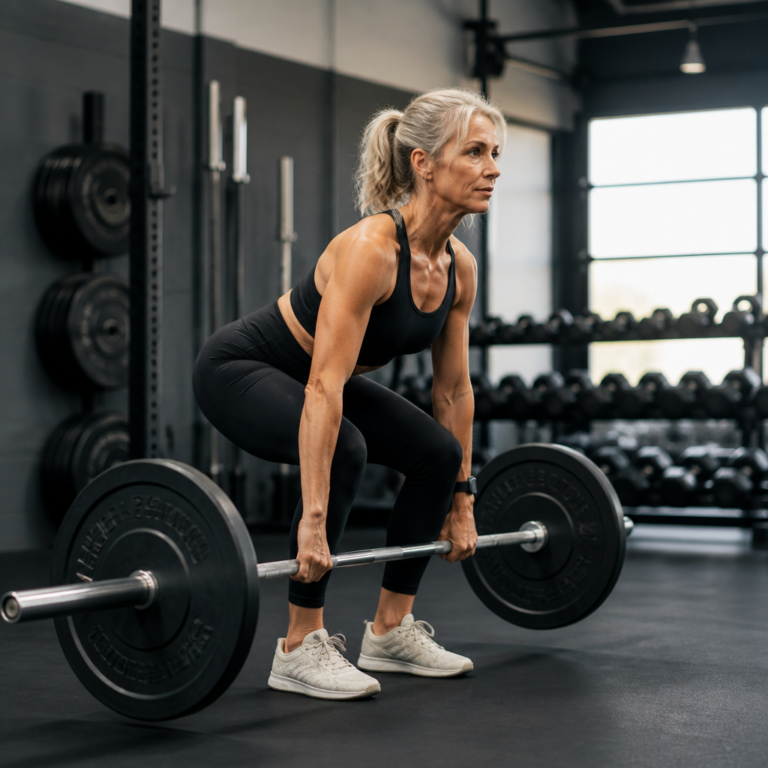
The encouraging news is that you do not have to stop bending, lifting, or living. You simply have to change where the bend happens. Instead of folding at the waist and rounding the spine, you learn to hip-hinge: keep your back in its natural, neutral curve and bow forward by pushing your hips backward and bending at the knees, letting the big muscles of the hips and thighs do the work. The classic cue is to imagine closing a car door with your backside, or picking something up the way a weightlifter does, chest up, spine long, hips back. The load then travels down through strong legs and an aligned spine rather than crushing the front of a vertebra.
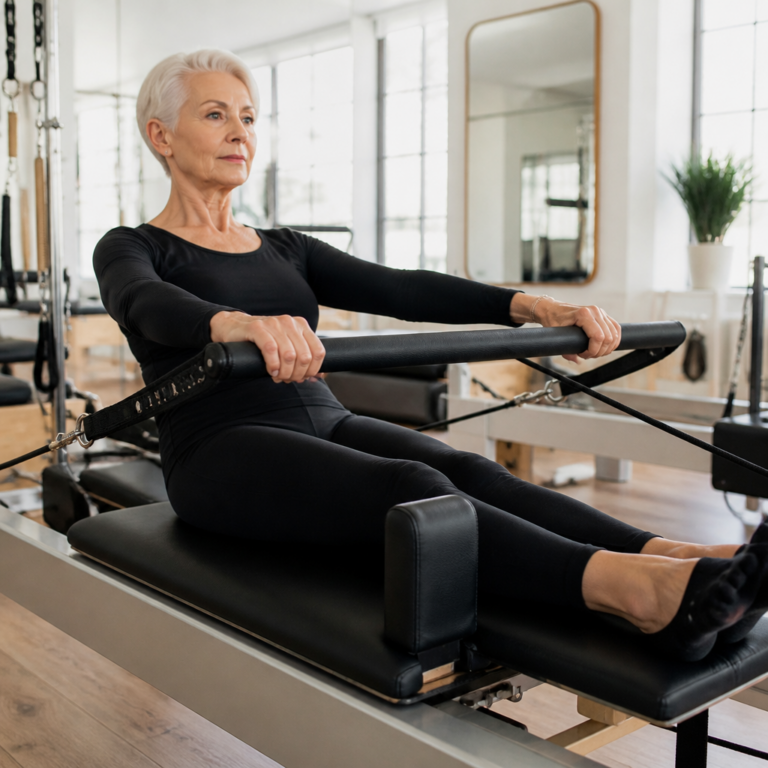
Alongside better lifting mechanics, the exercise that appears to protect the spine is extension work, the very thing that fared so well in Sinaki’s study. Gentle movements that strengthen the muscles running along the back and encourage you to stand tall counteract the forward-rounding pull that both gravity and modern life impose. Think of a program built around posture, back-extensor strength, balance, and weight-bearing activity rather than crunches and toe-touches. A physical therapist can show you specific spine-safe exercises for osteoporosis tailored to how fragile your bones actually are, and it is worth pairing that with a broader look at the best exercises to improve bone density after 50.
Bone health is never only about movement, of course. Nutrition, adequate protein, vitamin D, and the guidance of a good clinician all play their part. Some readers also explore structured, food-and-lifestyle approaches to supporting bone strength, such as The Bone Density Solution, as a complement to, never a replacement for, medical care.
This article contains affiliate links; we may earn a commission at no extra cost to you. See our disclosure.
When to stop guessing and get checked
One of the cruel features of vertebral compression fractures is that they can be quiet. Not every one announces itself with sharp pain; some show up only as a gradual loss of height, a new roundness in the upper back, or a dull ache that never quite resolves. That is why it is worth knowing the signs of a vertebral fracture so you can raise them with your doctor rather than dismissing them as ordinary aging. If you have lost more than an inch or two of height, if your posture has visibly changed, or if a sudden back pain follows nothing more than a bend or a lift, that deserves a professional evaluation.
The larger point is not to live in fear of your own spine. It is to move through the world with a small, permanent adjustment in mind: hinge at the hips, keep the back long, favor standing tall over curling forward, and let the strong muscles of your legs and back carry the load your vertebrae should not have to bear alone. That one habit, practiced until it becomes automatic, may do more to protect your spine than almost anything else you can do at home.
This article is for general information only and is not a substitute for personalized medical advice; please consult your doctor or physical therapist before changing how you exercise or move. See our full medical disclaimer.