Strength Training After 50: A Beginner’s Guide for Bone Health
Disclosure: We may earn a commission if you purchase through links on this page. This does not affect our editorial assessment. See our affiliate disclosure.
Of all the lifestyle interventions available for bone health after 50, resistance training stands out as one of the most powerful — and one of the most underused. If you’ve never lifted weights, or it’s been decades since you have, the idea can feel intimidating. But the science is clear: strength training is safe, effective, and genuinely transformative for bones and muscle alike. This guide gives you what you need to start.

Why Strength Training Is So Effective for Bone Health
Bone responds to mechanical stress. When muscles contract against resistance, they pull on the bones they’re attached to. This pulling force — called tensile stress — stimulates osteoblasts (bone-building cells) to produce new bone tissue. The heavier the load relative to what you’re used to, the stronger the signal.
This is why resistance training is more effective for bone density than walking or cycling. Weight-bearing cardio creates compressive forces through the skeleton, which is beneficial — but resistance training creates both compressive and tensile forces targeted at specific bones, producing a stronger and more site-specific stimulus. A squat loads the hip and spine. A row loads the upper spine. A hip hinge loads the femoral neck — one of the most fracture-prone sites in osteoporosis.
Multiple studies in postmenopausal women have shown that progressive resistance training can significantly slow bone loss and in some cases increase bone mineral density — particularly at the hip and spine, the sites most at risk. The LIFTMOR trial, published in the Journal of Bone and Mineral Research, found that high-intensity resistance training produced significant increases in femoral neck and lumbar spine bone density in postmenopausal women with low bone mass, with no adverse events.
Is Strength Training Safe if You Already Have Osteoporosis?
For most people, yes — with appropriate form and progression. The key is starting at a manageable load and progressing gradually. Some exercises require modification for people with vertebral fractures or severe osteoporosis — specifically, heavy flexion-based movements (like sit-ups or toe touches) and high-impact jumping. Your doctor or a physical therapist can advise on appropriate modifications for your specific situation.
The risk of doing nothing is greater than the risk of thoughtfully performed resistance training. Muscle weakness and bone fragility reinforce each other — breaking that cycle requires load.
Key Principles for Beginners Over 50
Progressive overload. Your body adapts to the stress you impose on it. To continue building bone and muscle, you need to gradually increase the challenge over time — through more weight, more repetitions, or more sets. Starting too light and staying there indefinitely produces limited results.
Compound movements first. Exercises that work multiple muscle groups and joints simultaneously — squats, deadlifts, rows, presses — provide the greatest bone stimulus because they load large portions of the skeleton at once. Isolation exercises (bicep curls, leg extensions) have their place but should complement, not replace, compound movements.
Adequate recovery. Bone remodeling happens during rest, not during exercise. Two to three strength training sessions per week, with rest days between, is the evidence-based sweet spot for most beginners. More is not always better — recovery matters.
Form before weight. Learning the correct movement pattern before adding significant load protects your joints and ensures the right muscles (and by extension, bones) are being stimulated.
A Simple Beginner Program (3 Days/Week)
This is a basic framework — adjust based on your fitness level, available equipment, and any joint limitations.
| Exercise | Sets × Reps | Bones Targeted |
|---|---|---|
| Goblet squat or bodyweight squat | 3 × 10–12 | Hip, femur, spine |
| Hip hinge / Romanian deadlift | 3 × 10 | Femoral neck, spine, hip |
| Seated or standing row (cable/band) | 3 × 12 | Upper spine, shoulders |
| Step-ups (onto a box or stair) | 3 × 10 each leg | Hip, femur |
| Wall push-up or incline push-up | 3 × 10–15 | Wrist, forearm, upper body |
| Standing calf raise | 3 × 15 | Tibia, ankle |
Rest 60–90 seconds between sets. The entire session should take 30–40 minutes. As these feel manageable — typically after 2–3 weeks — add small amounts of weight or additional reps.
Equipment Options
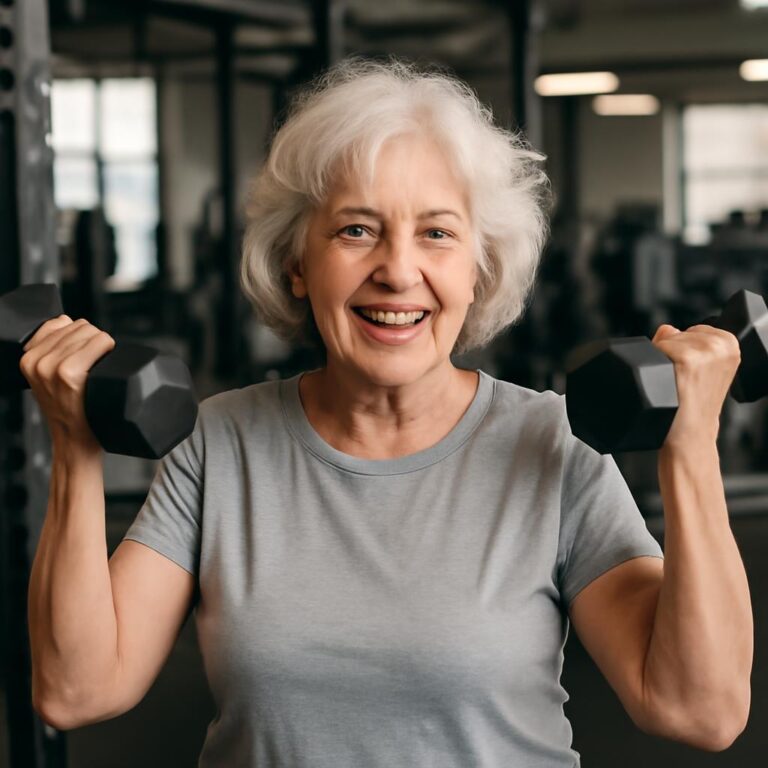
Gym: The most versatile option. Machines are useful for beginners learning movement patterns safely. Free weights (dumbbells, barbells) provide more bone stimulus due to the stabilization demands.
Home with dumbbells: A pair of adjustable dumbbells and a resistance band set covers most beginner needs effectively and affordably.
Resistance bands only: Provides some benefit, particularly for upper body and rehabilitative work. For hip and spine bone loading, heavier resistance from dumbbells or barbells is more effective long-term.
Pairing Strength Training with the Right Nutrition
Exercise creates the stimulus for bone and muscle building — nutrition provides the raw materials. Adequate protein (1.0–1.2g per kg of body weight per day), calcium, vitamin D, and vitamin K2 are particularly important to support the adaptations that resistance training triggers. If you’re exercising consistently but your nutrition isn’t supporting recovery, you’re leaving results on the table.
For a complete program that integrates resistance exercise with targeted nutrition and lifestyle habits — all structured into a daily plan — The Bone Density Solution was designed specifically for adults over 50 looking to rebuild and protect their bone density naturally.
Starting strength training at 50, 60, or even 70 is not too late. The bone and muscle response to resistance training is well-documented at every age. The best time to start was years ago. The second best time is now.
Related articles:
7 Best Exercises to Improve Bone Density After 50
Walking for Bone Health: How Much Do You Actually Need?
Protein and Bone Health: Why You Probably Need More Than You Think
Related Articles
Who Should Be Careful With Strength Training After 50
Strength training is one of the most effective ways to support bone density, but some people need to start more cautiously:
- Those with a recent fracture or who have been advised to limit loading by their doctor
- People with joint replacements — some movements may need to be avoided or modified
- Anyone who experiences chest pain, breathlessness, or dizziness during exercise
- Those new to exercise who should begin with bodyweight or very light loads and progress gradually
If you have osteoporosis and want to begin strength training, working with a physiotherapist or a trainer experienced in bone health can help you start safely and effectively.
Sources and Further Reading
This article is for educational purposes only and does not replace advice from a qualified healthcare professional.
The Bone Density Solution
A structured program specifically designed for adults over 50 to improve bone density through diet, exercise, and lifestyle changes. Takes an integrated approach to reducing fracture risk.
Check The Bone Density Solution →Affiliate link — we may earn a commission at no extra cost to you. Full disclosure.
Disclosure: This article contains affiliate links. We may earn a small commission if you purchase through our links, at no extra cost to you.
Medical disclaimer: This article is for informational purposes only and is not medical advice. Consult your physician before changing supplements, medications or exercise routines, especially if you have been diagnosed with osteopenia or osteoporosis. See our full medical disclaimer.