
Which Medications Quietly Cause Bone Loss? A Guide for Adults Over 50
Margaret did everything the brochures told her to. She walked most mornings, ate her yogurt and leafy greens, kept her weight steady, and took her calcium with dinner. So when her follow-up DEXA scan came back showing her bone density had slipped from mildly low into full osteoporosis, she sat in the parking lot afterward feeling betrayed by her own body. What her scan didn’t say, and what her rheumatologist gently explained a week later, was that the low-dose prednisone she’d taken for two years to keep her polymyalgia under control had been quietly working against her the whole time.
If you’re over 50 and worried about your bones, this is one of the most overlooked pieces of the puzzle. We talk endlessly about diet and exercise, and those matter enormously. But some of the most powerful influences on your skeleton come in a pill bottle with your name on the label. A surprising number of common, genuinely useful medications carry a side effect that rarely gets mentioned at the pharmacy counter: they chip away at bone density, sometimes fast, usually silently, and often in people who are otherwise doing everything right.
Before we go any further, one thing needs to be crystal clear, and I’ll come back to it more than once. Almost every drug on this list is prescribed for a good reason, and for many people the condition being treated is far more dangerous than the bone loss. The goal here is not to frighten you off your medication. It is to help you have a smarter conversation with your doctor, so that where bone loss can be monitored, offset, or minimized, it actually is. Never stop or change a prescription on your own based on an article. Read, then talk to the person who prescribed it.
The biggest offender by far: long-term oral steroids
If there’s a single class of medication that deserves the top of this list, it’s oral corticosteroids: prednisone, prednisolone, dexamethasone, and their relatives. These drugs are lifesavers for conditions like rheumatoid arthritis, lupus, polymyalgia rheumatica, asthma flares, inflammatory bowel disease, and dozens of other inflammatory and autoimmune problems. They’re also, gram for gram, the most common cause of drug-induced osteoporosis we know of.
The reason steroids hit bone so hard is that they attack it from several directions at once. They slow down the cells that build new bone, speed up the cells that break bone down, reduce how much calcium you absorb from food, and increase how much you lose in your urine. The bone loss is fastest in the first three to six months of treatment, which is exactly why it so often goes unnoticed. Someone starts prednisone for a flare, feels better, and never connects a fracture two years later to those early months. Doses as low as 2.5 to 5 milligrams a day, taken long enough, can measurably lower bone density, and the risk climbs with both the dose and the duration.
The encouraging part is that this is one of the most manageable risks on the entire list, precisely because it’s so well understood. Guidelines recommend that anyone expected to take steroids for three months or longer be assessed for bone protection, which may include calcium and vitamin D, a bone density scan, and in many cases a bone-preserving medication started alongside the steroid rather than years later. It’s also worth knowing that a good deal of steroid-related loss can recover once the drug is stopped or tapered; I’ve written more about that in this piece on whether prednisone-related bone loss is reversible, and there’s a fuller deep dive on the mechanism and management in my guide to corticosteroids and bone loss.
Acid reducers, antidepressants, and the drugs you forget you’re taking
Some of the trickiest offenders are the medications that become so routine you stop thinking of them as medication at all. Proton pump inhibitors, the acid reducers like omeprazole, esomeprazole, and lansoprazole, are a prime example. Millions of people over 50 take them for reflux, often for years, sometimes without anyone ever revisiting whether they’re still needed. The concern is that by lowering stomach acid they may reduce how well you absorb calcium, and long-term use has been linked in large studies to a modestly higher fracture risk, particularly of the hip.
I want to be honest about the size of that effect, because it’s easy to overstate. The increase in risk is real but relatively small, and it applies mainly to long-term, higher-dose use rather than a two-week course after a stomach bug. For many people the sensible response isn’t panic but a simple periodic review: are you still on the lowest effective dose, and do you still need it at all? A lot of long-term prescriptions turn out to be running on autopilot.
Antidepressants in the SSRI family, drugs like sertraline, citalopram, escitalopram, and fluoxetine, are another surprise on many people’s list. Serotonin, it turns out, has receptors on bone cells, and long-term SSRI use has been associated with lower bone density and a somewhat higher fracture risk. There’s also a second, more practical route: these medications can cause dizziness or affect balance, and a fall is what actually breaks a fragile bone. This is a genuinely delicate one, because untreated depression is itself dangerous and nobody should quietly abandon a medication that’s keeping them well. It belongs firmly in the “mention it to your doctor and weigh it together” category, not the “stop taking it” category.
Cancer therapy, seizure medication, and the hormone connection
For women who’ve been through breast cancer, aromatase inhibitors, drugs such as anastrozole, letrozole, and exemestane, are among the most important weapons available, dramatically lowering the odds of the cancer returning. They work by stripping estrogen down to almost nothing, and because estrogen is one of the main things protecting a woman’s skeleton, that same mechanism accelerates bone loss. This is a case where the trade-off is usually well worth it, and the right response is vigilance rather than avoidance. Oncologists who prescribe these drugs generally build in bone density monitoring and are quick to add protective treatment, because they know the risk is coming and can stay ahead of it.
Certain older anti-seizure medications, particularly phenytoin, phenobarbital, and carbamazepine, are another long-standing concern. These interfere with how the body processes vitamin D, which in turn hampers calcium absorption, and over years of use that can meaningfully weaken bone. People taking them for epilepsy are often on them for decades, which makes the cumulative effect matter, and makes vitamin D status something genuinely worth checking.
Then there’s the hormone side of the equation, which cuts both ways. Excess thyroid hormone is a quietly common culprit: if you take levothyroxine for an underactive thyroid and your dose is even slightly too high, that surplus can push bone turnover into overdrive for years without any obvious symptom. This is one of the easiest problems on the whole list to catch and fix, because it usually comes down to a simple blood test and a small dose adjustment. Overtreatment is more common than people realize, and the same accelerated turnover shows up in genuine overactive-thyroid conditions, which I cover in more detail in my article on hyperthyroidism and bone loss. On top of those, long-term use of blood-thinning heparin, certain diabetes medications in the thiazolidinedione family such as pioglitazone, and some hormone-suppressing therapies used for prostate cancer all carry their own documented effects on the skeleton.
A quick reference: the main culprits at a glance
Because it genuinely helps to see these side by side, here is a compact summary of the classes worth knowing about, how each one tends to affect bone, and a sensible question to bring to your next appointment.
| Drug class | How it affects bone | What to ask your doctor |
|---|---|---|
| Oral corticosteroids (prednisone) | Biggest offender; suppresses bone building, speeds breakdown, cuts calcium absorption. Loss fastest in first 3–6 months. | “If I’ll be on this 3+ months, should I have a DEXA scan and start bone protection now?” |
| Proton pump inhibitors (omeprazole) | May reduce calcium absorption; modest rise in fracture risk with long-term use. | “Am I still on the lowest dose I need, and do I still need this at all?” |
| SSRI antidepressants (sertraline) | Linked to lower density and more falls; effect real but moderate. | “Given my bones, is this still the best option, and how’s my balance?” |
| Aromatase inhibitors (letrozole) | Strip estrogen, accelerating loss; usually a worthwhile trade-off. | “How often will you monitor my bone density while I’m on this?” |
| Some anti-seizure drugs (phenytoin) | Interfere with vitamin D and calcium over years of use. | “Should we check my vitamin D level regularly?” |
| Long-term heparin | Prolonged use can lower bone density. | “Is there a shorter course or alternative for my situation?” |
| Excess thyroid hormone (over-replacement) | Surplus speeds bone turnover; easy to miss, easy to fix. | “Is my dose slightly too high — can we recheck my levels?” |
| Certain diabetes & hormone therapies | Some diabetes drugs and prostate-cancer hormone therapy affect bone. | “Does my treatment affect bone, and should we monitor it?” |
What you can actually do about it
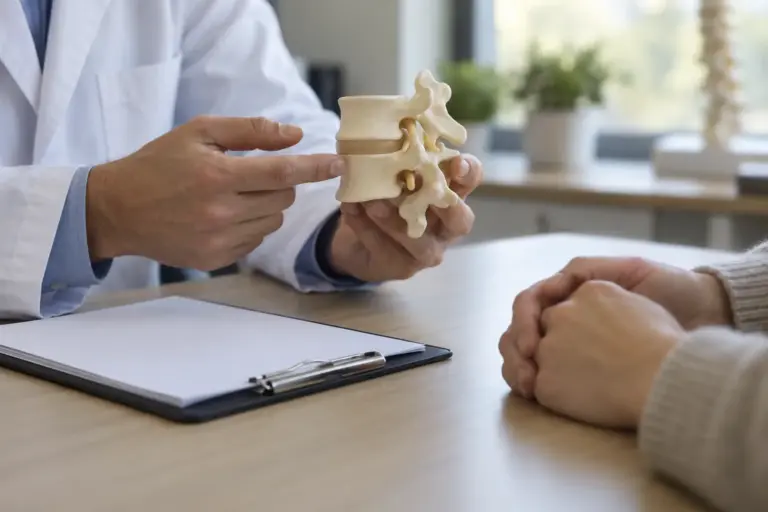
Here’s the reassuring truth underneath all of this: knowing a medication affects your bones turns a silent problem into a manageable one. The single most useful thing you can do is sit down with your doctor or pharmacist and go through your full medication list, prescriptions, over-the-counter items, everything, with one specific question in mind: which of these touch my bones, and what should we be doing about it? A surprising number of people have never had that conversation, and it changes everything about how proactive the care becomes.
From there, protection tends to come in layers. Making sure your calcium and vitamin D are genuinely adequate matters more than usual when a drug is working against absorption. Weight-bearing and resistance exercise become non-negotiable rather than optional, because loading bone is one of the few things that directly signals it to stay strong. If you’re on a high-risk medication, your doctor may recommend a baseline bone density scan and periodic repeats to catch changes early, and in some cases a protective medication. For people building a broader defensive routine, a structured program such as The Bone Density Solution can help you organize the diet, movement, and lifestyle pieces into something you’ll actually stick with, ideally as a complement to your medical care rather than a replacement for it.
This article contains affiliate links; we may earn a commission at no extra cost to you. See our disclosure.
It’s also worth understanding the tools your doctor has for pushing back against bone loss, since many of them are used specifically to counter the drugs above. Bone-preserving medications like the bisphosphonates are frequently started alongside steroids or aromatase inhibitors, and it helps to know both their benefits and their trade-offs, which I lay out in my piece on bisphosphonate side effects explained and in a broader comparison of the osteoporosis medications compared. And none of this replaces the foundational work of diet, movement, and lifestyle that supports bone at any age, which I walk through in detail in my guide to reversing bone loss naturally. If you’re currently on one of these prescriptions and want a focused checklist, my article on how to protect your bones while on medications is a good companion to this one.
The Bone Density Solution
A structured program designed for adults over 50 to support bone density through diet, exercise, and lifestyle changes — an integrated approach to reducing fracture risk. Best used alongside, not instead of, professional medical care.
Check The Bone Density Solution →Affiliate link — we may earn a commission at no extra cost to you.
None of this is a reason to fear your medicine cabinet. Margaret is doing well now; once she and her doctor understood what was happening, they adjusted her plan, added protection, and her numbers have stabilized. The medications she needed didn’t have to cost her her skeleton, they just needed to be watched. That’s really the whole message. The drugs on this list can be necessary, even lifesaving, and most of the bone loss they cause can be anticipated and blunted if someone is paying attention. Let that someone be you and your doctor, together, with your eyes open.
This article is for general information only and is not medical advice; please talk with your own doctor before making any decision about your medications or bone health. See our full medical disclaimer.