
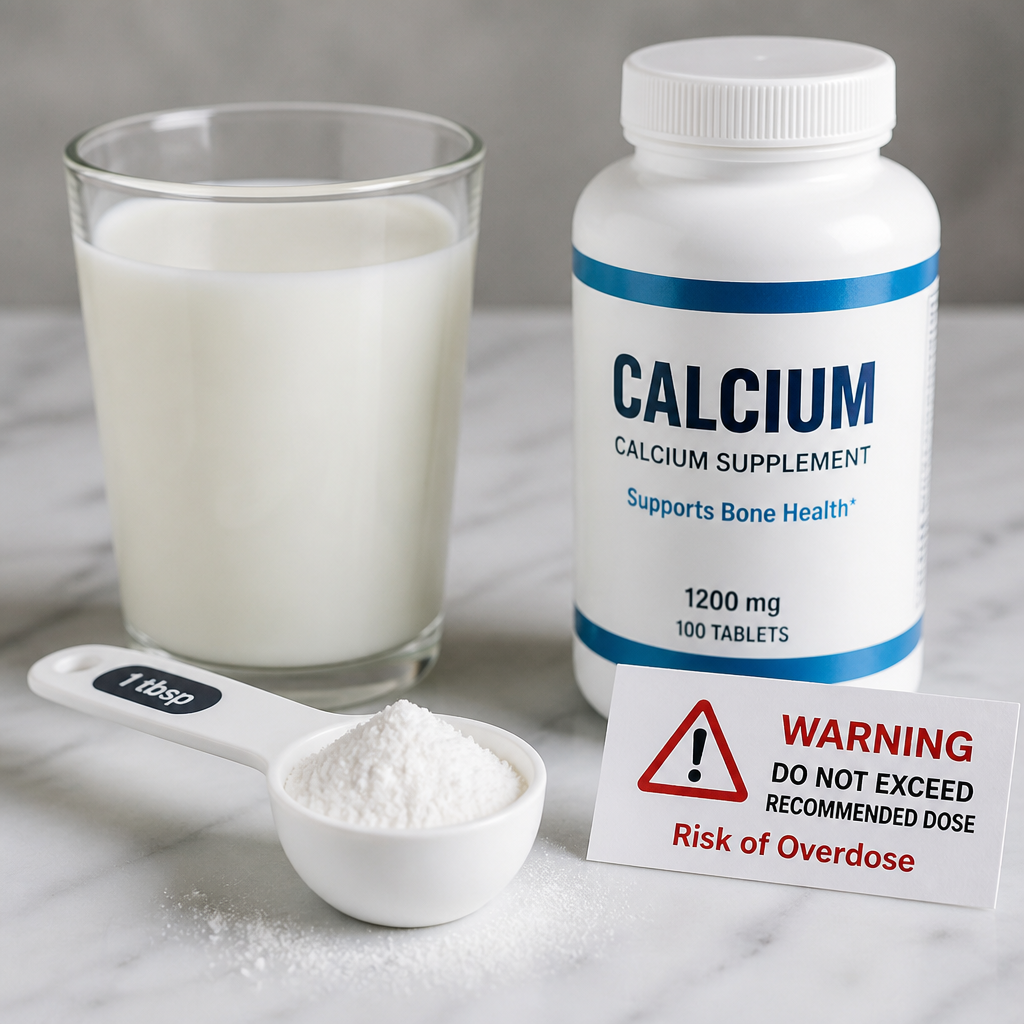
How Much Calcium Is Too Much? What You Need to Know
Disclosure: We may earn a commission if you purchase through links on this page. This does not affect our editorial assessment. See our affiliate disclosure.
Calcium is essential for bone health — that much is well established. But there’s a question that doesn’t get asked nearly enough: can you get too much? The answer is yes, and understanding where that line is matters as much as ensuring you’re getting enough.

The Upper Limit: What the Guidelines Say
Health authorities set a Tolerable Upper Intake Level (UL) for calcium — the maximum daily amount considered safe for most adults. For adults over 50, the current UL is 2,000 mg per day from all sources combined (food plus supplements). For adults under 50, it’s 2,500 mg.
These limits aren’t arbitrary. They’re based on evidence of harm at higher intakes — particularly the risk of hypercalcemia (too much calcium in the blood) and the conditions it can lead to.
What Happens When You Get Too Much Calcium
Hypercalcemia
When blood calcium levels become too high — typically from very high supplement doses rather than food alone — it can cause symptoms including nausea, vomiting, constipation, fatigue, excessive thirst, and in severe cases, confusion and kidney problems. True hypercalcemia from diet alone is rare; it’s almost always associated with very high supplement intake or underlying medical conditions like hyperparathyroidism.
Kidney Stones
This is one of the more well-documented risks of excessive calcium supplementation. High supplemental calcium intake can increase urinary calcium excretion, raising the risk of calcium oxalate kidney stones — particularly in people who are already prone to them. Interestingly, dietary calcium from food does not appear to carry the same risk and may actually be protective, because it binds oxalate in the gut and prevents absorption. The risk is specific to supplements in high doses.
Cardiovascular Concerns — The Ongoing Debate
This is the most controversial area. A series of studies — most notably a 2010 meta-analysis in the BMJ and subsequent research — suggested that high-dose calcium supplementation might be associated with increased cardiovascular risk, potentially by causing transient spikes in blood calcium that could promote arterial calcification.
This finding has been disputed and the evidence remains mixed. Several large studies have not replicated the cardiovascular risk finding. Current guidance from major bone health organizations is that calcium supplements at recommended doses, particularly when taken with vitamin K2 (which helps direct calcium into bones rather than arteries), are likely safe for most people. But it’s a reason to avoid unnecessarily high supplement doses and to prioritize dietary calcium where possible.
Interference with Other Minerals
Very high calcium intake can interfere with the absorption of other important minerals — particularly iron, zinc, and magnesium. This is most relevant when calcium supplements are taken with meals that are otherwise rich in these nutrients. Taking calcium supplements between meals, or at a different time from iron supplements, helps minimize this interaction.
Food Calcium vs. Supplement Calcium: Not the Same Risk
It’s important to distinguish between calcium from food and calcium from supplements. Food calcium is absorbed more gradually, alongside other nutrients that modulate its metabolism. It rarely causes the sharp spikes in blood calcium associated with some of the risks above.
Supplement calcium — especially calcium carbonate taken in large single doses — can cause more abrupt rises in blood calcium. This is one reason most guidelines now recommend:
- Getting as much calcium as possible from food first
- Using supplements only to fill genuine gaps in intake
- Taking no more than 500 mg of supplemental calcium at one time (absorption drops significantly above this)
- Preferring calcium citrate over calcium carbonate for people over 50 (better absorbed without food, gentler on digestion)
How Much Do You Actually Need?
The recommended daily intake for bone health is:
| Group | Recommended Daily Calcium |
|---|---|
| Women 19–50 | 1,000 mg |
| Women 51+ | 1,200 mg |
| Men 19–70 | 1,000 mg |
| Men 71+ | 1,200 mg |
The goal is to consistently hit these targets — not to exceed them significantly. More calcium is not better beyond the recommended amount. Think of it as a threshold to reach, not a nutrient to maximize.
A Practical Approach
Track your dietary calcium for a few days to get a realistic picture of your baseline intake. Many people are surprised to find they’re already getting 600–800 mg from food alone, which means supplementing with 400–600 mg is sufficient — not 1,000–1,200 mg on top of food intake.
If you’re working through a structured bone health program that includes nutritional guidance, this kind of personalization is built in. The Bone Density Solution takes exactly this approach — helping you optimize your bone health inputs without excess.
Related articles:
Calcium, Vitamin D & Beyond: What Your Bones Need
The Best Dairy-Free Sources of Calcium
Vitamin K2 and Bone Health: The Missing Piece
Related Articles
The Bone Density Solution
A structured program specifically designed for adults over 50 to improve bone density through diet, exercise, and lifestyle changes. Takes an integrated approach to reducing fracture risk.
Check The Bone Density Solution →Affiliate link — we may earn a commission at no extra cost to you. Full disclosure.
Disclosure: This article contains affiliate links. We may earn a small commission if you purchase through our links, at no extra cost to you.
Medical disclaimer: This article is for informational purposes only and is not medical advice. Consult your physician before changing supplements, medications or exercise routines, especially if you have been diagnosed with osteopenia or osteoporosis. See our full medical disclaimer.