Lactose Intolerance and Bone Density: Protecting Bones When Dairy Is Out
Roughly 65-75% of adults worldwide have some degree of lactose intolerance. For most, dairy is uncomfortable rather than impossible, but in older adults the symptoms can be enough to functionally eliminate the food group. Several large cohort studies have linked lactose intolerance to slightly lower BMD and higher fracture risk — but the effect is essentially eliminated when calcium and vitamin D targets are met through other sources. Here is how to do that practically.
The size of the dairy-driven calcium gap
For typical Western eaters, dairy provides 50-70% of daily calcium intake. Removing dairy without substitution drops daily calcium from approximately 1000 mg to 300-500 mg — substantially below the recommended 1000-1200 mg for adults over 50. This is the gap to close.
Calcium replacement foods, ranked
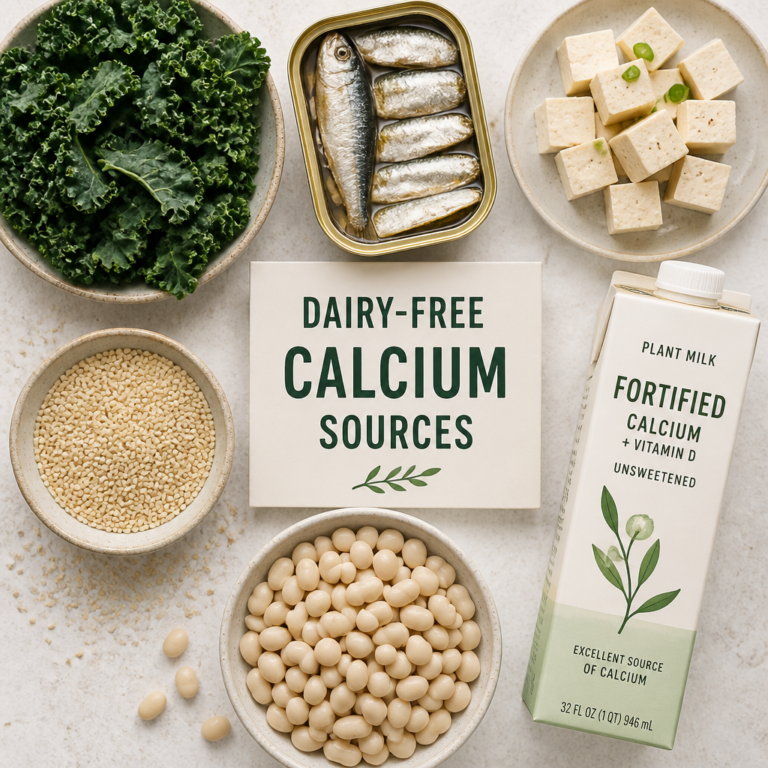
Calcium-set tofu (350 mg per 100 g), sardines with bones (380 mg per 100 g), kale and bok choy cooked (180-250 mg per cup), tahini (250 mg per 100 g), almonds (250 mg per 100 g), calcium-fortified plant milks (300-450 mg per cup), calcium-fortified orange juice (300-350 mg per cup), white beans (200 mg per cup). Two or three of these daily reaches the target without difficulty.
Lactose-tolerant dairy products
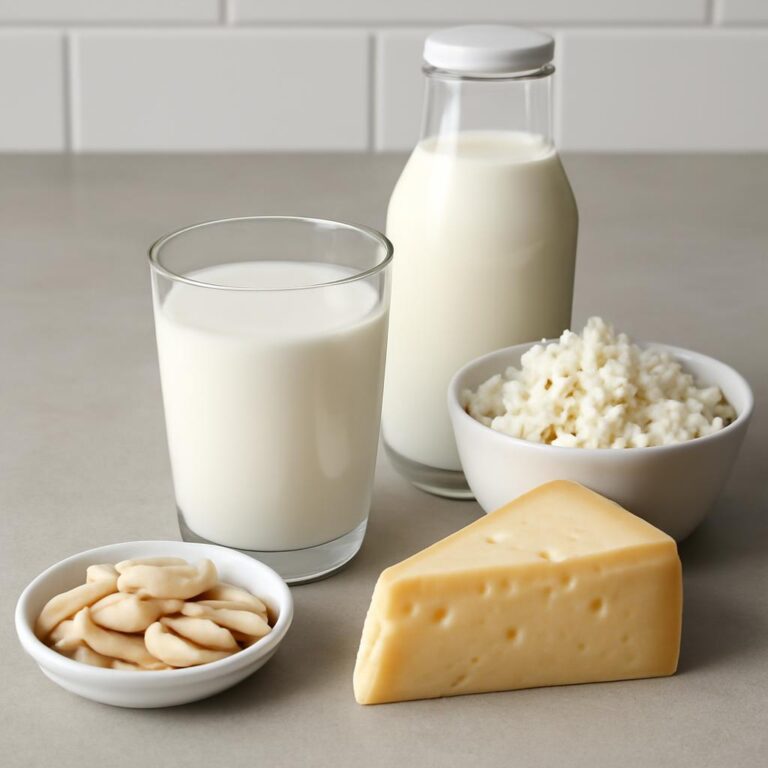
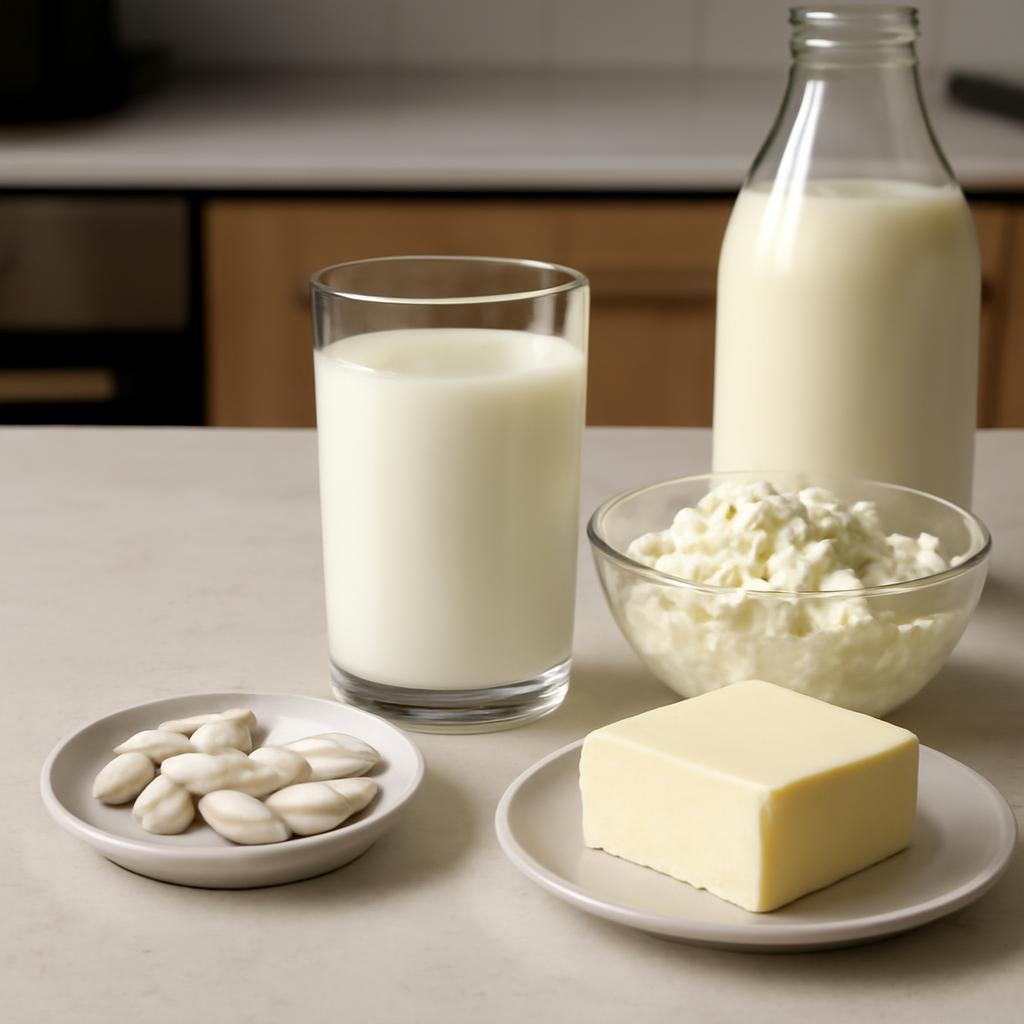
Hard aged cheeses (cheddar, parmesan, aged gouda) contain very little lactose because it is metabolized during aging. Greek yogurt has lower lactose than regular yogurt. Lactose-free milk has the same calcium and protein content as regular milk with the lactose pre-broken-down. Lactase enzyme tablets allow most lactose-intolerant people to consume small amounts of dairy comfortably. Many people who avoid all dairy actually tolerate aged cheese and fermented dairy well.
Vitamin D considerations
Dairy is fortified with vitamin D in most countries. Removing dairy often removes a daily vitamin D source. Plant milks fortified with vitamin D fill the gap if substituted regularly. For most lactose-intolerant adults over 50, a supplement of 1000-2000 IU vitamin D3 daily is the simplest path.
Magnesium and the dairy question
Dairy is a moderate magnesium source. Non-dairy alternatives — almonds, cashews, pumpkin seeds, dark chocolate, leafy greens — typically deliver more magnesium than dairy. This is one of the few bone nutrients where dairy elimination is potentially helpful rather than harmful.
What if I have malabsorption beyond lactose
Some people with lactose intolerance also have related conditions affecting nutrient absorption (small intestinal bacterial overgrowth, coeliac disease, IBD). If supplementation does not raise serum 25-hydroxyvitamin D or address calcium intake gaps, a gastroenterology evaluation is appropriate. Untreated malabsorption is a stealth driver of bone loss.
Frequently asked questions
Do I need a calcium supplement if I cannot tolerate dairy?
Sometimes. The first goal is food-based calcium intake. If meeting 1000-1200 mg daily through food is genuinely difficult, a calcium citrate supplement of 500-600 mg per day can fill the gap. Avoid larger doses, which have been associated with cardiovascular concerns.
Will lactose-free milk give me the same calcium?
Yes — the calcium content is identical. Only the lactose is enzymatically broken down.
What about A2 milk?
A2 milk lacks the A1 beta-casein protein that some people find irritating, but it contains the same lactose. It does not help with lactose intolerance specifically but may help some people with non-lactose dairy symptoms.
Is plant milk as good as dairy for bones?
Fortified plant milk (especially soy) is comparable to dairy for calcium and vitamin D. The protein content differs — soy is similar to dairy; oat, almond, and rice milks are lower. Pair with a protein source.
Related reading: The Bone Density Solution review · Vitamin K2 and bone health