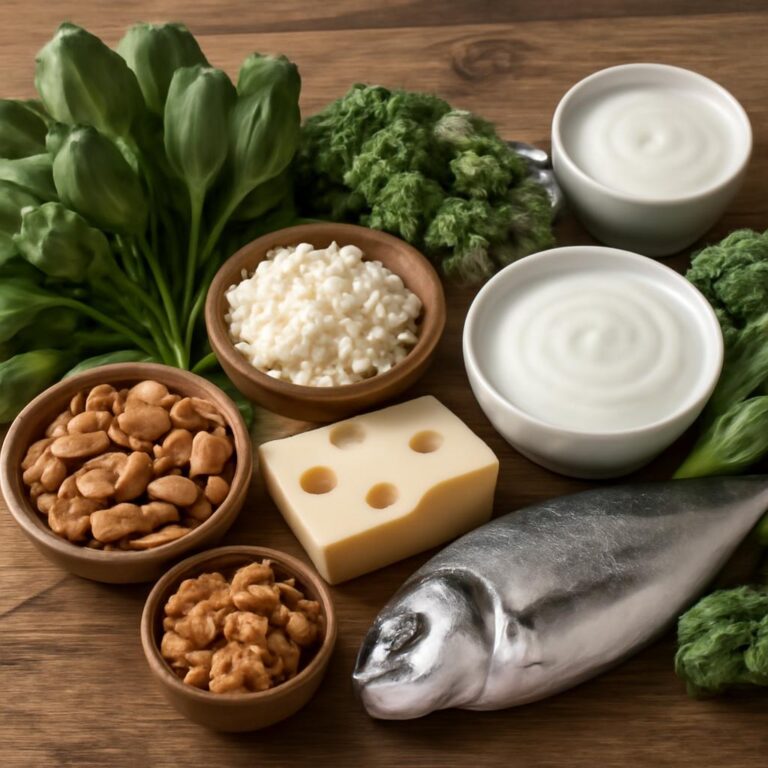

Vegan Diet and Bone Density: How to Eat Plant-Based Without Compromising Bone
For years the prevailing assumption was that vegans had lower bone density and higher fracture risk than omnivores. The EPIC-Oxford study reinforced that view in 2007. More recent analyses — particularly the 2020 update of EPIC-Oxford and several Asian cohort studies — show the picture is more nuanced. With careful planning, vegan bone density tracks closely with omnivore bone density. Without planning, the fracture risk is roughly 30% higher. The difference between those outcomes is dietary structure, not the absence of animal products.
Where the bone-vulnerable vegan typically falls short
Five nutrients account for most of the gap: protein (often under 0.8 g/kg in casual vegan eaters), calcium (under 700 mg/day common), vitamin B12 (low B12 raises homocysteine, a bone-quality risk factor), vitamin D (no animal-source D3 unless lichen-derived is used), and omega-3 EPA/DHA (only ALA from plants converts inefficiently).
The protein target for plant-based eaters after 50
1.2 g per kg body weight per day, distributed across 3-4 meals with at least 25-30 g per meal to maximize muscle protein synthesis. Practical sources: tempeh (20 g per 100 g), seitan (25 g per 100 g), lentils, edamame, hemp seeds, pea protein powder, soy products. Variety matters for amino acid coverage; rotating sources is more important than achieving “completeness” in any single meal.
Calcium without dairy
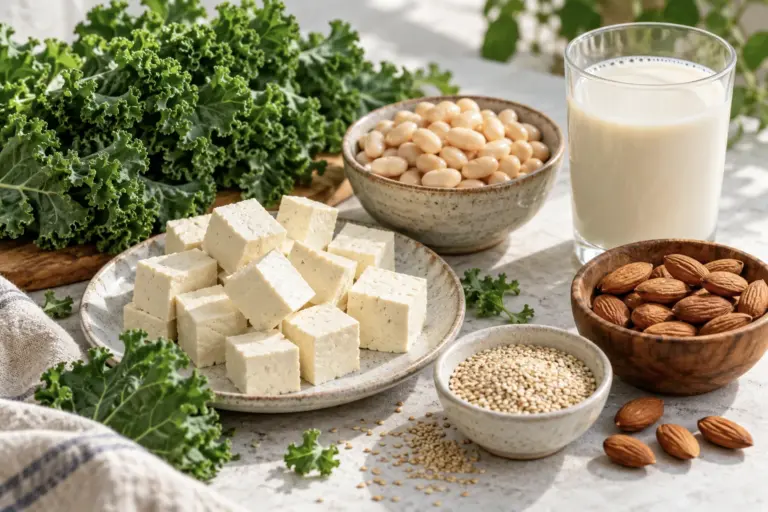
Calcium-fortified plant milks (oat, soy, almond — usually 300 mg per cup), tofu set with calcium sulfate (check the label — not all tofu is calcium-set), tahini (250 mg per 100 g), almonds (250 mg per 100 g), cooked dark leafy greens (calcium absorption is excellent in low-oxalate greens like kale and bok choy; lower in spinach due to oxalates). Aim for 1000-1200 mg total daily.
The B12 issue
Vegans need a reliable B12 source. Either daily 25-100 mcg cyanocobalamin tablet, weekly 1000-2000 mcg, or a fortified food eaten daily. Low B12 elevates homocysteine, which independently increases fracture risk. This is one of the few absolutely non-optional supplements for vegans.
Vitamin D and K2 in plant-based eating
D3 from lichen is available but more expensive than D2; both work. K2 (MK-7) is particularly important for plant-based eaters because plants provide K1 abundantly but K2 conversion is limited. Natto is the only meaningful food source; a supplement (90-180 mcg) covers it cleanly.
What the comparative data show when planning is good
In adventist health studies and several well-controlled smaller cohorts, vegans with adequate protein, calcium, B12, vitamin D, and resistance training had bone density and fracture rates statistically indistinguishable from omnivore controls. The diet does not damage bones — undernutrition does.
Frequently asked questions
Are vegans more likely to fracture?
In general, yes, but the difference disappears with structured nutrition planning. The risk reflects undernutrition, not animal-product absence.
Is soy bad for bones?
Quite the opposite — fermented and unfermented soy products are associated with better bone outcomes in Asian and Western cohort studies, partly due to isoflavone content.
Can I get enough calcium from leafy greens alone?
It is possible but logistically demanding (you would need several cups of cooked kale or bok choy daily). Combining greens with calcium-set tofu, fortified plant milk, and tahini is more realistic.
Do I need to supplement DHA on a vegan diet?
For bone health specifically, the evidence is moderate. For overall health, an algae-derived EPA/DHA supplement is reasonable for most vegans over 50.
Related reading: The Bone Density Solution review · Vitamin K2 and bone health