A 7-Day Bone Health Meal Plan for Adults Over 50 (Realistic and Repeatable)
A note before you read: this article is educational and does not replace medical or dietetic advice — adjust for your own conditions, allergies and medications with a professional. This page contains affiliate links — see our affiliate disclosure.
Knowing that bones need calcium, vitamin D, protein and magnesium is one thing. Knowing what that looks like on an actual Tuesday is another. This is a simple 7-day eating pattern built around the bone-relevant targets for adults over 50 — roughly 1,000-1,200 mg of calcium, 1.0-1.2 g of protein per kg of body weight, and steady contributions of vitamin K, magnesium and polyphenol-rich plants. It’s a template, not a prescription: swap freely within the same food families.
The daily anchors (every day, whatever else changes)
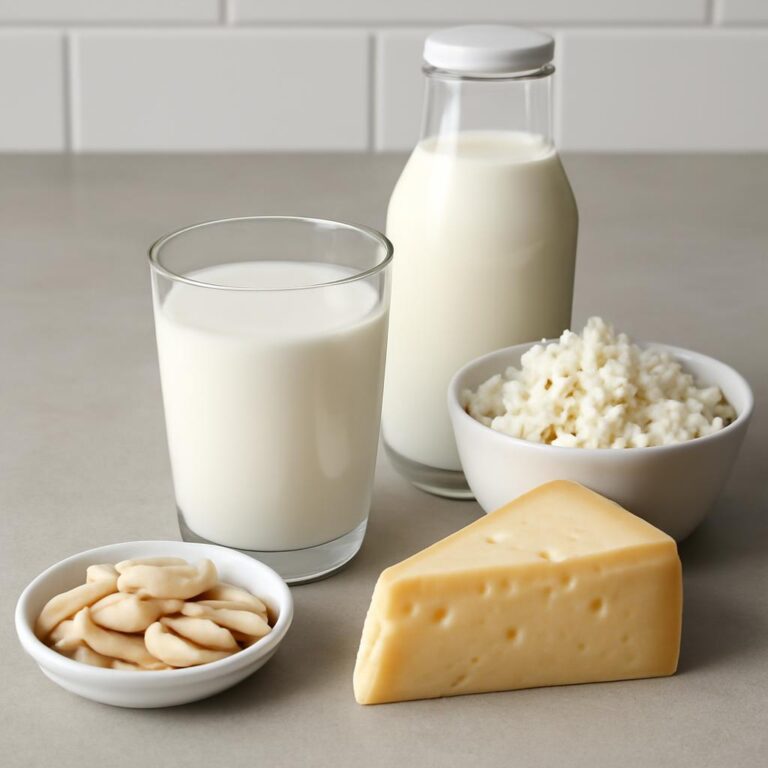
- Three calcium moments: dairy or fortified alternatives at three points in the day beats one big hit — calcium absorbs better in doses under ~500 mg.
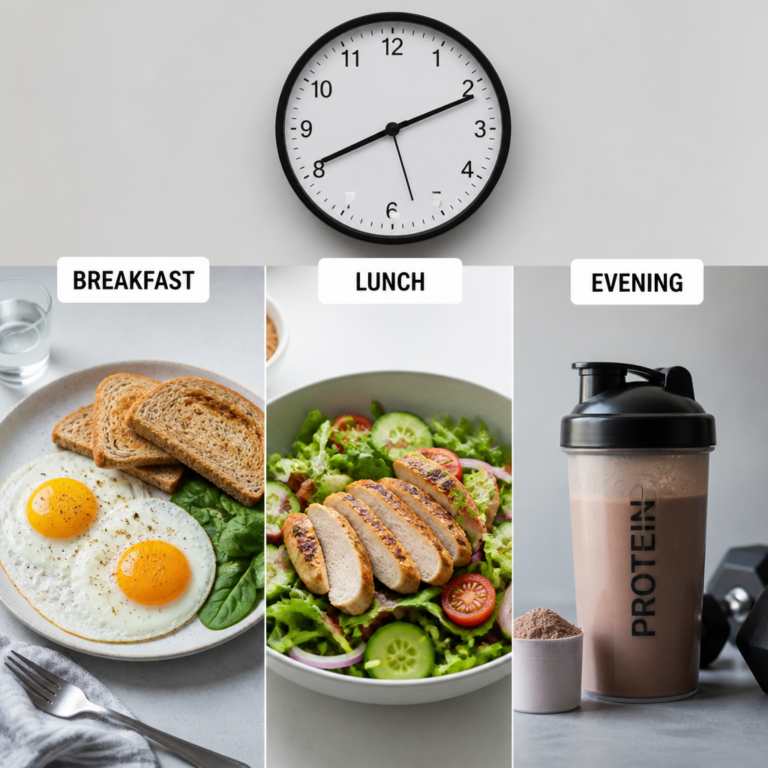
- Protein at every meal: 25-30 g per meal protects muscle as well as bone. Most people over 50 under-eat protein at breakfast specifically.
- Five or six prunes as a snack — the dose linked to hip-density preservation in trials (the evidence is genuinely interesting: see our prunes and bone density piece).
- Something green and leafy daily for vitamin K1.
The week
Day 1 — Greek yogurt with berries and almonds · lentil soup with wholegrain bread, side of kale · baked salmon, roasted broccoli, potatoes · snack: prunes + a square of dark chocolate.
Day 2 — scrambled eggs on wholegrain toast, glass of fortified milk · sardine salad with white beans and parsley (sardines with bones = calcium heavyweights) · chicken and vegetable stir-fry with sesame, brown rice · snack: prunes, kefir.
Day 3 — porridge made with milk, chia and banana · cottage cheese bowl with tomatoes, olive oil, seeds · turkey chilli with kidney beans, side salad · snack: prunes, handful of almonds.
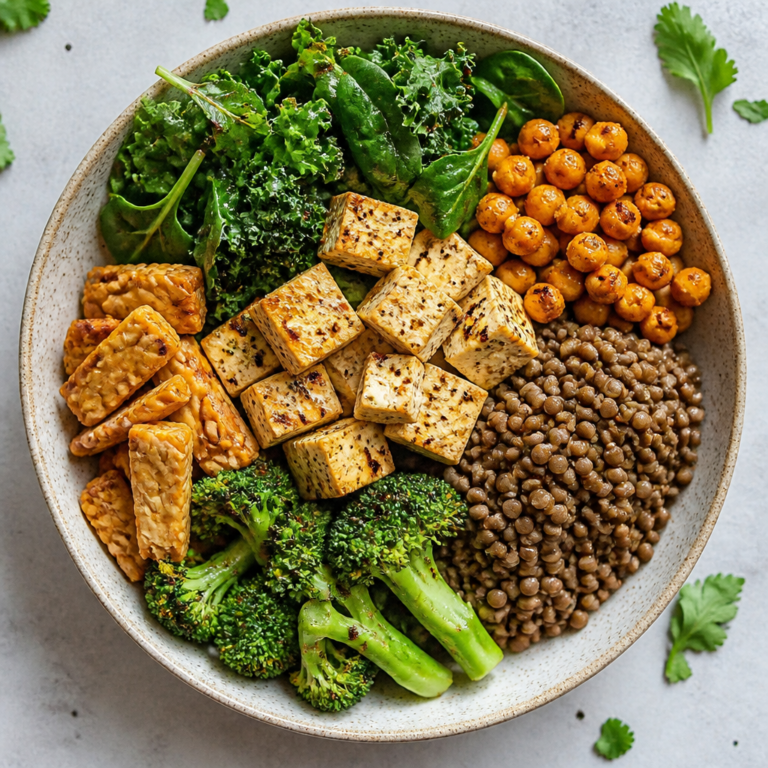
Day 4 — Greek yogurt smoothie with spinach, mango, ground flax · tinned-salmon sandwich with rocket · tofu (calcium-set) and vegetable curry with lentils · snack: prunes, cheese and oatcakes.
Day 5 — eggs with sautéed greens and feta · minestrone with cannellini beans, parmesan · grilled white fish, white-bean mash, green beans · snack: prunes, fortified plant milk latte.
Day 6 — wholegrain pancakes with yogurt and berries · big chopped salad with chickpeas, tuna, tahini dressing (tahini is a sneaky calcium source) · roast chicken, roasted root veg, broccoli · snack: prunes, dark chocolate.
Day 7 — milk-based porridge with stewed apple and walnuts · leftover roast chicken salad with kale and quinoa · bean and vegetable stew with crusty bread, cheese to finish · snack: prunes, kefir.
Why it’s built this way
Food first, supplements second. Most people can hit calcium targets from food; supplements then only fill a measured gap (our guide to choosing a calcium supplement covers when that’s warranted). Vitamin D is the exception — it barely exists in food, so testing and supplementing per your doctor’s advice usually accompanies any plan like this; see our calcium and vitamin D guide.
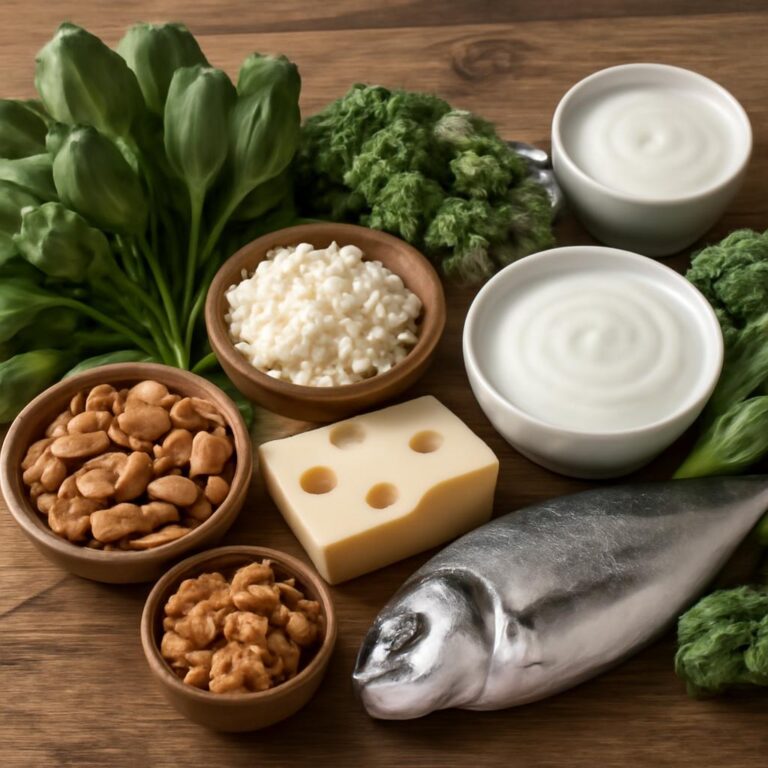
Plants do quiet work. The legumes, greens, nuts and fruit aren’t garnish — magnesium, vitamin K, boron and polyphenols all touch bone metabolism, which is why patterns like the Mediterranean diet keep showing up favourably in bone research.
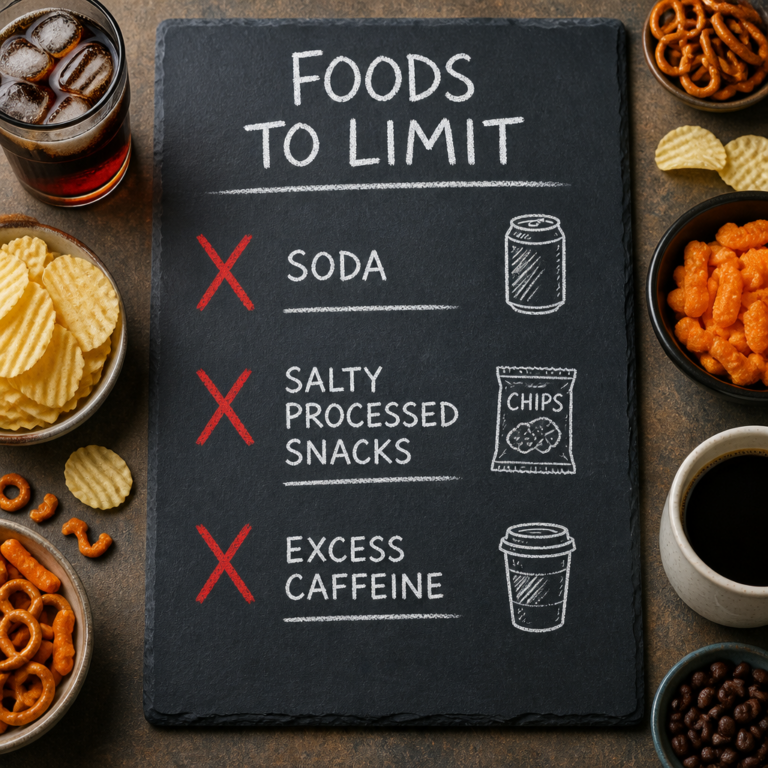
What’s deliberately limited: excess sodium and regular cola (both associated with poorer bone outcomes), and alcohol kept modest. Nothing is banned; the pattern just doesn’t revolve around them. (See also: foods to limit for bone health.)
Make it stick
A meal pattern only helps if it survives contact with real life. Batch-cook the soups and stews, keep tinned fish and beans stocked, and remember the plan tolerates imperfect weeks — consistency over months is what bone responds to. Diet is also one pillar of four: exercise, lifestyle and (where appropriate) supplementation carry the rest. If you’d rather follow a complete, structured 12-month protocol that integrates all four, The Bone Density Solution is the program we’ve reviewed in depth here — its nutrition approach aligns closely with the food-first pattern above.
FAQ
I’m dairy-free — can this still work?
Yes: fortified plant milks and yogurts, calcium-set tofu, tahini, almonds, beans and greens can cover the target with a little more attention. Our guide to dairy-free calcium sources does the maths.
How much protein is in this plan?
Roughly 80-100 g daily depending on portions — appropriate for most adults of 65-85 kg at 1.0-1.2 g/kg. Scale portions to your weight.
Will I see DEXA changes from diet alone?
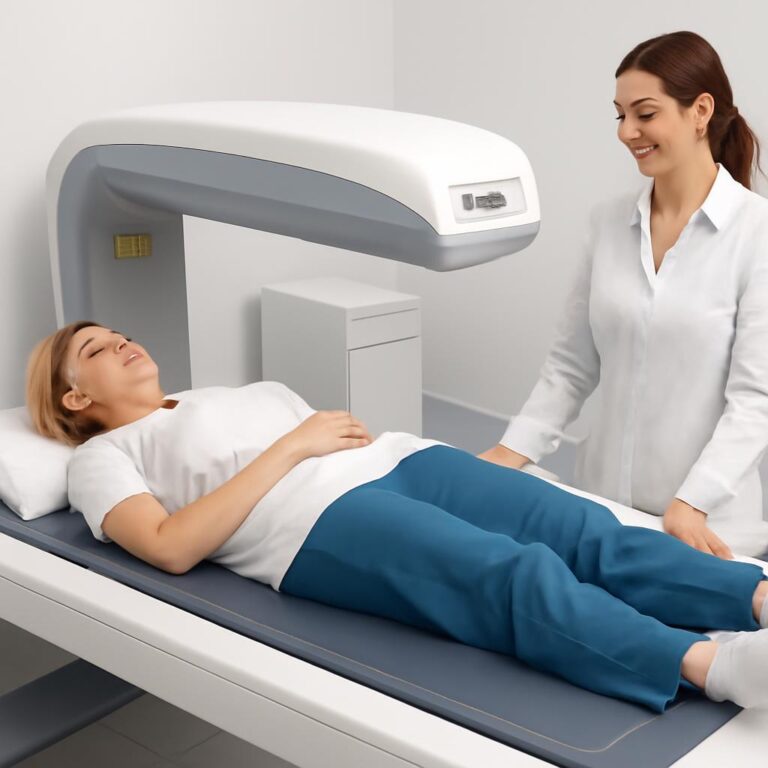
Diet’s realistic job after 50 is slowing loss and supplying raw materials — measurable density gains usually require the exercise side too. Honest expectations beat disappointment.
This article is for educational purposes only and does not replace advice from a qualified healthcare professional.