A Bone-Supportive Nutrition Protocol After 50: What to Eat Every Day
Disclosure: We may earn a commission if you purchase through links on this page. This does not affect our editorial assessment. See our affiliate disclosure.
In this article
- Daily target 1: protein at 1.0-1.2 g/kg body weight
- Daily target 2: calcium at 1000-1200 mg
- Daily target 3: vitamin D at 1000-2000 IU
- Daily target 4: vitamin K2 (MK-7) at 90-180 mcg
- Daily target 5: magnesium at 320-420 mg
- What to limit
- A sample day on this protocol
- FAQ
Bone-supportive nutrition is less about avoiding things and more about reaching specific daily targets. After 50, the body becomes less efficient at extracting bone-relevant nutrients, which means food intake has to be more deliberate. Here is the protocol most evidence-based clinicians recommend. If you would rather have these targets bundled with the training side, we describe a complete bone-nutrition and training protocol elsewhere on the site.
Daily target 1: protein at 1.0-1.2 g/kg body weight
For a 70 kg adult, 70-85 g protein daily, distributed across 3-4 meals with at least 25-30 g each. Best sources: eggs, fish, poultry, Greek yogurt, cottage cheese, lentils, beans, tempeh, tofu. Whey protein supplement is reasonable if dietary intake is hard to reach.
Daily target 2: calcium at 1000-1200 mg
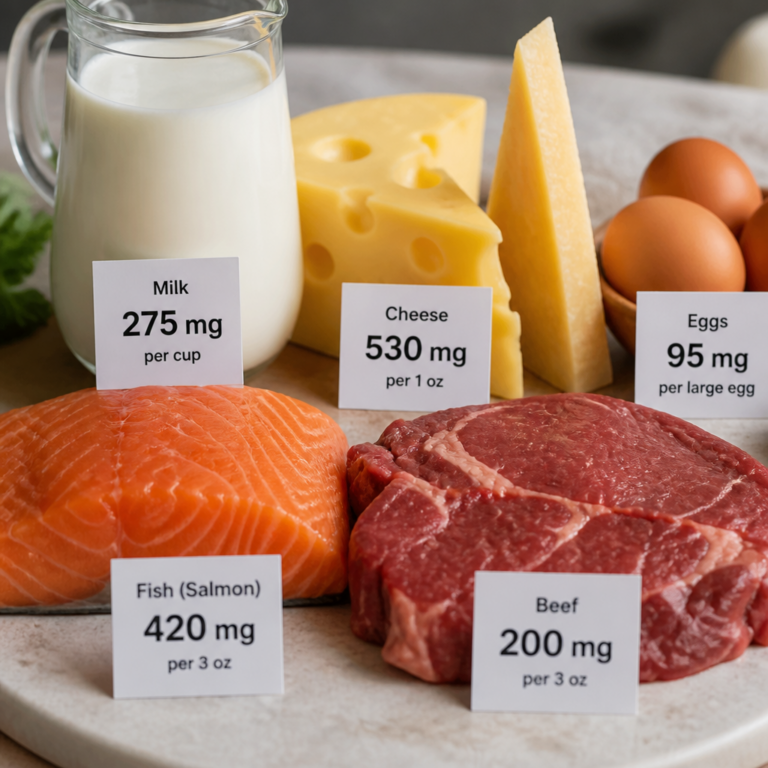
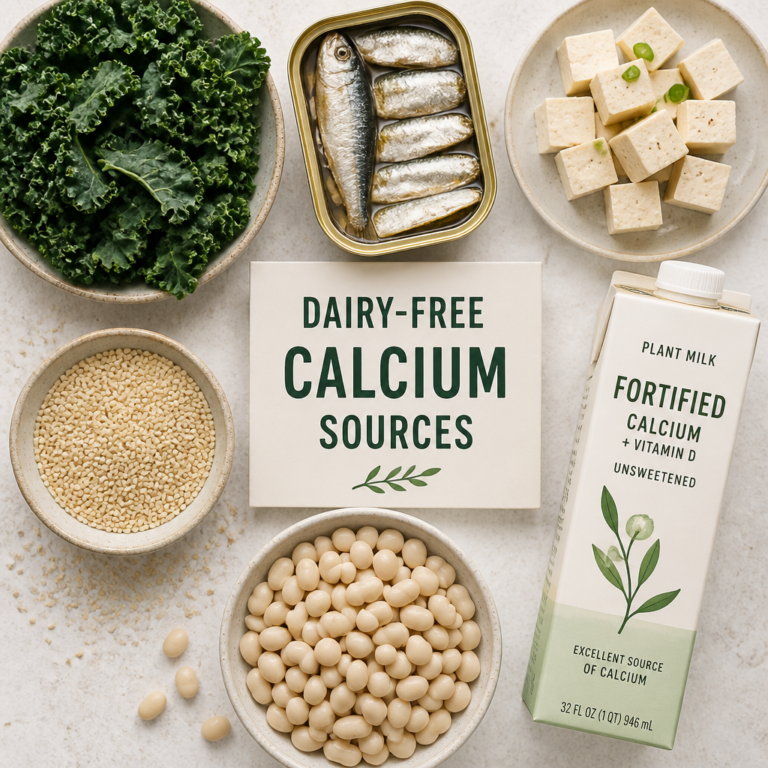
Food-first: dairy (1 cup yogurt + 1 slice cheese provides ~500 mg), calcium-fortified plant milk, sardines with bones, calcium-set tofu, almonds, dark leafy greens. If supplementation is needed, calcium citrate at 500 mg/day, split with meals. Avoid mega-dosing — over 1500 mg/day total raises cardiovascular concerns.
Daily target 3: vitamin D at 1000-2000 IU
Sun exposure provides modest amounts but is unreliable in winter or for indoor lifestyles. Most adults benefit from 1000-2000 IU D3 daily. Get serum 25-hydroxyvitamin D measured; aim for 35-50 ng/mL. Above 50 is no extra benefit; below 30 is functional deficiency.
Daily target 4: vitamin K2 (MK-7) at 90-180 mcg
Helps direct calcium to bone rather than soft tissue, a mechanism we explain in more depth in our guide to vitamin K2 and bone. Found in natto (high), aged cheeses (moderate), egg yolks (low). Supplementation is practical for most: 90-180 mcg MK-7 daily, taken with fat-containing meal for absorption.
Daily target 5: magnesium at 320-420 mg
Most adults under-consume. Pumpkin seeds, almonds, leafy greens, dark chocolate, legumes. Supplement 200-400 mg glycinate or citrate if food intake is short of target.
What to limit
Excessive sodium (over 2.3 g/day causes urinary calcium loss). Excessive caffeine (over 4 cups/day, particularly with low calcium intake). Excessive alcohol (over 2 drinks/day). Sugar-sweetened beverages (cola particularly, due to phosphoric acid). None of these are absolute — moderation matters more than elimination.
A sample day on this protocol
Breakfast: Greek yogurt with almonds and berries (30g protein, 500mg calcium). Mid-morning: hard-boiled eggs + handful of pumpkin seeds. Lunch: grilled chicken salad with leafy greens, tahini dressing, lentils. Afternoon snack: cottage cheese with fruit. Dinner: salmon with broccoli and sweet potato. Supplements: D3 2000 IU + K2 100 mcg + magnesium glycinate 300 mg at dinner.
Building a complete bone-protection routine? Our full Bone Density Solution review covers the 6-month structured program — what works, what does not, and who it fits.
FAQ
Do I need to take all these supplements?
Vitamin D is the most universally beneficial supplement after 50. K2 and magnesium are nearly universal too. Calcium supplements only if food intake is genuinely short.
Is too much protein bad for bones?
No — the “high protein leaches calcium” myth was disproven. Adequate protein supports bone, particularly when paired with adequate calcium intake.
Can I follow this protocol on a plant-based diet?
Yes. Plant protein sources, calcium-fortified plant milks, supplementation for D3 (lichen-derived), K2, and B12 cover the gaps.
How quickly will I notice nutritional improvements?
Lab markers shift within 4-12 weeks. DEXA-detectable bone density changes take 12-24 months.
Medical disclaimer: This article is for informational purposes only and is not medical advice. Consult your physician before changing supplements, medications or exercise routines, especially if you have been diagnosed with osteopenia or osteoporosis. See our full medical disclaimer.