
Bone Supplements That Actually Help: An Evidence-Based Ranking
Disclosure: We may earn a commission if you purchase through links on this page. This does not affect our editorial assessment. See our affiliate disclosure.
In this article
- Tier 1: nearly universally beneficial
- Tier 2: beneficial in specific situations
- Tier 3: limited or unclear evidence
- Tier 4: skip
- How to combine them
- When to consult a clinician
- FAQ
The supplement aisle has dozens of products promising bone benefits. Most are either ineffective, redundant with each other, or only useful in specific deficiency states. Here is the ranking based on actual published evidence.
Tier 1: nearly universally beneficial
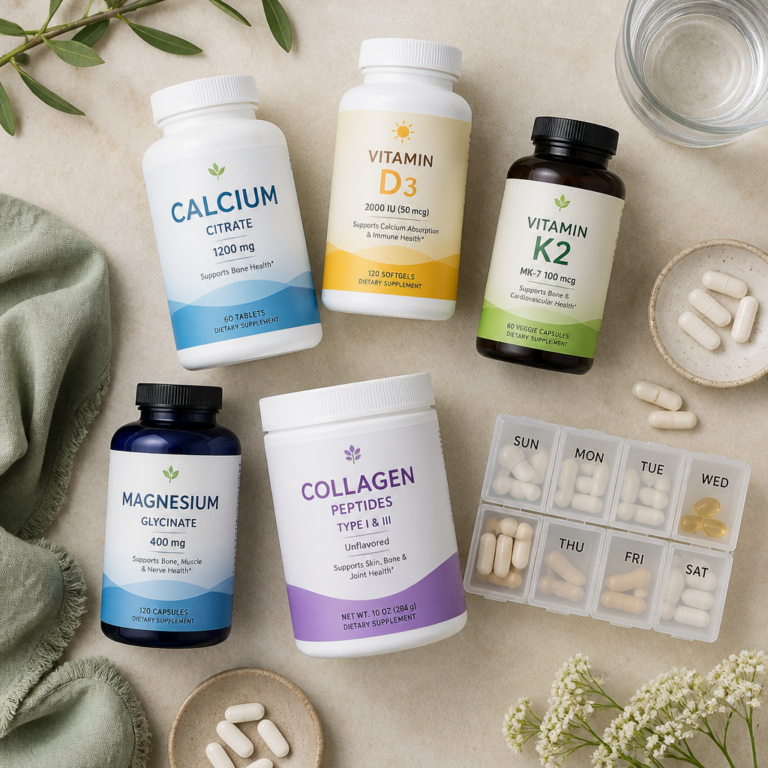
Vitamin D3 (1000-2000 IU/day): the single most universally supported supplement after 50. Many adults are functionally deficient. Aim for serum 25-OH D of 35-50 ng/mL. Cost: ~$0.05/day. Vitamin K2 (MK-7, 90-180 mcg/day): helps direct calcium deposition. Particularly relevant when supplementing calcium. Cost: approximately $0.20/day at the time of writing. See our notes on vitamin K2 dosing and the evidence behind it. Magnesium glycinate (200-400 mg/day): widespread suboptimal intake, supports D activation. Cost: ~$0.15/day.
Tier 2: beneficial in specific situations
Calcium (500-600 mg/day supplement if dietary intake is short): not needed if you reach 1000-1200 mg from food. Excess (>1500 mg/day total) has cardiovascular concerns. Boron (1-3 mg/day): modest evidence for bone-supportive effects, may amplify D and magnesium absorption. Strontium ranelate: pharmaceutical version withdrawn in many markets due to cardiovascular concerns. Strontium citrate supplements have weaker evidence. Generally skip.
Tier 3: limited or unclear evidence
Collagen peptides (10-20 g/day): some short-term studies show modest BMD effects in postmenopausal women. The mechanism may be amino acid provision more than collagen-specific effects. Soy isoflavones: small effects on bone density in some studies. Reasonable for postmenopausal women who tolerate them. Glucosamine and chondroitin: useful for joint health, no meaningful bone-density effect.
Tier 4: skip
“Bone formula” multi-supplements with everything thrown in (often under-dosed on what matters and over-priced). High-dose silica, copper, or zinc as bone interventions (limited evidence beyond addressing deficiency). Homeopathic or “energy-balanced” bone products. Stem cell or “telomere extension” bone products.
How to combine them
For most adults over 50: D3 + K2 + magnesium daily, taken with dinner (fat aids D and K absorption, magnesium can help sleep). Calcium supplement only if food intake is genuinely short. Get baseline labs (25-OH D, ionized calcium, PTH, magnesium) to guide dosing. Supplements do less on their own than alongside loading and adequate protein, and we look at how this stack fits inside a wider six-month routine in a separate review.
When to consult a clinician
Established osteoporosis or T-score at or below -2.5. Multiple medications that interact with supplements. Kidney disease (changes safe doses of several supplements). Prior history of kidney stones (changes calcium recommendations). Recent fragility fracture.
Building a complete bone-protection routine? Our full Bone Density Solution review covers the 6-month structured program — what works, what does not, and who it fits.
FAQ
Should I take a “bone formula” combo supplement?
Usually not. Better to take individual supplements at appropriate doses with verified third-party testing.
Is calcium supplementation dangerous?
At doses up to 500-600 mg/day on top of food, no. Above 1500 mg total daily, some studies suggest mild increase in cardiovascular events. Moderation is the answer.
Does collagen really help bone?
Some short-term studies suggest modest BMD effects in postmenopausal women. The evidence is moderate, not strong. Reasonable if you tolerate it; not necessary.
What is the single most important supplement?
Vitamin D3 for most adults over 50. The deficiency prevalence is high and the bone-mineral consequences of deficiency are well-established.
Medical disclaimer: This article is for informational purposes only and is not medical advice. Consult your physician before changing supplements, medications or exercise routines, especially if you have been diagnosed with osteopenia or osteoporosis. See our full medical disclaimer.