GLP-1 Drugs and Muscle Loss After 50: Why It Matters for Your Bones
Disclosure: We may earn a commission if you purchase through links on this page. This does not affect our editorial assessment. See our affiliate disclosure.
The number on the scale drops, the jeans fit again, and everyone tells you how good you look. That is the story most people hear about GLP-1 medications, and for adults over 50 living with type 2 diabetes or obesity, a lot of it is true. Drugs like semaglutide (Ozempic, Wegovy) and tirzepatide (Mounjaro, Zepbound) can take off weight that years of dieting never touched. But step on a body-composition scanner instead of a bathroom scale and a quieter fact shows up: some of what you are losing is not fat at all. It is muscle. And after 50, that is the part worth paying attention to.
None of this is a reason to fear a medication your doctor prescribed. It is a reason to lose the weight smarter, so the muscle and bone that carry you through your day stay with you. Here is what the research actually shows, who needs to be most careful, and the handful of habits that make the difference.
How much muscle actually goes
Any time you lose weight by eating less, part of the loss comes from lean tissue rather than fat. That is true of dieting, of bariatric surgery, of every approach that puts your body in a calorie deficit. What makes GLP-1 drugs different is the speed and the scale. When someone sheds 15 percent or more of their body weight in a year, the lean-mass slice of that loss adds up fast.
In the body-composition data from the major semaglutide trials, roughly 25 to 40 percent of the total weight lost was lean body mass instead of fat. Lean mass is not muscle alone, to be fair; it also counts water and organ tissue. But a real share of it is skeletal muscle, and that fraction is larger than most people picture when they start treatment.
Keep some perspective, though. Shedding excess weight is generally good news for your blood sugar, your joints, and your heart, and losing a bit of lean tissue as you get physically smaller is normal. The worry is narrower than “any muscle loss is bad.” It is that an older adult who already has less muscle to spare, who is barely eating because their appetite has vanished, and who never challenges those muscles can slide toward frailty without noticing. Muscle you lose in your fifties and sixties is also stubbornly harder to rebuild than the muscle you lost track of at 30.
Why your muscle is really about your bones
Muscle and bone are partners, not neighbors. They build up together, they waste away together, and they lean on each other the whole time. Every time a muscle pulls on a bone during effort, it sends the skeleton a message to stay dense and strong. Let the muscle fade and that message goes quiet. Doctors call age-related muscle loss sarcopenia, and when it shows up alongside thinning bone they sometimes name the pair osteosarcopenia, because each one drags the other down.
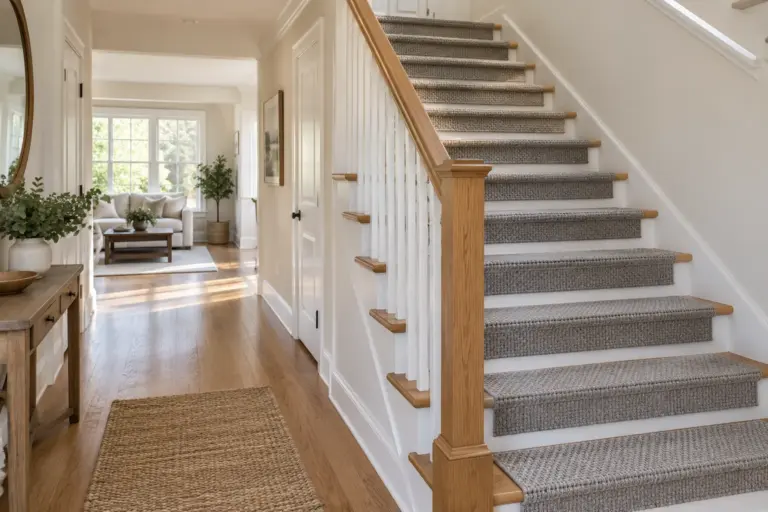
The place this gets dangerous is a fall. Strong legs and a strong core keep you upright, help you catch a stumble, and get you out of a chair or up the stairs without a second thought. As muscle weakens, balance and reaction time slip, and the odds of going down climb. When someone with both weak muscles and fragile bones does fall, a minor trip can become a broken hip, and a broken hip after 50 is not a small thing. It can rewrite how independently a person lives for the rest of their life.
Then there is bone density itself. Rapid weight loss of any kind, bariatric surgery included, has been tied to measurable drops in bone mineral density, and early signals suggest GLP-1 weight loss may travel a similar road. Researchers are still untangling how much of that owes to the weight coming off versus the drug itself, but for anyone over 50 the practical instruction lands the same either way: guard the muscle and watch the bone while the pounds come down. Our companion piece on Ozempic and bone loss digs further into what is known so far.
Who needs to be most careful
This risk does not land on everyone equally. If you are postmenopausal, you are already losing bone quickly in the years after menopause and often started with less muscle than a man your age. If you have been told you have osteopenia or osteoporosis, any extra bone or muscle loss eats into a margin that was thin to begin with. Age past 65 speeds sarcopenia up and slows recovery down. And if you are underweight, largely sedentary, dropping weight very fast, or eating well under your protein needs, you have less lean tissue to give and less signal telling your body to hold what is left. Being in any of these groups is not a cue to skip a medication you need. It is a cue to build the habits below in from day one, and to raise the topic plainly with your clinician before and during treatment.
How to hold onto muscle and bone
The encouraging part is how much of this you control. Muscle loss during weight loss is not a fixed tax you simply pay. Three levers do most of the work, and none of them requires stopping your medication.
The first is protein, the raw material your body rebuilds muscle from. Older adults need more than the outdated baseline recommendation, and that need climbs higher during active weight loss. Many experts point to roughly 1.2 to 1.5 grams of protein per kilogram of body weight a day for adults over 50 who are losing weight, unless a kidney condition means your doctor has told you otherwise. For someone around 70 kilograms, about 154 pounds, that works out to roughly 85 to 105 grams a day. The catch on a GLP-1 is that a suppressed appetite makes it easy to fall short without realizing it. Spread protein across your meals, eat it first before you fill up, and lean on the easy standbys: eggs, Greek yogurt, fish, poultry, legumes, dairy. Our guide to protein and bone health gets specific on targets and foods.
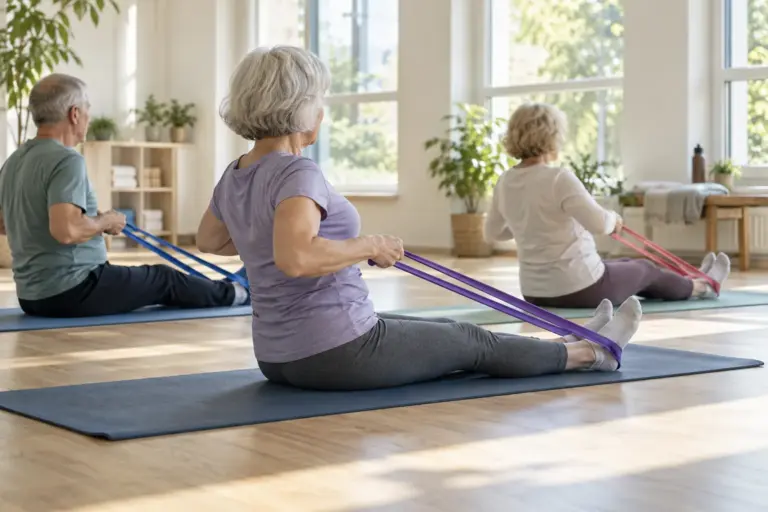
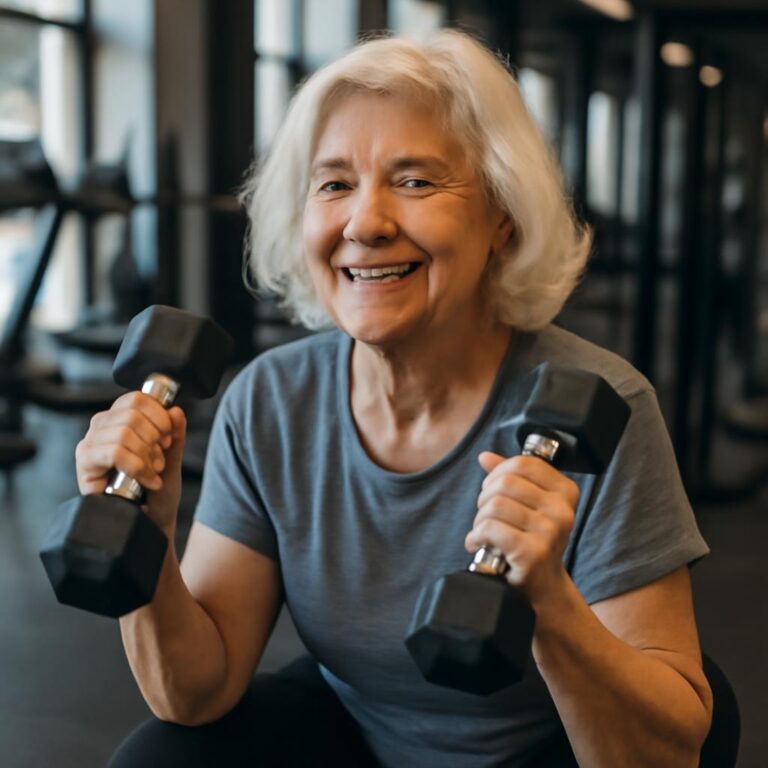
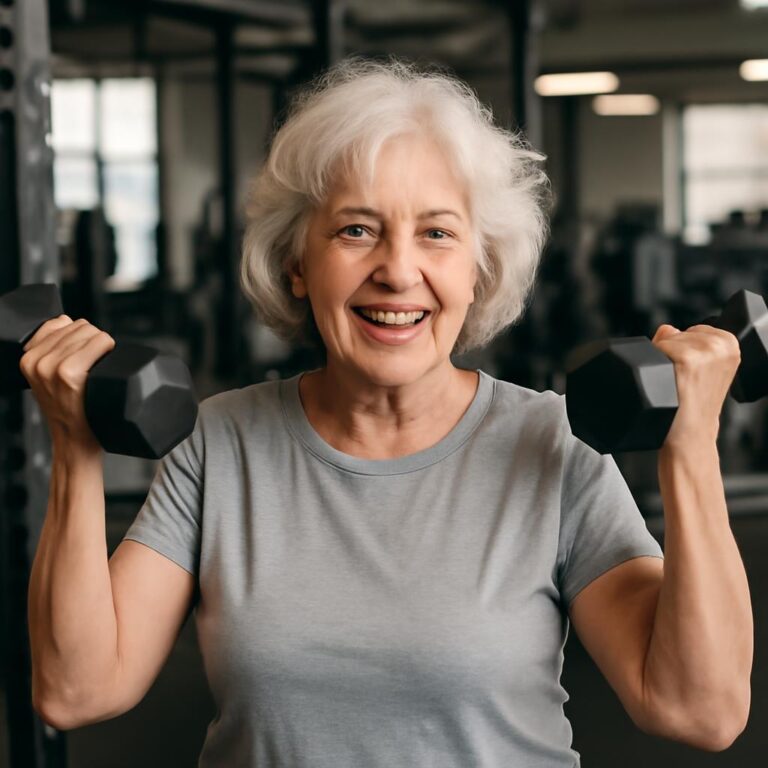
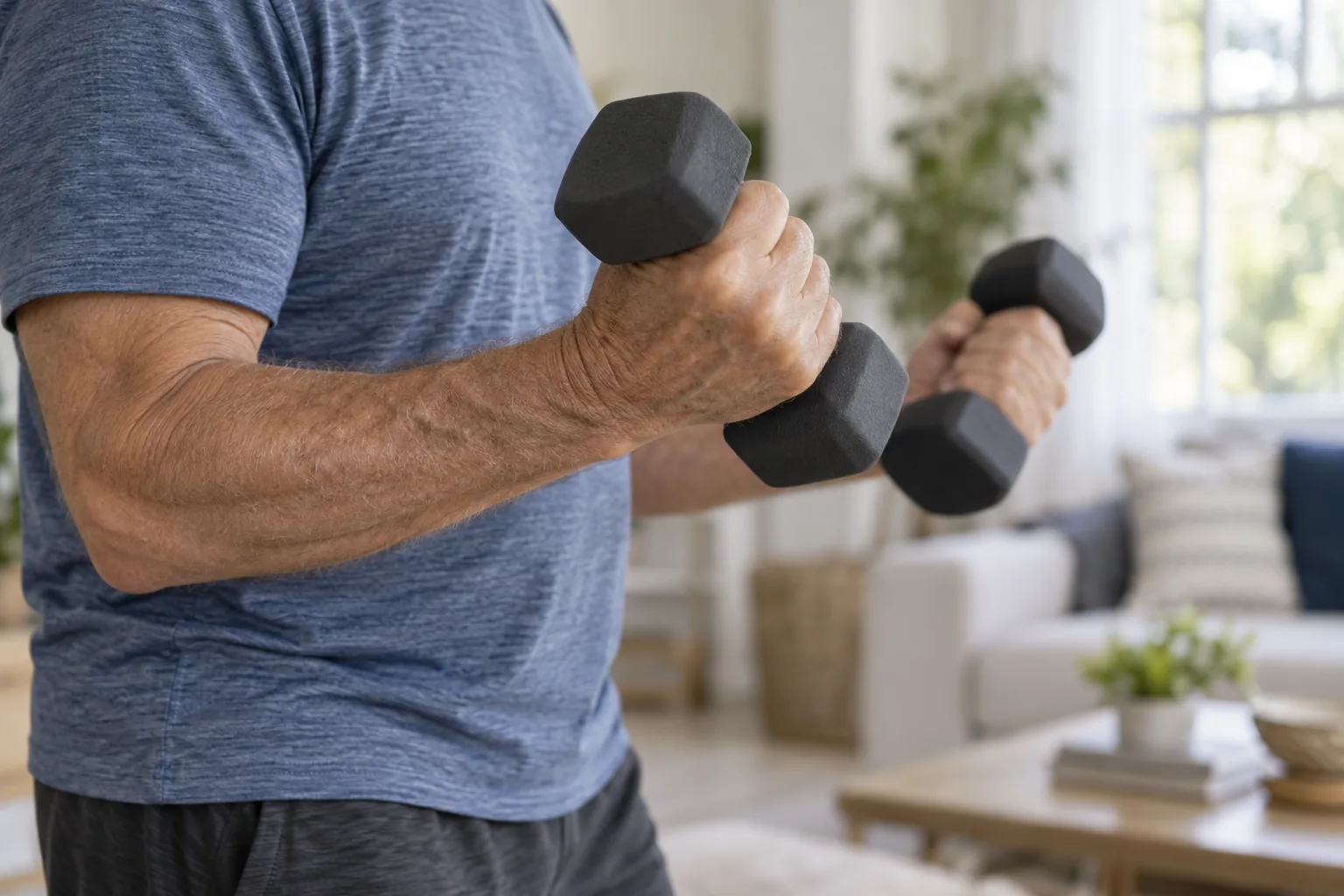
The second lever is resistance training, which is the signal that tells your body to keep the muscle rather than break it down for fuel. Lifting weights, pulling resistance bands, or working through bodyweight moves like squats, sit-to-stands, and wall push-ups two or three times a week is about the single most effective thing you can do to defend muscle while you slim down, and it stimulates bone at the same time, hitting both halves of the partnership at once. You do not need a gym or a loaded barbell to begin; start with what you can manage and add a little each week. Our walkthrough on strength training after 50 for bone health lays out beginner-friendly routines.
The third lever is simply not starving. Weight loss should be steady, not extreme, because a deficit that is too deep pushes the body to burn muscle for energy. Losing gradually gives muscle and bone the room to adapt, so do not skip meals just because nothing sounds appetizing. Bone also wants its own building blocks: aim for enough calcium, around 1,000 to 1,200 mg a day for most adults over 50, ideally from food first, and enough vitamin D to absorb it. A shrinking appetite can quietly shortchange both, which makes this a good moment to review your intake with your clinician or a dietitian. Creatine monohydrate is worth a mention here too. Paired with resistance training, it is one of the best-studied supplements for muscle and may help older adults hold onto strength, though it is not right for everyone, so clear it with your doctor first, especially with any kidney concern. Our overview of creatine and bone density covers what the evidence does and does not support.
None of this is about second-guessing the prescription. If you are worried about your muscle or your bones, the answer is never to quietly stop the drug on your own. GLP-1 medications are prescribed for real reasons, and stopping abruptly carries its own consequences. Bring the concern to your doctor instead, and let them help you protect lean mass through food, exercise, and monitoring while you stay on treatment as needed. Some readers pair those daily habits with a structured program like The Bone Density Solution, which organizes the diet, exercise, and lifestyle side into one plan. We have written up our notes on what it actually asks of you; think of it as support alongside your medical care, not a replacement for it.
Keeping an eye on things
What gets measured gets managed, and a few simple checkpoints let you and your doctor catch trouble early. It is worth asking about a baseline bone density (DEXA) scan if you have not had one, particularly if you are postmenopausal or already have low bone density, with follow-up on whatever schedule your doctor suggests. Beyond the scan, pay attention to the everyday signals of strength and function:
- How easily you rise from a chair, your grip, and how steady you feel on your feet over time.
- Whether your protein, calcium, and vitamin D intake is holding up, and whether a supplement is warranted.
- Any new weakness, unsteadiness, or falls, which are worth reporting promptly rather than saving for your next scheduled visit.
These medications can be a genuinely valuable tool, and for many people over 50 the metabolic payoff is real. The point is not to fear them but to use them with your eyes open: keep the muscle and bone that carry you through daily life, and let your care team help you find the right balance.
The Bone Density Solution
A structured program designed for adults over 50 to support bone density through diet, exercise, and lifestyle changes — an integrated approach to reducing fracture risk. Best used alongside, not instead of, professional medical care.
Check The Bone Density Solution →Affiliate link — we may earn a commission at no extra cost to you. Full disclosure.
Sources
- PubMed — research on GLP-1 receptor agonists, body composition, and lean mass during weight loss
- Endocrine Society — clinical guidance on obesity treatment, GLP-1 therapies, and metabolic bone health
- NIAMS — National Institute of Arthritis and Musculoskeletal and Skin Diseases: osteoporosis and bone health
- NIAMS — information on sarcopenia, muscle loss, and falls in older adults
Medical disclaimer: This article is for informational purposes only and is not medical advice. See our full medical disclaimer.