
Ozempic and Bone Loss: How to Protect Your Bones on GLP-1 Weight-Loss Drugs
Disclosure: We may earn a commission if you purchase through links on this page. This does not affect our editorial assessment. See our affiliate disclosure.
The scale finally moved. After years of trying, a friend of mine watched the number drop week after week on semaglutide, and she was thrilled — right up until her doctor mentioned, almost in passing, that she should keep an eye on her bones. That offhand comment sent her down a rabbit hole of alarming headlines, and she came to me half-convinced the drug that was fixing her blood sugar was quietly wrecking her skeleton. Her story is a common one now, and the truth sits somewhere calmer than the headlines suggest.
GLP-1 medications have genuinely changed the conversation around weight and metabolic health. Semaglutide (Ozempic, Wegovy) and tirzepatide (Mounjaro, Zepbound) can produce the kind of weight loss that used to require surgery, and for a lot of adults over 50 that translates into better blood sugar, lower blood pressure, easier joints, and reduced cardiovascular risk. Those are real gains. If you and your doctor have decided one of these drugs belongs in your life, that is very often a sound decision.
What gets less airtime is the quieter question of what happens to your bones and muscle when you shed a large amount of weight in a hurry. For the over-50 crowd this deserves attention, because bone density and muscle mass are already thinning with age, and a hip or spine fracture later in life is no small thing. The worry about Ozempic and bone loss is real enough to take seriously, yet it is also widely misunderstood and sometimes blown out of proportion. Here is the honest picture, along with a practical plan to keep your skeleton strong while you collect the drug’s metabolic rewards. The reassuring headline: you do not have to pick between losing the weight and keeping your bones. You can have both, if you go about it deliberately.
Why losing weight tugs on your bones
GLP-1 receptor agonists mimic a gut hormone called glucagon-like peptide-1. They slow how fast your stomach empties, quiet your appetite, and smooth out the way your body manages blood sugar. The practical upshot is that you eat considerably less and lose weight — often 15 to 20 percent of body weight, or more, with the newer agents. That is a large, fast change for a body to absorb.
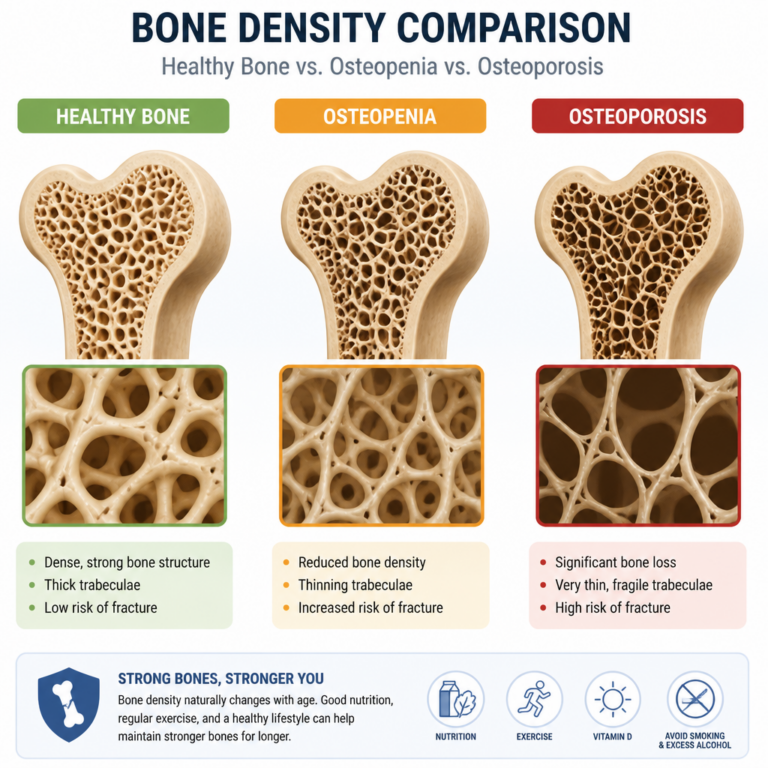
The core idea for bone health is simple: your skeleton is built and maintained by the load you put on it. Bone is living tissue that responds to mechanical stress. Carry more weight, and your bones adapt to support it. Take that weight off — by any route, whether diet, surgery, or medication — and the load on your skeleton eases, so bone density tends to drift down in response. This shows up across every form of significant weight loss, not just with GLP-1 drugs, and it is one reason being underweight is itself a risk factor for osteoporosis.
Other things pile on. Eating far less can mean skimping on the very nutrients bone depends on — protein, calcium, vitamin D — simply because there is less food coming in. The hormonal and metabolic shifts that ride along with fat loss can nudge bone turnover too. And weight lost through eating less is never pure fat; a meaningful slice comes from lean mass, muscle included, which carries its own consequences for bone.
The framing matters here, so it is worth being precise. The weight of current evidence points to bone loss on GLP-1 drugs being driven mostly by the rapid weight loss and the drop in mechanical loading, rather than the drug acting as some direct “bone poison.” The bone changes look a lot like what you would expect from any big, quick weight reduction. That is genuinely reassuring, because it means the same defenses that protect bone during weight loss in general — loading the skeleton, eating enough protein, covering your minerals — apply cleanly here. For the deeper background, our companion piece on weight loss and osteoporosis lays out the dynamic in full.
What the research actually shows so far
This is an area of active, evolving research, and honesty means saying plainly that the evidence is still coming in. Several studies of significant weight loss, some involving GLP-1 medications, have measured reductions in bone mineral density, particularly at the hip and spine. That tracks with what shows up after bariatric surgery and other large weight losses. The size of the effect varies, and here is a wrinkle worth knowing: part of the measured change can reflect the loss of soft tissue around the bone rather than the bone itself, which muddies the DEXA reading.
A dip in density on a scan, though, is not the same as a broken bone. Whether GLP-1 drugs raise actual fracture risk is genuinely unresolved. Some analyses have been reassuring, and there is even a thread of research asking whether GLP-1 signaling might be neutral or even protective for bone in certain settings. Because these medications are relatively new at the high doses used for weight loss, we simply do not yet have the decades of long-term fracture data we have for established osteoporosis treatments. Anyone who tells you the fracture verdict is in — in either direction — is running ahead of the evidence.
So the honest read on the common question of whether Ozempic causes bone loss is a nuanced one. Significant weight loss, including the kind these drugs produce, is associated with lower bone mineral density — mostly through reduced loading, not direct toxicity — and whether that turns into more fractures is still being worked out. It is fair to say GLP-1 weight loss can go hand in hand with some bone density loss, which is exactly why the protective steps below matter. It would overstate things to say it “causes dangerous bone loss in everyone.” The right response is not alarm; it is attention. If you are over 50, and especially if you carry other risk factors, bone belongs in the conversation with your doctor before and during treatment. That is a reason to be proactive, not a reason to walk away from a medication that may be improving your health in other real ways.
The muscle problem hiding inside the weight loss
Some of what comes off during rapid GLP-1 weight loss is lean tissue, skeletal muscle included — often a quarter to a third of the total in some studies. That matters for bone twice over: muscle pulling on the skeleton is one of the main signals telling bone to stay dense, and strong legs with steady balance are what stop a stumble from becoming a fracture. Protecting bone on a GLP-1 therefore means protecting muscle at the same time, and the two levers are resistance training and enough protein. Our piece on GLP-1 drugs and muscle loss after 50 covers that side in full.
Who should pay the closest attention
Not everyone on a GLP-1 needs to worry to the same degree. The people who should be most attentive are those stacking up several risk factors at once. Older adults sit near the top, simply because bone density and muscle mass are both already declining and there is less reserve to spare. Postmenopausal women are the highest priority for monitoring, since the fall in estrogen after menopause accelerates bone loss. If you started at a low body weight or low BMI, aggressive loss leaves a thinner margin and a more vulnerable skeleton. Speed is its own risk factor: dropping weight very fast gives bone and muscle less time to adapt and usually costs more lean mass. And if you already carry a diagnosis of osteoporosis or osteopenia, a prior fragility fracture, a low-protein diet, or a fairly inactive routine, further loss lands harder.
If several of those describe you, that is not cause for panic. It is a cue to build the protective plan below into your treatment from day one, and to make sure your doctor knows your full bone history.
How to protect your bones and muscle while you lose weight
This is the part that counts, and the encouraging news is that the tools are well established, low-risk, and good for you in a dozen other ways. Think of them as the non-negotiables of doing GLP-1 weight loss well after 50.
Start with protein, because when you are eating far less it is dangerously easy to short yourself on the one nutrient you most need to hold onto muscle and support bone. A common evidence-informed target during weight loss for older adults lands around 1.0 to 1.5 grams of protein per kilogram of body weight per day — though the right number for you is a conversation for your doctor or dietitian, especially if you have kidney disease. Spread it across the day, anchor each plate with it, and expect to be deliberate about it, because these drugs suppress appetite so thoroughly that many people have to schedule protein to hit the mark. Our full guide on protein and bone health covers how much and what kinds.
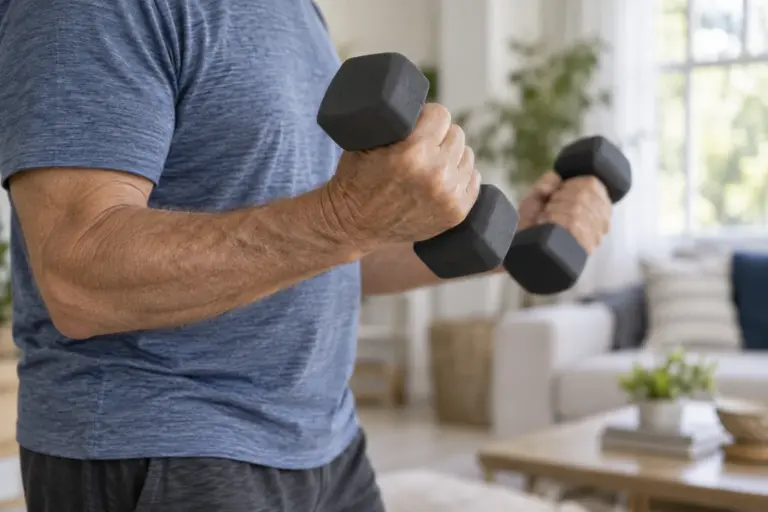
Then lift something heavy. Resistance training — weights, bands, machines, or genuinely challenging bodyweight work — is the direct signal that tells muscle and bone to stay put during weight loss, and it is the most important item on this whole list. Aim for two sessions a week, ideally three, working all the major muscle groups hard enough that the last couple of repetitions are truly difficult. That preserves muscle, loads the skeleton, and sharpens the balance that keeps you from falling. If you are new to it, our guide to strength training after 50 for bone health walks through how to start safely.
Cover the bone nutrients next. Meet recommended intakes of calcium, ideally from food first, and vitamin D, which your body needs in order to absorb that calcium; vitamin K2 often comes up as a supporting player in directing calcium toward bone. On a sharply reduced-calorie diet, getting enough from food alone is genuinely hard, so this is a fair place to ask your doctor whether supplementation makes sense for you. Some adults on GLP-1 drugs also find creatine worth discussing as an adjunct to resistance training for holding onto muscle.
Go slower than you might like. Faster is not better when the goal is protecting bone and muscle — a gentler pace gives your body time to adapt and tends to spare more lean mass. If the weight is falling off extremely fast, raise it with your prescriber, since dose and pace can sometimes be adjusted. A steadier descent also makes it far more realistic to keep up with your protein and your training. Finally, if you are over 50 and starting a GLP-1, ask your doctor whether a baseline DEXA (bone density) scan makes sense before you begin, with a follow-up down the road. A baseline gives the two of you an objective way to see whether your bones are holding or trending down, so you can act early if you need to; our guide on how to read DEXA scan results helps you make sense of the numbers.
If you want a single organized framework that pulls these habits together, some readers over 50 use a structured program like The Bone Density Solution, which packages the diet, exercise, and lifestyle pieces into one plan; our closer look at how it is put together covers what is and is not in it. Treat anything like that as a complement to your doctor’s guidance, never a replacement for it.
Bringing it to your doctor
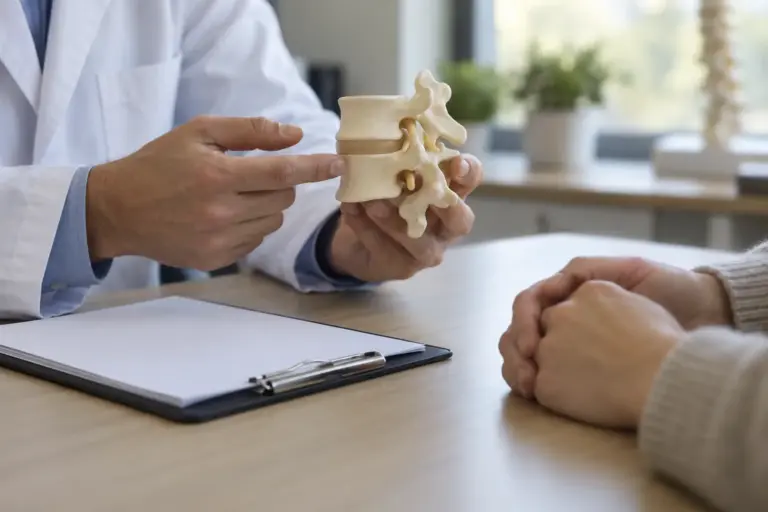
You are a partner in these decisions, not a passenger, so bring bone and muscle into the room. A handful of questions tends to open the right conversation:
- Given my age and history, should I have a baseline DEXA scan before starting, and when should we recheck it?
- What rate of weight loss are we aiming for, and is my current pace too fast?
- How much protein should I be targeting each day, and should I see a dietitian?
- Do you recommend a calcium and vitamin D supplement for me, and at what dose?
- Can you refer me to physical therapy or a trainer to set up a safe resistance-training program?
- Do any existing bone or muscle concerns — osteopenia, osteoporosis, prior fractures — change the plan?
- What signs should prompt me to check back in with you?
Walking in with these signals that you want to do this well, and most clinicians will welcome the partnership. One thing not to do is quit the drug on your own to protect your bones. Stopping a prescription is a decision that belongs to you and your doctor together, weighed against all of your health factors, and for most people the smarter move is not to abandon a medication that may be helping but to defend bone and muscle proactively while taking it. If you have specific bone worries, name them to your prescriber rather than stopping abruptly.
It is worth remembering, too, that bone is living, adaptable tissue. The density changes seen with weight loss are not automatically permanent; continued resistance training, solid nutrition, and settling at a healthy stable weight all support bone over time. Exactly how bone recovers after GLP-1-related weight loss is still being studied, which is one more reason to pour your energy into the habits you can control and to work the problem alongside your doctor rather than assuming any outcome is fixed.
The Bone Density Solution
A structured program designed for adults over 50 to support bone density through diet, exercise, and lifestyle changes — an integrated approach to reducing fracture risk. Best used alongside, not instead of, professional medical care.
Check The Bone Density Solution →Affiliate link — we may earn a commission at no extra cost to you. Full disclosure.
Sources
- National Institute of Arthritis and Musculoskeletal and Skin Diseases (NIAMS) — Osteoporosis
- Bone Health & Osteoporosis Foundation (BHOF)
- Endocrine Society — Osteoporosis and Bone Health
- Mayo Clinic — Osteoporosis
- PubMed — peer-reviewed research on GLP-1 receptor agonists, weight loss, and bone density
Medical disclaimer: This article is for informational purposes only and is not medical advice. Do not change any prescription without your doctor. See our full medical disclaimer.
More in this series: weight-loss drugs & your bones