Mild vs Moderate Osteopenia: How Treatment Differs
Disclosure: We may earn a commission if you purchase through links on this page. This does not affect our editorial assessment. See our affiliate disclosure.
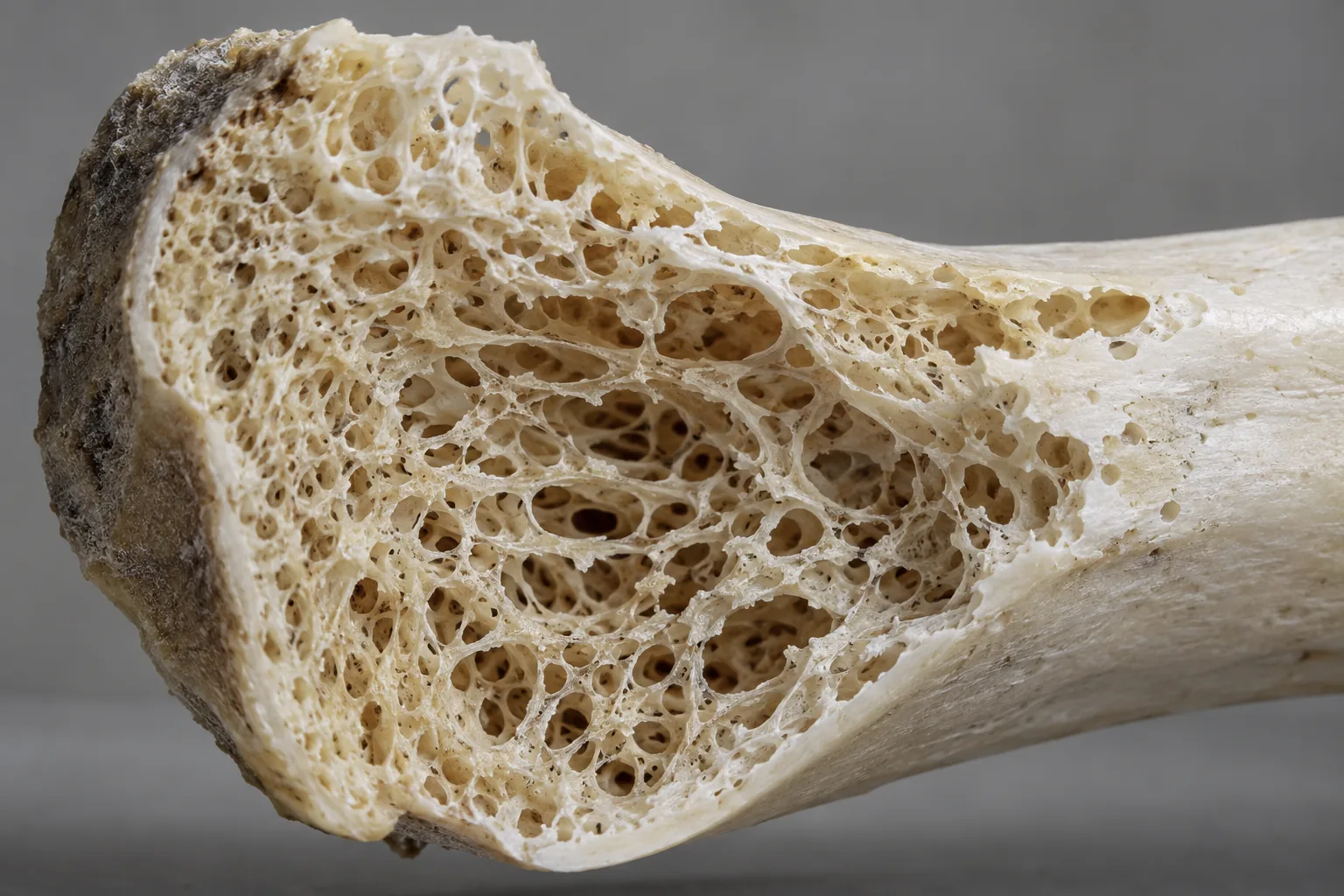
The scan comes back, someone uses the word “osteopenia,” and you are handed a leaflet about calcium on your way out the door. It sounds mild. It sounds like something you can file away and forget. But here is what that tidy little label leaves out: osteopenia is not one thing. It is a wide stretch of territory that runs from bone density barely a hair below normal all the way down to the doorstep of osteoporosis. Two people can carry the exact same diagnosis and be in genuinely different situations — and where you land on that stretch changes what happens next.
So it is worth understanding what the word actually covers, because the gap between “mild” and “moderate” osteopenia is where the real decisions live. One person walks out with a plan built around walking shoes and dinner. Another leaves weighing whether to start a medication. Same label, different roads — and the reason has less to do with the number itself than most people assume.
What the osteopenia range actually means
Osteopenia — sometimes called low bone mass — is defined by your T-score on a DEXA scan, which measures how your bone density compares to that of a healthy young adult. The World Health Organization criteria that the NIAMS and the Bone Health & Osteoporosis Foundation rely on draw the lines simply enough: a T-score of −1.0 or above is normal, anything of −2.5 or below is osteoporosis, and everything in between — that whole band from −1.0 to −2.5 — is osteopenia.
Now look at how much room sits inside that band. A T-score of −1.1 and a T-score of −2.4 both earn the same word on the report, yet they are worlds apart. That is why clinicians tend to talk about osteopenia along an informal spectrum. Toward the top of the range, roughly −1.0 to −1.5, they might call it mild — bone density only modestly below normal. Around the middle, near −1.5 to −2.0, it shades into moderate. And down near the osteoporosis threshold, somewhere around −2.0 to −2.5, you will hear it described as marked or advanced.
These sub-labels are not official WHO categories, and the exact cut-points drift from one clinician to the next. Think of them as shorthand for a single question: how close am I to osteoporosis? What they cannot tell you, on their own, is the thing you most want to know — your actual odds of breaking a bone. For that, your doctor looks well past the T-score, and that idea quietly runs underneath everything else in this article. If you want to see how the two diagnoses relate more fully, our guide on osteoporosis vs osteopenia lays it out.
When osteopenia is mild
When your bone density is only a little below normal — a T-score sitting somewhere around −1.0 to −1.5 — and nothing else about your history raises a flag, the plan is almost always lifestyle first. Medication rarely earns its place here. The potential upside is small next to the effort and the possible side effects, and your near-term fracture risk is usually low to begin with. This is the stage where habits do the heavy lifting.
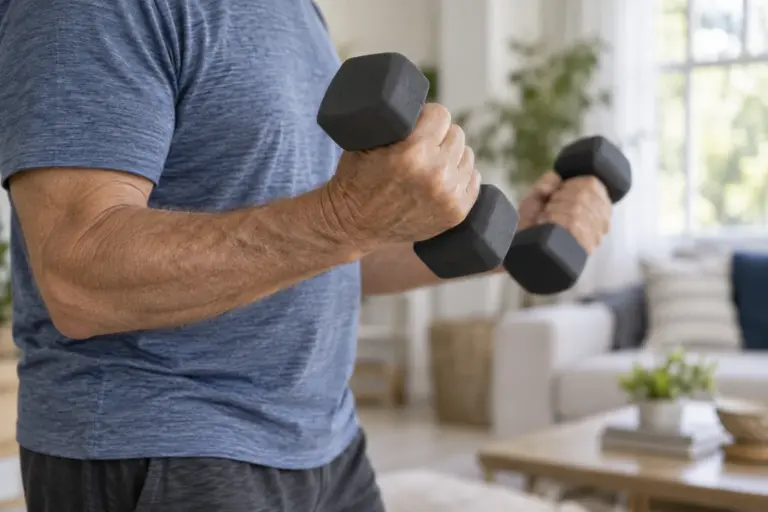
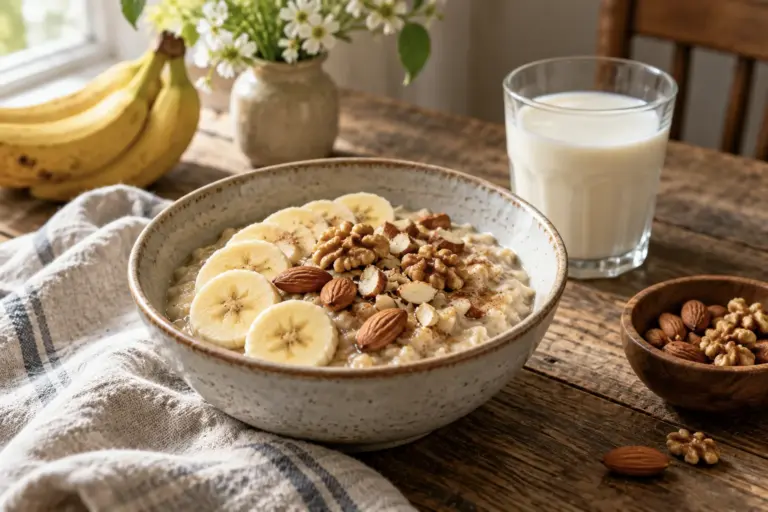
Guidance from the NHS and Mayo Clinic lands in the same place: build the everyday routines that protect bone, and in some cases nudge it in the right direction. That means weight-bearing and resistance work — walking, stairs, dancing, and progressive strength training all signal bone to hold its ground. It means getting enough calcium and vitamin D, ideally from food, with supplements only to fill a real gap and only on your doctor’s say-so. It means not smoking and keeping alcohol modest, since both quietly speed bone loss. It means eating enough protein to keep the bone matrix supplied. And it means taking falls seriously, because a fracture needs two things — fragile bone and a fall — and you have real influence over the second one.
Follow-up tends to be unhurried. Bone changes slowly, so repeat DEXA scans for mild osteopenia are usually spaced further apart — often two years or more, depending on your risk — and scanning more often than that rarely tells you anything useful. Your doctor sets the interval based on your age, your risk factors, and whether anything has shifted. If you want to go deeper on the non-drug side, our piece on osteopenia treatment without drugs covers it in detail.
When osteopenia is moderate or marked
As the T-score drifts toward −2.0 and beyond, the tone of the conversation changes. The lifestyle foundation does not go anywhere — if anything it matters more now — but it needs to be pursued with real consistency, and a genuine question about medication often joins the discussion.
Here is the part that surprises people: the number alone still does not write the prescription. Guidelines from the Bone Health & Osteoporosis Foundation and others lean on a formal fracture-risk estimate — most often the FRAX score — to decide whether a drug is warranted. In the United States, medication commonly comes onto the table for someone with osteopenia when their FRAX-estimated 10-year risk reaches roughly 20% for a major osteoporotic fracture or 3% for a hip fracture. A person at −2.3 carrying several risk factors might sail past that line; another person at the very same density, with nothing else stacked against them, might not come close.
In practice, a doctor working with moderate to marked osteopenia will tighten up the fundamentals — more structure around exercise, calcium, vitamin D, and fall prevention — run a FRAX assessment, and go looking for secondary causes that quietly erode bone, from vitamin D deficiency to thyroid or parathyroid trouble to certain medications. They will talk through whether a bone-protective drug fits your risk and your preferences, and they will usually recheck your density on a shorter interval so any real change shows up sooner. None of that makes medication a foregone conclusion. Plenty of people in this range are managed with lifestyle alone. It simply means the question deserves a careful, individual answer rather than a reflexive yes or no.
Why your risk profile beats the number
This is the idea that reframes the whole thing: the point of treatment is to prevent fractures, not to move a number on a printout. Bone density is one ingredient in fracture risk — an important one, but only one — and that is precisely why the FRAX tool exists. It folds your bone density together with clinical risk factors to estimate your 10-year odds of a major fracture. Those factors include your age and sex, a previous fragility fracture (one of the strongest predictors there is), a parent who broke a hip, current smoking, long-term steroid use, rheumatoid arthritis, heavy drinking, low body weight, and other secondary causes of bone loss.
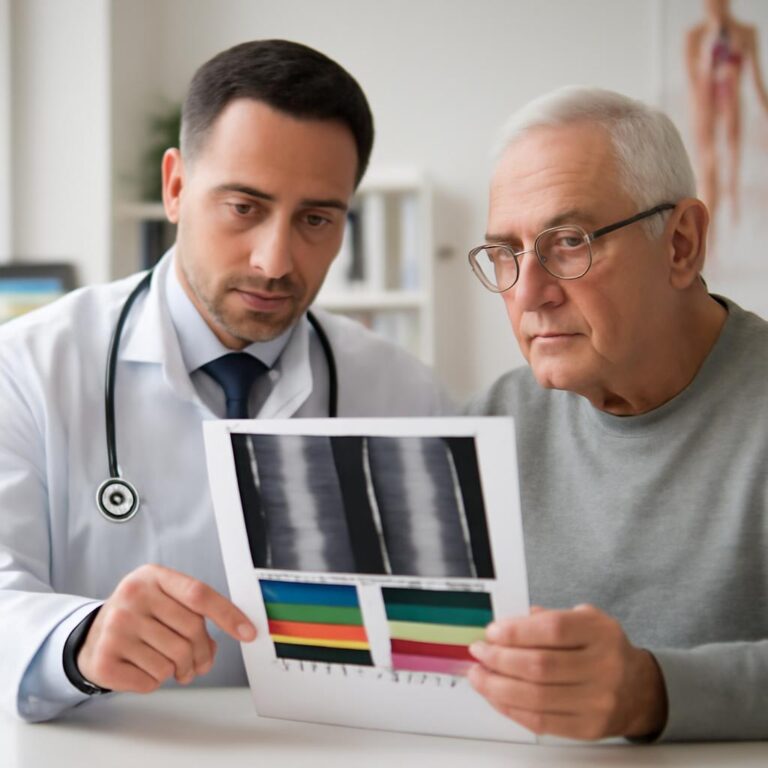
Line that up against the labels and the logic flips in a way that catches people off guard. Someone with mild osteopenia who has already snapped a bone in a minor fall may need more attention than someone with moderate osteopenia and a clean history, because a prior fragility fracture drives risk up sharply no matter where the T-score sits. The label describes your bone density. FRAX and your fracture history describe your risk — and risk is the thing treatment is actually aiming at. Reading your DEXA result next to your FRAX number is what turns a lonely T-score into a real picture; our walkthrough on how to read your DEXA scan results shows you how the two fit together.
The foundation both share
Mild or marked, the base layer is the same, and when medication is used it goes on top of these habits rather than in place of them. Move with purpose — regular weight-bearing activity paired with progressive strength training a couple of times a week. Get enough calcium and vitamin D, food first, supplements only to fill genuine gaps under medical guidance. Eat well enough overall, with adequate protein, to keep the bone matrix supplied. Cut the accelerants by stopping smoking and keeping alcohol in check. Work on falls — balance, vision, trip hazards at home, and any medication that leaves you dizzy. And treat what can be treated, from vitamin D deficiency to the secondary medical causes of bone loss.
What these steps will not do is “cure” osteopenia. There is no cure, and no supplement or program can promise to reverse it — a claim worth treating with real suspicion whenever you see it. If a structured routine appeals to you and you want a framework to organize the diet, exercise, and lifestyle pieces, a program such as The Bone Density Solution can help you stay consistent, though it belongs alongside your doctor’s guidance, never instead of it. For a closer look at what is inside it, and at the claims it makes, see the programme we assessed in detail. Used well, these habits are still the most evidence-based way to protect the bone you have and lower your odds of a fracture. In the end, the distance between mild and moderate osteopenia comes down to intensity, monitoring, and how seriously the medication question gets weighed — and every one of those calls belongs to you and the doctor who knows your full history.
Sources
- NIAMS (National Institute of Arthritis and Musculoskeletal and Skin Diseases) — Osteoporosis and bone health
- Bone Health & Osteoporosis Foundation (BHOF) — Bone density, T-scores, and treatment thresholds
- NHS — Osteopenia
- Mayo Clinic — Osteoporosis and low bone density
The Bone Density Solution
A structured program designed for adults over 50 to support bone density through diet, exercise, and lifestyle changes — an integrated approach to reducing fracture risk. Best used alongside, not instead of, professional medical care.
Check The Bone Density Solution →Affiliate link — we may earn a commission at no extra cost to you. Full disclosure.
Medical disclaimer: This article is for informational purposes only and is not medical advice. See our full medical disclaimer.