Osteopenia and Dental Implants: What You Need to Know
Disclosure: We may earn a commission if you purchase through links on this page. This does not affect our editorial assessment. See our affiliate disclosure.
A woman emails us a version of the same story every few weeks. She lost a molar, went in hopeful about an implant, and left the appointment convinced the door had been slammed shut, because a scan somewhere along the way had turned up osteopenia and someone mentioned her bones were “too thin.” If that has happened to you, take a breath. In most cases, that conversation was more discouraging than the science warrants.
The worry makes intuitive sense. An implant lives in bone, so it seems obvious that low bone density anywhere would put the whole plan at risk. But osteopenia on its own is generally not a reason to rule out dental implants. What actually decides the outcome is the bone in your jaw specifically, and, for some people, the medication they take to protect their bones. Those are two very different questions from the one on your DXA report, and it is worth pulling them apart.
If you want to get clear on the diagnosis first, our guide to osteoporosis vs osteopenia explains exactly where the line between them is drawn.
Does osteopenia actually stop you getting implants?
Usually, no. Osteopenia means your bone density sits below the young-adult average but has not dropped far enough to count as osteoporosis. It is enormously common past 50, especially for women after menopause, and countless people carrying that label go on to get implants without any trouble at all.
Implant dentistry has been refined over decades, and when researchers look at people with lower whole-body bone density, a diagnosis of osteopenia by itself does not appear to make implants fail. Even in osteoporosis, which is a steeper drop in density, most reviews report survival rates that stay high and, in plenty of studies, sit right alongside the numbers for people with normal bone. The reason is worth understanding: a hip or spine scan tells your doctor about your fracture risk across the whole skeleton. It does not measure your jaw, and no reputable surgeon treats it as a pass-or-fail gate for implant surgery.
None of that means the number is meaningless. Your dental team will still look you over carefully, because everything that determines success is happening locally, in your mouth, not on a skeletal average.
How bone density really affects an implant
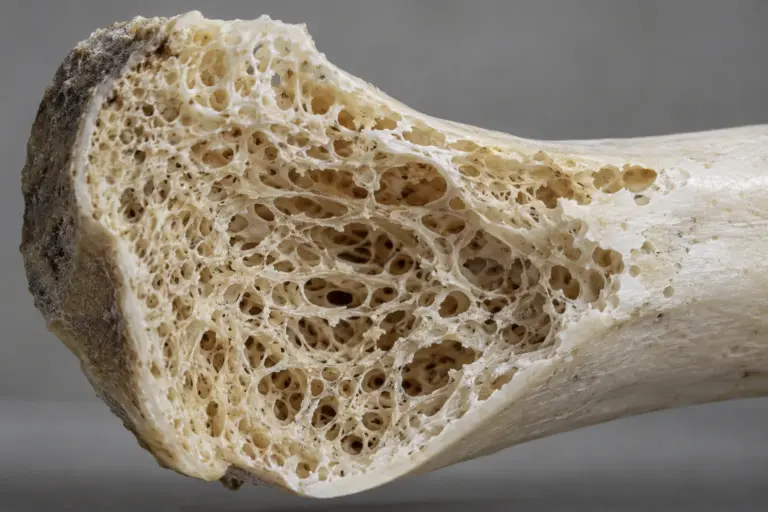
An implant is a small titanium or ceramic post set into the jaw to stand in for a missing tooth root. Whether it lasts comes down to a process called osseointegration, where bone grows against the surface of the post and bonds to it over the following weeks and months, gradually locking it in place. When that bond is strong, an implant can serve you for decades. When it is weak, the implant can loosen or fail. So the honest question is never really about your spine. It is about how well your jaw can form and hold that bond.
And here is the part that surprises almost everyone: the density of your hip or spine does not reliably predict the density of your jaw. Bone across the body answers to different local demands, and the jaw is shaped above all by whether teeth are present and how much chewing force it takes. You can have osteopenia elsewhere and perfectly adequate jaw bone, or normal spine density and a jaw that has quietly thinned in the years since a tooth went missing.
Surgeons weigh two things at the site itself. There is quantity, meaning whether there is enough height and width to seat an implant of the right size, and there is quality, meaning how dense and well-structured that bone is. Softer, less dense jaw bone does not disqualify you, but it can nudge the plan in a different direction. Your surgeon might reach for a different implant design, place it more gently, or simply allow a longer stretch of healing before loading it with a crown. That whole-body density figure is useful background, but the decision gets made from what the surgeon can see in your jaw.
The medication question that matters more than the label
For a lot of people, the osteopenia label turns out to be a sideshow. The conversation that genuinely deserves attention is whether you take a bone medication, which one, and how it reaches your body. A few of the drugs used for osteopenia and osteoporosis carry a small but real consideration when jaw surgery is on the table.
The two to know are the antiresorptives. Bisphosphonates, which include alendronate, risedronate, ibandronate and zoledronic acid, and denosumab, sold as Prolia, both work by slowing the cells that break bone down, which preserves density and cuts fracture risk. Because they also change the pace at which bone remodels and heals, they are linked to a rare complication called medication-related osteonecrosis of the jaw, or MRONJ, where a patch of jaw bone struggles to heal after a dental procedure. If you want the fuller picture on this drug class, our overview of bisphosphonate side effects explained goes into more depth.
The detail that gets lost in scary headlines is how much the route and dose change the risk. For someone taking oral bisphosphonates at the usual doses for bone density, the odds of MRONJ after implant surgery are very low, generally put at well under one percent. The risk climbs meaningfully for people on high-dose intravenous bisphosphonates or IV antiresorptives given as part of cancer treatment, which is a wholly different clinical situation from routine bone-density care. Denosumab belongs in the same antiresorptive family and gets factored in the same way when jaw surgery is being planned.
The point is not to be frightened off implants. It is to make sure your oral surgeon has the whole story. Tell them every bone medication you have ever taken, the dose, whether it came as a pill, an injection or an infusion, and how long you were on it. That full history is what lets a clinician weigh a small risk honestly and build the plan around it, rather than guessing.
Where you actually have some control
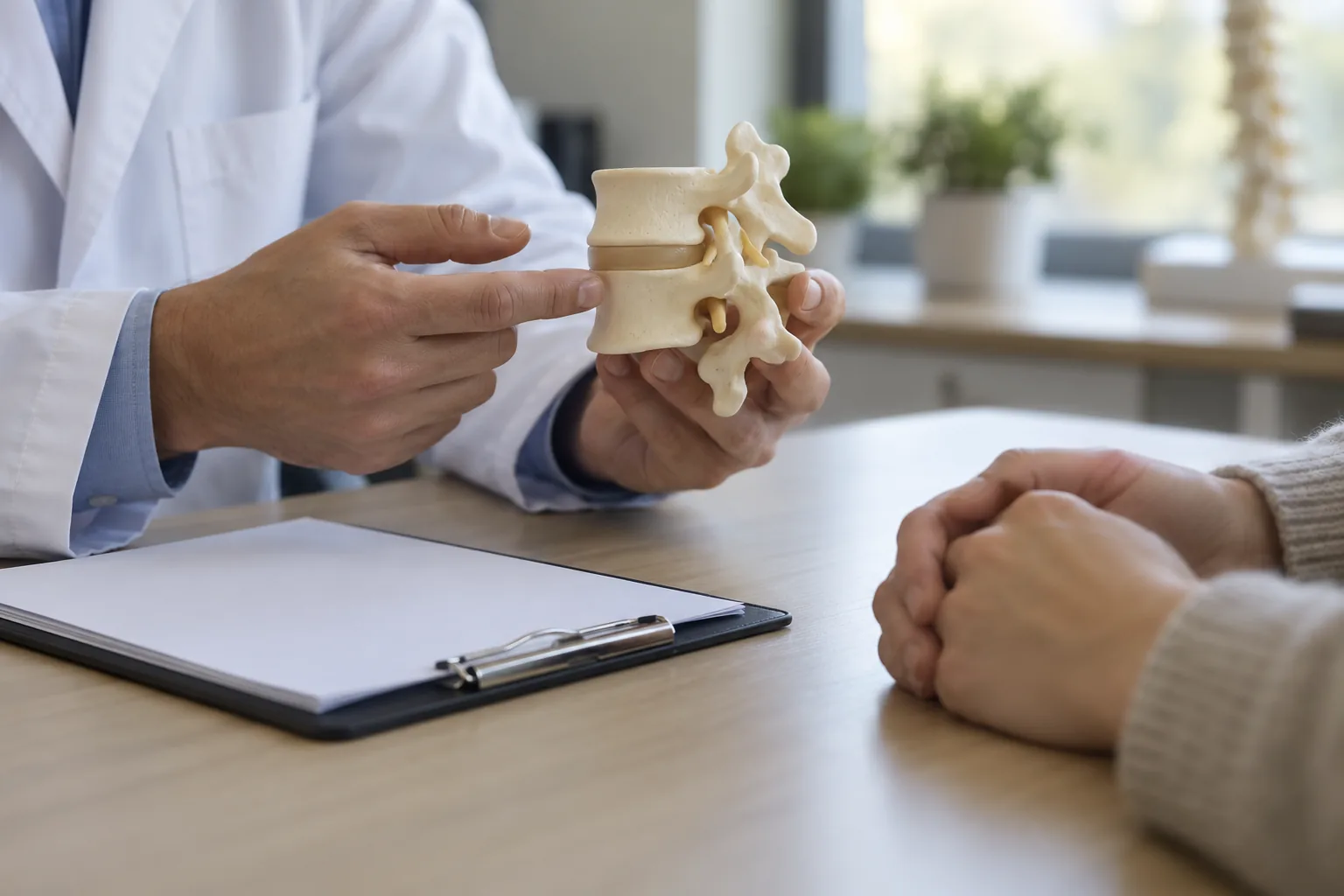
Preparation is the part of this you can shape yourself, and a handful of things genuinely move the needle. The first is imaging. Expect a 3D scan, usually a cone-beam CT, so the surgeon can measure the exact height, width and density of bone at the planned site and map out where the nerves and sinuses run. This is the moment your jaw quality and quantity actually get assessed, rather than inferred from a hip scan.
If that scan shows there is not enough bone to work with, it is worth asking about grafting. A bone graft or a sinus lift can build the site up before or during placement, and needing one is common. It is not a quiet signal that implants are off the table. Alongside that, the ordinary groundwork of healing matters more than people expect. Vitamin D and protein both support the way bone knits and tissue repairs, and many adults over 50 run low on vitamin D without realizing it. Our guide to the right vitamin D dose for bone health after 50 can help you frame that conversation with your doctor.
Two more things belong on the list. If you smoke, this is the moment to stop, even temporarily. Smoking is one of the best-documented risk factors for implant failure because it starves the gums and bone of the blood supply healing depends on, and stepping away from it around surgery genuinely improves your odds. And bring your complete medication and health list to every appointment, bone drugs included, along with anything like diabetes that affects healing, so the whole team is reading from the same page.
If you are thinking more broadly about supporting your bones while you weigh your options, some people like to follow a structured routine of diet, movement and lifestyle changes, and one such program built for adults over 50 is The Bone Density Solution. It is meant to sit alongside professional care, never in place of it. Based on the materials we have seen, we wrote up our editorial assessment of the program. For a wider, no-cost look at the same territory, our pillar guide to osteopenia treatment without drugs covers diet, exercise and lifestyle in depth.
So what does a good candidate look like?
Put it all together and a strong candidate for implants with osteopenia tends to have adequate jaw bone on a CBCT scan, or a workable plan to build it with grafting, along with healthy gums, good oral hygiene and reasonably well-controlled general health. They are either a non-smoker or willing to stop around surgery, and they have been fully open about any bone medications so the risk can be assessed and managed. Osteopenia in the hip or spine can be sitting quietly in the background of every one of those people without changing a thing.
A few specific worries come up so often they are worth answering head-on. Can you get implants with osteopenia at all? For most people, yes, because the label by itself is generally not a contraindication, and survival rates stay high even for many people with osteoporosis. Do bisphosphonates rule implants out? Usually not, since the risk on standard oral doses is very low, and the real concern lies with the high-dose IV antiresorptives used in cancer care. Does osteoporosis drag down success rates? The evidence is largely reassuring, with most reviews finding survival comparable to normal bone, though healing may run longer and softer jaw bone can call for adjustments in technique. And should you stop your bone medication before surgery? That is the one to be firm about: never stop or change a prescription on your own. Whether a drug should be paused around jaw surgery is an individual call that balances your fracture risk against a small MRONJ risk, and it has to be made jointly by your prescribing physician and your oral surgeon, because stopping abruptly carries its own dangers.
The honest bottom line is that osteopenia is rarely the thing that decides this. Your jaw, your habits and your medications are, and an experienced team can evaluate and plan for all three. So if someone has left you thinking the answer is a flat no, it is worth getting a proper implant assessment before you believe them.
Sources
- Bone Health & Osteoporosis Foundation (BHOF) — patient guidance on osteopenia, osteoporosis and bone medications.
- Mayo Clinic — overview of osteoporosis, bone density and treatment.
- National Institutes of Health / NCBI — medication-related osteonecrosis of the jaw (MRONJ) overview.
- NIH National Institute of Arthritis and Musculoskeletal and Skin Diseases — osteoporosis and bone health information.
The Bone Density Solution
A structured program designed for adults over 50 to support bone density through diet, exercise, and lifestyle changes — an integrated approach to reducing fracture risk. Best used alongside, not instead of, professional medical care.
Check The Bone Density Solution →Affiliate link — we may earn a commission at no extra cost to you. Full disclosure.
Medical disclaimer: This article is for informational purposes only and is not medical or dental advice. See our full medical disclaimer.