OsteoStrong Review: Does It Work? Cost, Sessions and Research
- What it is: a network of independently owned centres where members use four specialised machines for about 10 minutes, once a week, to apply high forces to the body in a controlled, low-impact way. The company calls this “osteogenic loading”.
- Evidence: published research is small and mixed. A 2025 scoping review found no randomised trial against a no-exercise control group, and bone-density effects were inconsistent. The largest randomised trial found OsteoStrong not worse than a conventional exercise programme on its main measure, with no meaningful bone-density differences between groups.
- Cost: set by each franchise and not published on the company’s main site, so ask for a written quote and the contract terms.
- Safety: the company says it is not a medical treatment. If you have osteoporosis, a fracture history or a spinal condition, speak to your doctor first.
See current price and refund terms →
What OsteoStrong is
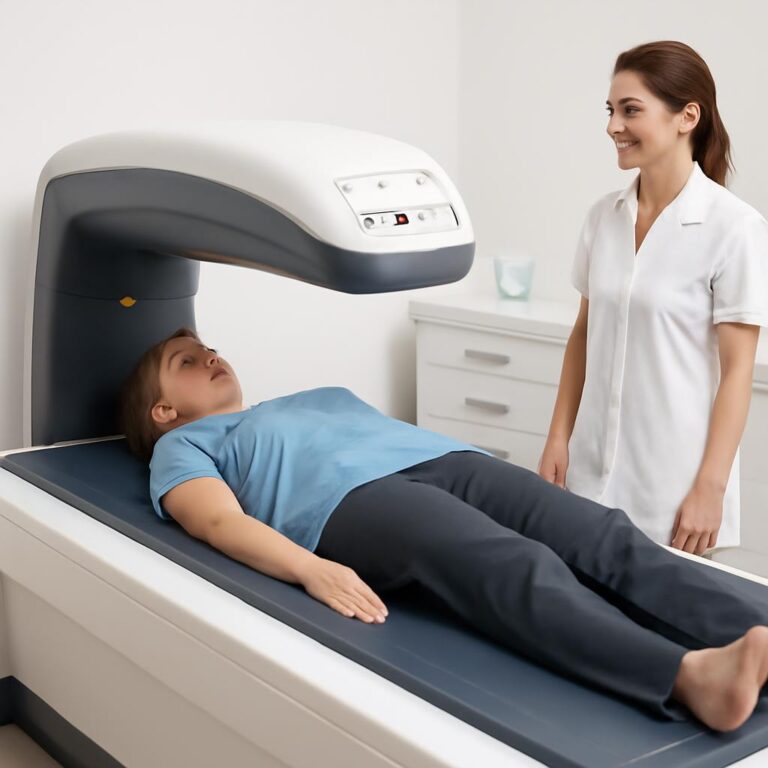
OsteoStrong is a franchise. The company’s website says its centres are independently owned and operated, and it also recruits new owners. Members attend a centre, use a small set of purpose-built machines under supervision, and leave in a matter of minutes. The company says its approach “emulates” a high-impact load of force to achieve what it calls osteogenic loading, “without the high impact”, using robotic musculoskeletal devices that apply axial compression to the bone.
The concept: bone adapts to the loads placed on it, and very high forces send a stronger signal than walking does. Such forces normally need jumping or heavy lifting, which is impractical for many people over 50. The machines let you press against fixed resistance to reach high force without moving, which is why researchers call the exercise “near-isometric”.
The company’s own wording is careful in one place that matters: its site states that OsteoStrong is “not a gym, diet, supplement, pharmaceutical, or a medical treatment.” It also says members have reported better bone density, balance, strength and joint pain, with “results may vary”, and that its statements have not been evaluated by the FDA. Keep those lines in mind when you read testimonials.
How a session works
According to the company, the programme is “10 minutes per week”. Independent studies describe a similar pattern: one 2025 pilot study had women attend supervised once-weekly sessions of 10 to 15 minutes at a clinic, while a randomised trial used once-weekly 20-minute sessions. So the commitment is small in time, but it is a standing weekly appointment.
Staff set up each machine and guide you; the company does not describe the service as healthcare. Bone responds slowly: research visits are spaced 8 to 12 months apart, and quick changes people report usually concern strength or posture rather than bone density.
OsteoStrong cost and membership
This is the question most searchers ask, and the honest answer is that it depends on the centre. We could not find an official price list on the company’s main website. Because centres are independently owned, membership structure, price and contract length are set locally. Third-party pages circulate figures in the low hundreds of dollars per month, but we could not verify those against an official source, so treat them only as a prompt to ask.
| What to ask the centre | Why it matters |
|---|---|
| Monthly price and what it includes | Ask whether extras are bundled; get the base cost for weekly sessions in writing |
| Contract length and cancellation terms | A commitment of several months changes the real cost of trying it |
| Sign-up or assessment fees | Initial fees are not always advertised |
| Who supervises sessions and their training | Helps you judge whether staff can handle your health history |
| What the centre will say about medical conditions | A good centre will ask you to clear it with your doctor |
| Whether they will let you do a trial session first | Lets you judge comfort and logistics before committing |
A DXA scan is a separate cost; see how often to have one after 50. Membership is a recurring expense for as long as you stay, whereas a book or device is paid once.
What the research shows
A fair review has to separate three levels of evidence: an overview of the whole field, controlled trials, and smaller uncontrolled studies.
The overview: a 2025 scoping review
A scoping review in Osteoporosis International (2025) searched five databases for any study of OsteoStrong machines in any population measuring falls, fractures or bone strength. It found nine studies, of which five were abstracts or unpublished. Seven were observational (case studies, case series, non-randomised trials) and two were randomised trials comparing OsteoStrong with exercise. There were no randomised trials against a control group, most studies were small and had potential conflicts of interest, the two largest included people already taking osteoporosis medicine, effects on bone density were inconsistent, and the authors concluded there was little data on safety.
The controlled trial: BONEMORE
The largest randomised trial since is called BONEMORE (Archives of Osteoporosis, 2026). It enrolled 194 women aged 65 to 79 with osteopenia or osteoporosis and compared nine months of once-weekly OsteoStrong (20 minutes) with a dynamic multicomponent exercise programme (twice weekly, 60 minutes). OsteoStrong met the pre-specified non-inferiority margin for the primary measure, a bone material strength index, and no differences between groups were seen in bone density or bone-turnover markers. Within the OsteoStrong group the bone material strength index rose 2.9% (p = 0.026), while the exercise group’s did not change; the authors note that because the comparison programme did not improve this measure, the non-inferiority result is hard to interpret.
A companion paper on physical function in the same trial found both programmes improved several measures, with the exercise group improving more on walking speed, trunk-extension endurance and one-leg balance. The authors noted these were secondary outcomes, and a separate commentary questioned the comparison because the exercise group trained about six times as many minutes per week.
The pilot study: no change in bone density
A 2025 single-arm pilot in the journal Bone followed 44 postmenopausal women with low bone density who attended supervised once-weekly 10 to 15 minute sessions for eight months; 38 completed it. Adherence was high (83% overall). Bone density at the hip and spine did not change, trabecular bone score decreased slightly, some measures at the wrist and shin showed small decreases, and some physical-function measures such as chair-stand and stair-climb times improved. Two adverse events were judged possibly related to the intervention. The authors concluded eight months of OsteoStrong did not significantly improve bone density, microarchitecture or strength in this group.
The case series: modest changes in subgroups
A 2025 quasi-experimental study in the Journal of Clinical Endocrinology & Metabolism compared 75 women receiving OsteoStrong with 72 who did not, over 12 months. After statistical correction, spine bone density rose in the OsteoStrong group taking bone medicine (+0.029 g/cm²), and also in the comparison group taking bone medicine (+0.025 g/cm²). Left total-hip density also rose in the OsteoStrong group taking bone medicine (+0.028 g/cm²); other within-group changes did not stay significant after correction. The authors themselves called for cautious interpretation and more randomised trials. Because participants were not randomised and many were on medicine that raises bone density by itself, the study cannot separate the effect of the machines.
| Study | Design | What it found | Main caveat |
|---|---|---|---|
| Scoping review, Osteoporos Int 2025 | Review of 9 studies | Inconsistent bone effects; little safety data | Field dominated by small or low-quality studies |
| BONEMORE, Arch Osteoporos 2026 | Randomised, 194 women, 9 months vs exercise | Non-inferior on bone material strength; no group differences in density | Comparator also showed no gain on the primary measure; no no-exercise control |
| Pilot, Bone 2025 | Single-arm, 44 women, 8 months | No change in hip or spine density | No control group; short |
| Case series, JCEM 2025 | Non-randomised, 147 women, 12 months | Modest spine density rises in medicine subgroups, in both groups | Not randomised; participants on bone medicine |
What the research does not show
- No fracture reduction. No study showing that OsteoStrong lowers fracture risk. The scoping review looked for falls and fractures as outcomes and found little.
- No randomised trial against doing nothing. The strongest design so far compares it with another exercise programme.
- No clear bone-density gain in the best-controlled work. That is not the same as proof of no effect, because the studies are small and short, but the benefit claimed in marketing has not been consistently reproduced.
- Possible benefits for strength and function are more plausible than for bone. Both trial arms in BONEMORE improved several function measures, so regular supervised resistance work has value; the question is whether this specific machine adds more than other forms of exercise.
It would be wrong to say OsteoStrong is harmful or worthless on this evidence, and equally wrong to say it has been shown to build bone. Exercise of many kinds helps strength, balance and confidence. Our guides to resistance-band exercises and hip exercises for bone density cover lower-cost options.
Safety and who should check first
The company states that “no physical exercise is 100% safe, and neither is OsteoStrong” and advises consulting a physician. In the studies, adverse events were uncommon but were reported (two possibly related events in the 44-woman pilot), and the scoping review noted limited safety data overall. Because the machines apply high forces, a conversation with your doctor beforehand is sensible for:
- anyone with an osteoporosis diagnosis or a prior fragility fracture, especially of the spine or hip;
- spinal conditions such as disc problems, severe curvature, stenosis or recent surgery;
- joint replacements, significant joint pain, or tendon problems;
- heart, blood-pressure or balance problems, and anyone taking medicine affecting bone (see protecting your bones on medications);
- anyone unsure which movements are safe with fragile bones; our list of exercises to avoid with osteoporosis is a useful companion.
Tell the centre about your diagnosis and medicines first, and stop if you feel sharp pain, especially in the back.
How it differs from medical bone treatment
Prescription bone medicines are studied in large, long trials with fractures as an endpoint, and they are prescribed after a doctor assesses your fracture risk. OsteoStrong, by its own description, is a fitness-style service, not a medical treatment. It does not diagnose, prescribe or replace anything. Nothing here is a reason to stop or delay a medicine your doctor has prescribed, and anyone with osteoporosis should keep their doctor in charge of treatment. If you are weighing medicine against lifestyle changes, our article on osteopenia: medication vs natural approaches sets out the trade-offs.
For a device regulated as a medical treatment for a specific group, see our Osteoboost review.
See current price and refund terms →
How to read OsteoStrong reviews
We did not collect or quote customer reviews. Each centre is separately owned, so one centre’s experience says little about another’s. Positive reviews often describe feeling stronger or standing straighter, which is plausible with any structured exercise, rather than a measured change in bone density. Few reviewers have before-and-after scans, and reviews on a franchise’s own pages are curated by the business. Use reviews to judge service and convenience; use the trial literature for questions about bone.
Where The Bone Density Solution fits (a different approach)
This site is about bone health after 50 and The Bone Density Solution is the one guide we promote as an affiliate (we earn a commission; we did not write or publish it). It is not a substitute for OsteoStrong and not a like-for-like alternative. It is a digital guide by Shelly Manning, published by Blue Heron Health News, delivered as a PDF, that combines food and gut-health advice, a list of nutrients and a daily-habits plan with a substantial exercise routine. It costs one payment of about $49 at the time of writing (prices change), with a 60-day refund administered by ClickBank. There is no weekly appointment, no contract and no machine.
It has limits you should know. The author is not a physician. There is no clinical trial of the branded programme. It is not a medical treatment, results vary, and its tone about prescription drugs is sceptical in a way we do not endorse: please keep your doctor in charge of any medicine. It does not replace a DXA scan.
Who might prefer which? If you value supervision, a fixed weekly appointment and a machine-based session, OsteoStrong might appeal, once your doctor agrees. If you would rather make food and home-based changes at your own pace without a recurring fee, a guide could be an easier fit. Plenty of people do both. The three-way comparison lines them up on cost, evidence and time.
See current price and refund terms →
Frequently asked questions
Does OsteoStrong work?
The evidence is mixed. The best-controlled recent study found it not worse than a standard exercise programme, with no meaningful group differences in bone density; a pilot found no change in density. No study shows fewer fractures. Both strength and balance may improve, as with other exercise.
How much does OsteoStrong cost per month?
It depends on the centre. We could not find an official price list; centres set their own prices and contracts. Ask for a written quote, contract length and cancellation terms before joining, and check the current price.
How often do you go to OsteoStrong?
Typically once a week for about 10 minutes, according to the company. Studies used once-weekly sessions of 10 to 20 minutes. Bone changes are measured over many months.
Is OsteoStrong safe for osteoporosis?
The company says it is not a medical treatment and recommends consulting a physician. The machines apply high forces, so people with osteoporosis, a fracture history or spinal problems should get their doctor’s agreement first, and tell the centre about their diagnosis.
Is OsteoStrong FDA approved?
Its website states that it is not a medical treatment and that its statements have not been evaluated by the FDA. Unlike a regulated medical device, it is positioned as a fitness-style service.
Does OsteoStrong increase bone density?
Results are inconsistent. A 2025 pilot study found no change in hip or spine density after eight months, and a larger randomised trial found no bone-density differences compared with conventional exercise. Some non-randomised data show modest changes in subgroups, often alongside bone medicine.
OsteoStrong vs Osteoboost: what is the difference?
OsteoStrong is a supervised weekly loading session at a franchise centre; Osteoboost is a prescription wearable belt used daily. They differ in evidence, price and regulation. See our Osteoboost review.
Verdict
OsteoStrong is a convenient, low-time-cost way to do supervised resistance-style exercise, and some members will value the structure. As a way of building bone density, the published evidence is limited, mostly small or non-randomised, and does not clearly show a gain over ordinary exercise, while the cost is set by each centre and can add up. It is a reasonable option if your doctor agrees, you like supervised sessions, and you price the contract carefully. It does not replace a DXA scan, medical care, prescribed medicine, calcium and vitamin D basics, regular strength and balance training, or fall prevention at home.
How we reviewed this
This article is based on the company’s published website, the published research cited above (including a 2025 scoping review and randomised and observational studies), and publicly available information. We have not used the service, visited a centre, or interviewed members. Last checked: October 2026. Centre prices, contracts and the research base change, so confirm current details locally and with your doctor. Spotted an error? Tell us via the contact page and we will check and fix it.
Sources and further reading
- OsteoStrong and bone health: a scoping review (Osteoporosis International, 2025)
- BONEMORE randomised trial: bone strength, OsteoStrong vs dynamic multicomponent exercise (Archives of Osteoporosis, 2026)
- BONEMORE: physical function outcomes (Aging Clinical and Experimental Research, 2026)
- Pilot study in postmenopausal women with low bone density (Bone, 2025)
- Osteogenic loading case-series study (JCEM, 2025)
- Commentary on the BONEMORE comparison (Aging Clinical and Experimental Research, 2026)
- NIAMS (NIH): Osteoporosis overview
Related reading on this site: Bones After 50 home · Editorial team · Medical disclaimer · Affiliate disclosure